 欧元、澳元、英镑、日元、印度卢比


全部的: $0.00
结账时计算税费和运费
 SGD
SGD


Did you know that approximately 20% of the population struggles with a nickel allergy? If you've ever felt the sting of a red, itchy lobe after wearing your favorite pair, you're certainly not alone. Seeking earring irritation relief often feels like a frustrating cycle of trial and error. You likely feel discouraged after investing in beautiful pieces that you simply can't wear, yet you're afraid to leave them out because your piercings might close up for good.
We believe that jewelry should be an effortless expression of your style, not a source of physical discomfort. You deserve to wear elegant pieces that feel as good as they look. This guide helps you identify your specific metal triggers and explains why the "hypoallergenic" label isn't always a guarantee of safety. We'll explore the professional science of biocompatible materials like 14K gold and the specialized comfort of flat-back designs. You're about to learn how to choose jewelry you can wear 24/7, ensuring your ears stay healthy and your aesthetic remains refined. By understanding the intersection of metal science and thoughtful design, you can finally enjoy your jewelry collection without the fear of soreness or swelling.
Understanding why your ears feel "angry" is the first step toward finding permanent earring irritation relief. Most discomfort stems from two distinct sources: contact dermatitis or mechanical stress. While an infection involves a bacterial invasion that requires medical attention, irritation is typically your body's defensive response to a specific material or physical pressure. Distinguishing between the two allows you to treat the root cause rather than just the symptoms.
You can typically identify irritation by looking for localized redness and persistent itching. You might notice clear or slightly white "crusties," which is simply dried lymph fluid. Crucially, irritation usually lacks the systemic symptoms of an infection. If you experience radiating heat, throbbing pain, or thick yellow discharge, it's time to consult a professional. Even piercings you've had for years can suddenly flare up in 2026. This often happens because our skin's sensitivity can change over time, or a tiny scratch in the piercing channel allows trace metals to enter the bloodstream for the first time.
A Nickel allergy is the most frequent culprit behind metal hypersensitivity. The itch doesn't always happen immediately; it often begins several hours after you've put in a pair of earrings. As the reaction intensifies, the piercing site may begin "weeping," producing a clear fluid that signals your immune system is in overdrive. This isn't a sign of poor hygiene. It's a clear signal that your jewelry's composition is incompatible with your biology. To get a personalized assessment of your ear health, you can book an appointment with a specialist who understands the nuances of jewelry-related trauma.
Sometimes, the metal isn't the only issue. The physical design of your jewelry can cause significant distress. Traditional butterfly backs are notorious for trapping moisture and bacteria against the skin. They also tend to compress the lobe, restricting blood flow and causing "mechanical" soreness. Heavy statement earrings can stretch the piercing channel, leading to micro-tears that never quite heal. If you sleep in traditional studs, the sharp posts can poke the delicate skin behind your ear, creating a cycle of constant inflammation. Transitioning to professional-grade designs can make a world of difference. If you're unsure about your current setup, exploring a professional piercing service can provide the clarity you need to heal your ears for good.
Swift action is the cornerstone of recovery. As soon as you feel that familiar heat or itch, remove the offending jewelry. Leaving them in for even a few more hours can escalate a minor reaction into a weeks-long inflammatory cycle. By removing the source of the allergen or pressure, you provide your skin the breathing room it needs to begin the repair process. This immediate break is the first step toward achieving lasting earring irritation relief.
While your instinct might be to reach for harsh antiseptics, avoid alcohol and hydrogen peroxide. These substances are too aggressive for irritated tissue. They kill healthy skin cells along with bacteria, which actually slows down the healing process and causes unnecessary dryness. Instead, rely on a gentle saline solution to soothe the area without causing further trauma. If you're unsure whether your reaction is a simple sensitivity or something more serious, reviewing the symptoms of a nickel allergy can help you decide if a permanent change in jewelry material is necessary.
Sterile saline sprays are the gold standard for cleaning "angry" ears. Unlike DIY salt soaks, which often have incorrect salt-to-water ratios, professional sprays are balanced and free from contaminants. Apply the spray twice daily and strictly follow the "no-touch" rule. Avoid picking at any crusting, as this creates micro-wounds that invite bacteria. After spraying, gently dry the area with a hair dryer on a cool setting or a piece of non-woven gauze. Trapped moisture is a common cause of bacterial growth, so keeping the area dry and airy is vital for a quick recovery.
A cold compress provides immediate comfort by constricting blood vessels and reducing localized swelling. Wrap a clean ice pack in a soft, lint-free cloth and apply it to the lobe for five to ten minutes. If the itching is intense, a tiny amount of over-the-counter hydrocortisone cream may help, but only use it on the surrounding skin and never inside the piercing channel itself. Most importantly, embrace a "jewelry holiday." Give your ears at least 24 hours of rest. If you're worried about your piercings closing during this time, you can book an appointment to have a professional assist with inserting a biocompatible, medical-grade retainer that won't cause further distress.
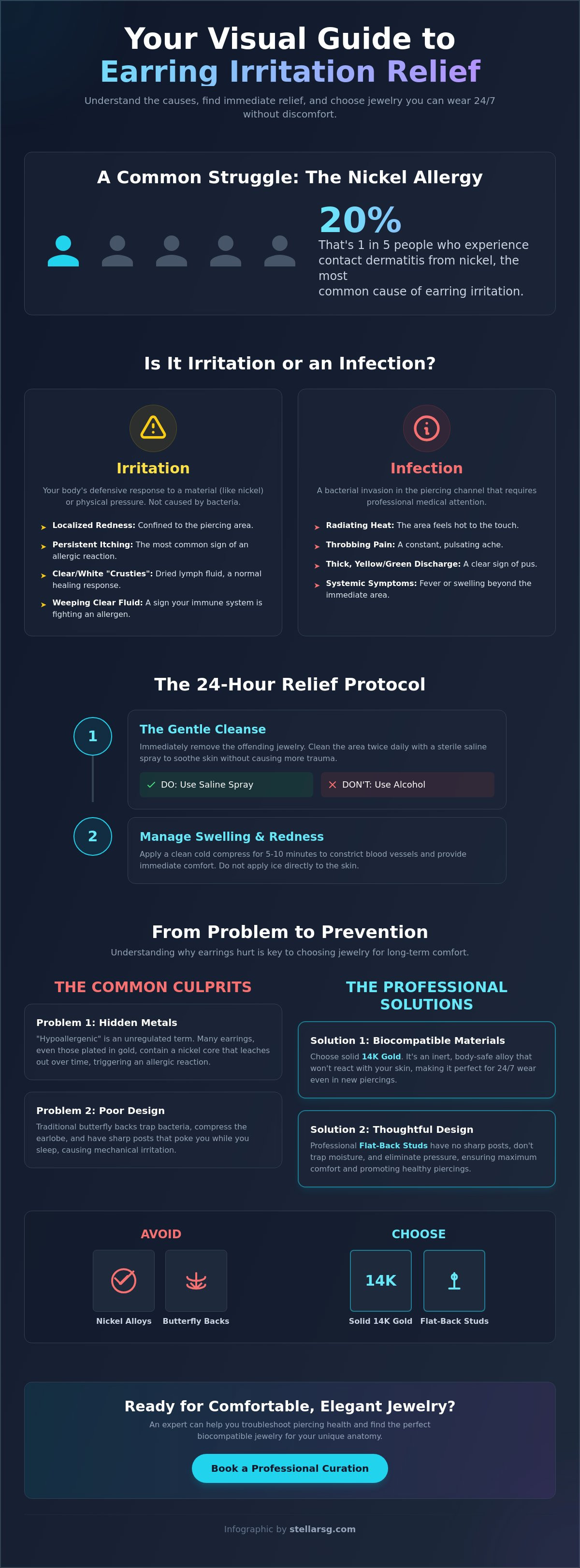
The term "hypoallergenic" is one of the most misunderstood labels in the jewelry industry. In 2026, there is still no legal or medical standard governing its use. For many brands, it simply serves as a marketing claim suggesting a product is "less likely" to cause a reaction. This lack of regulation explains why you might still experience discomfort even after specifically seeking out jewelry labeled for sensitive skin. Achieving true earring irritation relief requires looking past the label and examining the specific metallurgy of your pieces.
Hidden culprits like copper, zinc, and trace amounts of nickel are often found in the base metals of plated jewelry. While a piece may look like solid gold, the thin outer layer eventually wears down. In Singapore’s tropical climate, high humidity and perspiration accelerate this process. As the plating erodes, your skin comes into direct contact with reactive base metals. This exposure triggers the immune system, leading to the redness and swelling you've likely experienced. If you are noticing persistent itching or a rash, comparing your experience to documented Nickel allergy symptoms can help confirm if a metal sensitivity is the root cause. To understand which materials truly support skin health, explore our guide on hypoallergenic metals for piercings.
Metal leaching occurs when moisture, such as sweat or skin oils, reacts with the alloys in your jewelry. This chemical reaction releases metal ions that penetrate the skin. Even jewelry sold as "nickel-free" can cause issues if it contains high concentrations of copper or brass, which are known skin irritants. Surgical steel is a common choice, but it often contains small amounts of nickel trapped within the alloy. For those with heightened sensitivities, biocompatible materials are a much safer alternative. These metals are designed to coexist with human tissue without triggering a defensive response, ensuring your piercing stays calm and healthy.
While many focus on titanium as the only solution for sensitive ears, 14K gold offers a sophisticated and equally biocompatible alternative. It provides the perfect balance of purity and durability. Unlike 24K gold, which is too soft for daily wear, 14K gold is alloyed with silver and copper in specific ratios that maintain its structural integrity while remaining gentle on the skin. When compared to titanium, 14K gold provides a classic, warm aesthetic that many find more appealing for long-term wear. Choosing the best metal for ear piercing is a vital decision for anyone prone to irritation. Investing in solid 14K gold ensures that your jewelry remains a source of joy rather than a cause for concern.
Prevention is the ultimate luxury for your ears. Once you've achieved initial earring irritation relief, the goal shifts to maintaining that comfort permanently. This requires a move away from the restrictive designs of traditional fashion jewelry toward professional-grade alternatives. By combining the biocompatibility of 14K gold with the ergonomic benefits of flat-back designs, you create an environment where your piercings can truly thrive without the cycle of inflammation returning.
Singapore’s unique climate adds an extra layer of challenge to jewelry maintenance. Our high humidity and heat mean that sweat and skin oils accumulate much faster than in cooler regions. This buildup can lead to bacterial growth and oxidation, even on high-quality pieces. To keep your collection in pristine condition and protect your skin, it's essential to follow a dedicated routine for gold jewelry care in Singapore. Regular, gentle cleaning ensures that your investment remains both beautiful and safe for 24/7 wear.
Traditional butterfly backs are often the hidden source of "angry" piercings. Their design creates a "gunk trap" where moisture and dead skin cells accumulate, leading to persistent irritation. In contrast, the anatomy of a flat-back labret features a smooth, flat surface that sits flush against the skin. This design offers several key benefits:
Transitioning your "ear stack" to solid 14K gold is a strategic investment in your physical comfort. While the initial cost is higher than plated alternatives, the cost-per-wear is significantly lower because these pieces don't need to be replaced due to tarnishing or skin reactions. 14K gold provides the structural integrity needed for daily wear while remaining gentle enough for sensitive piercing channels. By building a "safe list" of brands that prioritize metal purity and threadless designs, you can curate a sophisticated look that never requires a "jewelry holiday." Ready to upgrade your collection to skin-safe materials? Book a professional consultation to find the perfect fit for your lifestyle.
Finding lasting earring irritation relief sometimes requires more than just changing your jewelry at home. While a General Practitioner is your go-to for medical infections, a professional curation specialist is often better equipped to troubleshoot the mechanical causes of persistent discomfort. They possess the specialized tools and anatomical knowledge to identify why a piercing refuses to settle, even when you're using high-quality metals. A specialist understands the delicate balance between skin health and jewelry design, providing a level of care that goes beyond a standard medical consultation.
At Stellar SG, our specialists look beyond the surface. We assess the precise angle of the piercing channel and the remaining length of your jewelry post. If a post is too long, it slides back and forth, dragging bacteria into the wound and causing micro-trauma. If it's too short, it compresses the tissue and restricts blood flow. Professional downsizing is a critical step many people overlook. This involves switching to a shorter, custom-fitted post once initial swelling subsides, which significantly reduces movement and prevents the recurrence of irritation.
During a professional assessment, we check for signs of migration or tilting. Migration happens when the body slowly pushes a piercing toward the surface. This is often a reaction to low-quality metals or excessive physical weight. We also ensure your jewelry is custom-fitted to your specific ear anatomy. No two ears are the same thickness, so a one-size-fits-all post often leads to the very pressure that causes "angry" ears. You can book an appointment for a comprehensive health check to ensure your piercings are correctly aligned and healthy.
Styling an elegant "ear stack" is an art form that must prioritize skin health. Overcrowding a small area with too many heavy or poorly spaced pieces can lead to chronic inflammation. We recommend a curated mix of solid 14K gold and medical-grade titanium to achieve a high-end look that remains entirely biocompatible. This approach allows you to express your personal style without the fear of a flare-up. Our specialists help you choose the right gauge and diameter for your specific ear shape, ensuring every piece sits perfectly. If you're ready to transform your jewelry experience, visit our piercing service for expert guidance and a selection of premium, skin-safe designs.
You now possess the essential tools to transform your relationship with jewelry. True earring irritation relief comes from moving beyond generic labels and choosing materials that respect your body's unique biology. By prioritizing solid 14K gold and ergonomic flat-back designs, you can finally enjoy a sophisticated ear stack without the constant cycle of soreness. Your piercings deserve the same level of specialized care and attention as any other aspect of your wellness routine.
Our expert piercing specialists at ION Orchard, JEM, and Vivocity are dedicated to providing a safe and luxurious experience for every client. Whether you're troubleshooting an old piercing or looking to start a new curation, our specialized 14K Gold and Titanium collections offer the perfect blend of security and style. We pride ourselves on delivering a caring and professional service for all ages, ensuring your path to pain-free beauty is seamless and enjoyable. Book a Professional Piercing Consultation at Stellar SG today and rediscover the joy of wearing jewelry you love. Your journey to effortless, 24/7 comfort starts with an expert assessment.
Your "gold" earrings might be plated or a low-karat alloy. Gold plating eventually wears thin, exposing base metals like nickel or copper that trigger an allergic response. Even solid 9K gold contains a high percentage of other metals, so switching to solid 14K or 18K gold is often necessary for sensitive skin.
Avoid using petroleum-based ointments like Neosporin on your piercings. These products create a seal that traps bacteria and prevents oxygen from reaching the wound, which can actually delay healing. For effective earring irritation relief, stick to professional sterile saline sprays that allow the skin to breathe while staying clean.
A jewelry holiday of 24 to 48 hours is usually sufficient for minor redness to subside. Be cautious if your piercings are less than a year old, as the holes can begin to close within hours. If you're prone to closing, visit a specialist to have a biocompatible titanium or gold retainer inserted instead of leaving the piercing empty.
You can use rubbing alcohol to disinfect the jewelry itself, but never apply it to your skin. Alcohol is extremely drying and destroys healthy skin cells, which can turn a minor irritation into a cracked, painful wound. Always ensure the jewelry is completely dry before re-inserting it into your ear to avoid chemical irritation.
The scent is typically caused by "ear cheese," which is a natural buildup of dead skin cells, sebum, and sweat. This occurs more frequently with butterfly backs because their design traps debris against the lobe. Transitioning to a flat-back labret and maintaining a consistent cleaning routine will eliminate this issue entirely.
Implant-grade titanium and solid 14K gold are the premier choices for extreme sensitivity. These materials are biocompatible, meaning they don't react with body fluids or leach harmful ions into your tissue. Choosing these high-quality metals is the most reliable way to find permanent earring irritation relief and maintain a healthy ear stack.
Singapore’s high humidity creates a moist environment that encourages bacterial growth and accelerates the breakdown of cheap metal plating. Sweat also acts as a catalyst for metal leaching, which increases the likelihood of a reaction. Always dry your piercings thoroughly with a hair dryer on a cool setting after outdoor activities or showering.
Consult a doctor if you experience systemic symptoms like fever, chills, or redness that spreads far beyond the piercing site. However, if the issue is localized to the lobe, a professional piercer is often better equipped to help. They can troubleshoot jewelry fit, post length, and metal quality to resolve mechanical irritation that a GP might miss.


