 SGD
SGD EUR
EUR
 AUD
AUD
 GBP
GBP
 JPY
JPY
 INR
INR
Total: $0.00
Taxes and shipping calculated at checkout


Did you know that roughly 1 in 10 people in Singapore suffer from nickel allergies? It's a frustrating reality for many who find their new accessory leads to itchy, red, or irritated skin instead of the elegant look they envisioned. You shouldn't have to worry about mystery metals or slow healing when you're trying to express your personal style. Finding the best metal for ear piercing is the most important step in ensuring your new look remains a source of confidence rather than a medical concern.
We agree that your health should never be the price of beauty. This guide provides the clarity you need to choose materials that are truly biocompatible and safe for sensitive skin. You'll learn why 14K gold and implant-grade titanium are the premier choices for 2026. We'll also explain how to avoid common pitfalls like nickel reactions and the outdated equipment responsible for nearly 30% of local piercing complications. Discover how to prioritize your comfort without ever sacrificing your aesthetic.
A new piercing is more than a style statement; it's a delicate puncture wound that requires precise care. When you insert a jewelry post, that material stays in direct contact with your internal tissues for weeks or months. Your body's natural healing response is to build a healthy layer of skin around the foreign object. Choosing the best metal for ear piercing is the only way to ensure this process happens without interference. High-quality, safe piercing materials allow your immune system to focus on repair rather than fighting off toxins.
Inexpensive or "cheap" jewelry often contains unstable alloys that cause chronic inflammation. When the body detects an irritating metal, it stays in a state of high alert. This persistent swelling often leads to piercing rejection, where the body physically pushes the jewelry toward the surface of the skin. Nearly 30% of piercing complications in local Singaporean clinics stem from outdated equipment and low-quality materials. At Stellar SG, we eliminate this risk by curating a selection of premium 14K gold and medical-grade materials. Our piercing service is built on the belief that safety and elegance are inseparable. Starting your journey with irritation-free jewelry offers a significant psychological advantage. You can feel confident and sophisticated from day one, free from the fear of infection or painful setbacks.
The term "hypoallergenic" is frequently used in marketing, but it often lacks a strict scientific definition. It simply suggests that a product is less likely to cause an allergic reaction compared to others. Biocompatibility is a far more rigorous standard. It refers to a material's ability to exist in harmony with living tissue without causing a toxic or immunological strike. Biocompatibility is the ability of a material to perform its function within the body while maintaining an appropriate and non-toxic host response. Choosing biocompatible metals ensures that your body accepts the jewelry as a safe addition rather than a harmful invader.
Nickel is the most common cause of contact dermatitis in the piercing world. It's a cheap, durable metal often hidden in "surgical" steel or used as a base for gold-plated items. The danger of gold-plating is that the finish eventually wears down. Once the plating thins, nickel leaches directly into the healing wound. This exposure can trigger a permanent nickel sensitivity. Once your immune system identifies nickel as a threat, you may never be able to wear standard costume jewelry again. Investing in the best metal for ear piercing from the start protects you from a lifetime of skin sensitivities and ensures your style remains limitless.
Professional piercers rely on a specific trio of materials to ensure client safety and long-term comfort. The brand name on the jewelry box matters far less than the specific alloy composition of the post itself. When you choose a material that follows APP jewelry standards, you're selecting a metal that won't break down or release irritants into your bloodstream. Understanding these differences helps you make an informed choice for your unique skin chemistry. For a detailed look at the science behind these choices, explore our Safe Piercing Materials: 2026 Guide.
Gold remains the gold standard for those who want elegance from day one. 14K gold is often considered the best metal for ear piercing because it perfectly balances purity with structural integrity. While 18K or 24K gold may sound more prestigious, these higher karats are often too soft for the constant friction of a new piercing. Solid 14K gold is superior to gold-filled or plated options because it doesn't flake or peel over time. Plated jewelry often hides reactive base metals that can cause irritation as the finish wears down. Starting with solid gold ensures your ear stack looks timeless and sophisticated while your body heals in peace.
If you have a history of reacting to watches or costume jewelry, implant-grade titanium (ASTM F-136) is your most reliable option. This is the same material used for medical implants because the human body rarely identifies it as a foreign threat. Titanium is exceptionally lightweight. This reduces the physical weight on your earlobe or cartilage, which can significantly speed up the healing process. It's also completely resistant to corrosion. Whether you're dealing with sweat or the humid Singapore climate, titanium remains stable and inert. It's a premium, worry-free choice for anyone with extreme skin sensitivities.
Surgical stainless steel is a popular choice, but the "surgical" label can be misleading. Grades like 316L and 316LVM are common in the industry, yet they still contain trace amounts of nickel. While many people heal without issues using high-quality steel, it isn't always the best choice for a first piercing. If you're unsure about your skin's tolerance, upgrading to gold or titanium is a safer investment. High-quality steel is durable and affordable, but it requires a careful check of the alloy composition to ensure it won't trigger a reaction. If you want a guaranteed smooth experience, you can book your ear piercing appointment with our specialists to discuss which of these "Big Three" suits your lifestyle best.
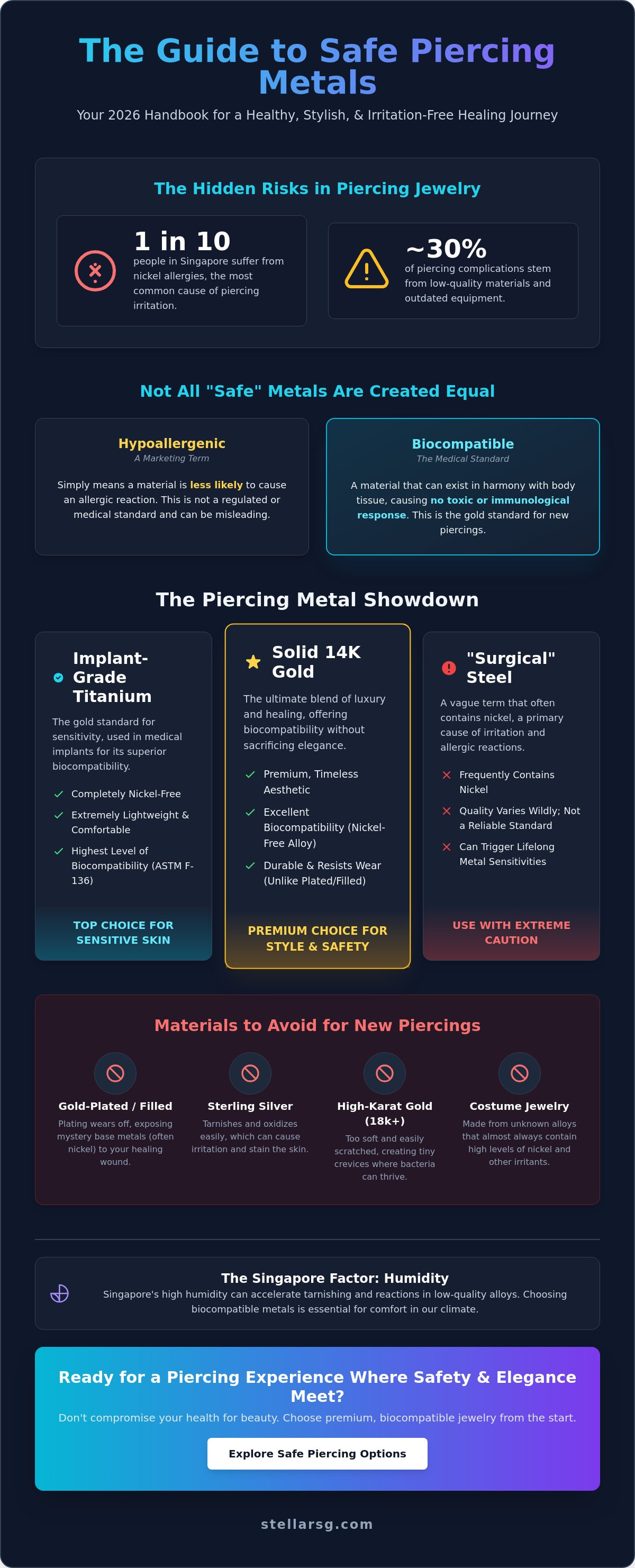
Living in Singapore means navigating a tropical climate where humidity levels frequently exceed 80%. While this moisture is great for your skin's hydration, it creates a challenging environment for a healing piercing. Moisture, sweat, and sebum act as catalysts for chemical reactions, accelerating the breakdown of low-quality jewelry alloys. Finding the best metal for ear piercing in the tropics requires looking beyond the initial shine. You need a material that remains chemically inert even when exposed to constant heat and moisture. When your jewelry adheres to APP's official jewelry standards, you ensure that the metal won't degrade or leach irritants into your skin during those humid afternoons.
The interaction between sweat and "mystery metals" is a leading cause of the itching and redness many people mistake for a simple lack of cleaning. In reality, the salt in your sweat can corrode base metals found in fashion jewelry, leading to localized dermatitis. This is why choosing non-tarnish, premium materials is essential for the Singapore lifestyle. It's about more than just aesthetics; it's about maintaining a sterile and calm environment for your body to heal. For more tips on maintaining your pieces in this climate, our guide on Gold Jewelry Care in Singapore offers professional insights into keeping your collection pristine.
That dreaded green tint on your skin isn't an infection; it's a chemical reaction called oxidation. This typically happens when moisture meets copper, a common filler in cheap jewelry. Solid 14K gold remains the most stable and elegant choice for humid weather because it doesn't contain the high copper levels found in lower-quality gold-filled items. To keep your piercings healthy, implement a simple daily routine. Gently rinse your jewelry with clean water after a long day outdoors to prevent salt and sebum buildup. This small step ensures your premium pieces continue to look sophisticated without irritating your skin.
For the swimmers and gym enthusiasts in Singapore, metal selection is even more critical. Chlorine and salt water are highly corrosive to most fashion jewelry. If you're frequently in the pool or the ocean, implant-grade titanium is the best metal for ear piercing due to its incredible resistance to corrosion. It won't react to harsh chemicals or sweat, making it a "set and forget" option for active individuals. We also recommend using flat-back labrets for initial piercings. These provide a smooth, snag-free profile that stays comfortable during high-movement activities like yoga or HIIT sessions, ensuring your style never slows you down.
While building a curated ear stack is an exciting journey of self-expression, your initial jewelry selection requires a strict filter. Many materials that look beautiful in a display case are unsuitable for a fresh wound. Choosing the best metal for ear piercing means looking past the surface shine and investigating the chemical stability of the alloy. High-fashion pieces often prioritize cost over biocompatibility. This can lead to complications that stall your healing process or cause permanent skin issues. Understanding which materials to reject is just as vital as knowing which ones to embrace.
Costume jewelry is a primary offender in the world of piercing complications. These pieces frequently contain "mystery metal" blends that may include toxic elements like lead or cadmium. Even if a piece looks like gold, it's often a base metal with a thin decorative coating. Plated metals are particularly dangerous for new piercings because of the "peeling" effect. As the thin layer of gold or silver chips away, it creates microscopic jagged edges. These edges can scratch the delicate new skin forming inside the piercing channel and trap harmful bacteria. For a deeper look at safer alternatives, read our guide on Hypoallergenic Metals for Sensitive Ears.
Sterling silver is a beloved material for jewelry, yet it should never be used in a fresh or healing piercing. Silver is highly reactive. When it comes into contact with body fluids and oxygen, it oxidizes and creates silver sulfide. This tarnish is the black residue you often see on old spoons. In an open piercing, this tarnish can leach into the skin and cause argyria. This is a permanent grey or black staining of the tissue that cannot be reversed. You should wait at least 6 to 12 months until the piercing channel is fully matured before switching to sterling silver pieces.
Marketing labels can be deceptive. Terms like "gold-toned," "gold-finish," or "gold-overlay" usually indicate that the piece contains very little actual gold. To verify the quality of your jewelry, always look for hallmark stamps. Genuine 14K gold will typically be stamped with "14K" or "585," while 18K gold is marked "750." These stamps provide a level of transparency that costume jewelry lacks. Relying on a professional piercing service is the most reliable way to ensure your jewelry is authentic and safe. Our experts curate only the finest materials so you can start your ear stack with total confidence. Ready to begin your journey with premium, safe materials? Book Your Ear Piercing Appointment today and experience the Stellar standard.
Choosing the best metal for ear piercing is a vital first step toward a healthy and beautiful result. However, the quality of the piercing service is what ensures that premium material performs its job correctly. At Stellar SG, we've refined the ear piercing experience into an art form. We combine medical-grade safety standards with the luxury and personalized care of a high-end boutique. Our collection is exclusively curated to include only 14K gold and biocompatible materials. This ensures your journey toward a stunning ear stack is never interrupted by painful irritation or slow healing. Visit us at our flagship locations in ION Orchard or Vivocity to experience this dedication to excellence firsthand.
Our "Safe and Stylish" promise is the foundation of everything we do. We don't believe you should ever have to choose between your health and your aesthetic. Our skilled staff provides expert consultations to help you identify the best metal for ear piercing based on your specific skin type and daily habits. Whether you're a frequent traveler, a busy professional, or a fitness enthusiast, we'll find the perfect match for your unique lifestyle. We take the guesswork out of jewelry selection so you can focus on the excitement of your new look.
We specialize in 14K gold labret and stud collections designed for maximum comfort and elegance. Unlike traditional butterfly backs that can be difficult to maintain, our flat-back labrets are easier to clean and less likely to trap moisture. This design is especially important in Singapore's humid climate, where keeping a piercing dry is a top priority. We combine these premium metals with precision piercing techniques that minimize tissue trauma. Our aftercare advice is specifically tailored to the local environment. We help you manage the challenges of sweat and humidity to ensure a smooth, elegant healing process from start to finish.
Booking a professional appointment with us is a seamless and rewarding process. When you arrive at our studio, you'll receive a personal consultation to discuss your jewelry options in detail. We'll walk you through the specific benefits of different materials, ensuring you feel confident in your choice. You'll leave our studio not just with a beautiful new accessory, but with the peace of mind that your jewelry is safe, premium, and biocompatible. It's time to elevate your style with the specialized care you deserve. Book Your Appointment at Stellar SG and start your aesthetic transformation with the leading experts in Singapore.
Your journey toward a curated ear stack should be as seamless as it is stylish. By now, you understand that selecting the best metal for ear piercing is the most critical decision for long-term comfort and health. Whether you choose the timeless elegance of solid 14K gold or the medical-grade reliability of titanium, prioritizing biocompatibility ensures your healing process remains irritation-free. You don't have to sacrifice your personal aesthetic to maintain the highest standards of safety.
At Stellar SG, we're dedicated to this "safe and stylish" standard. Our expert staff is specifically trained in biocompatible material selection to guide you through every step of the process. We offer a premium, curated 14K gold collection designed specifically for sensitive skin, ensuring your new look feels as good as it looks. With multiple convenient locations across Singapore, including ION Orchard and Bugis Junction, professional care is always nearby. We understand the unique challenges of our tropical climate and provide the specialized attention your ears deserve.
Ready to transform your look without compromise? Book Your Safe & Stylish Piercing Appointment at Stellar SG today. We're excited to help you achieve a look that is both sophisticated and perfectly suited to your skin's needs.
14K gold is generally preferred over 18K for initial piercings because of its superior durability. While 18K gold has a higher purity level, it is significantly softer and more prone to microscopic scratches. These tiny nicks can trap bacteria and irritate a healing wound. 14K gold provides the perfect balance of elegance and strength for a smooth recovery.
You should avoid using sterling silver for any new or healing piercing. Silver is highly reactive and oxidizes quickly when it comes into contact with body fluids. In an open wound, this chemical reaction can cause argyria, which is a permanent black or grey staining of the skin. It is best to wait at least six months before switching to silver.
Implant-grade titanium (ASTM F-136) is the premier choice for individuals with severe nickel sensitivities. It is a completely biocompatible material that the human body rarely identifies as a foreign threat. This makes it the best metal for ear piercing for anyone prone to allergic contact dermatitis. It remains stable and non-reactive even in Singapore's humid climate.
Checking for hallmark stamps is the most reliable way to verify your jewelry's quality. Look for "14K" or "585" for gold, which indicates the purity level of the metal. For titanium or surgical steel, always purchase from a professional studio that can confirm the specific medical grade. Authentic, safe pieces won't have a metallic smell or turn your skin green.
Surgical stainless steel is a common choice, but it isn't always ideal for those with very sensitive skin. Many "surgical" grades still contain trace amounts of nickel that can trigger a reaction. While it's durable and affordable, those with known sensitivities often find better results with titanium or solid 14K gold. Always ensure the steel is grade 316L or 316LVM.
Pain from inexpensive earrings is typically an immune response to reactive base metals like nickel or copper. These metals leach into the skin and cause localized inflammation and itching. Solid gold is chemically inert, meaning it doesn't break down or react with your body's tissues. This lack of chemical interference allows your piercing to stay calm, comfortable, and pain-free.
Titanium is an excellent option for a child's first piercing experience. It is exceptionally lightweight, which reduces physical stress on small, delicate earlobes. Since it is completely hypoallergenic, it provides a safe and worry-free experience for parents. It's a durable material that stands up well to the active daily lives and high-movement activities of children.
Your choice of metal directly influences the total speed of your healing process. The best metal for ear piercing minimizes inflammation, allowing your body to focus entirely on repairing the skin. Using reactive or low-quality metals can cause the body to stay in a state of chronic alert. This often leads to persistent swelling and significantly longer recovery times.


