 SGD
SGD EUR
EUR
 AUD
AUD
 GBP
GBP
 JPY
JPY
 INR
INR
Total: $0.00
Taxes and shipping calculated at checkout


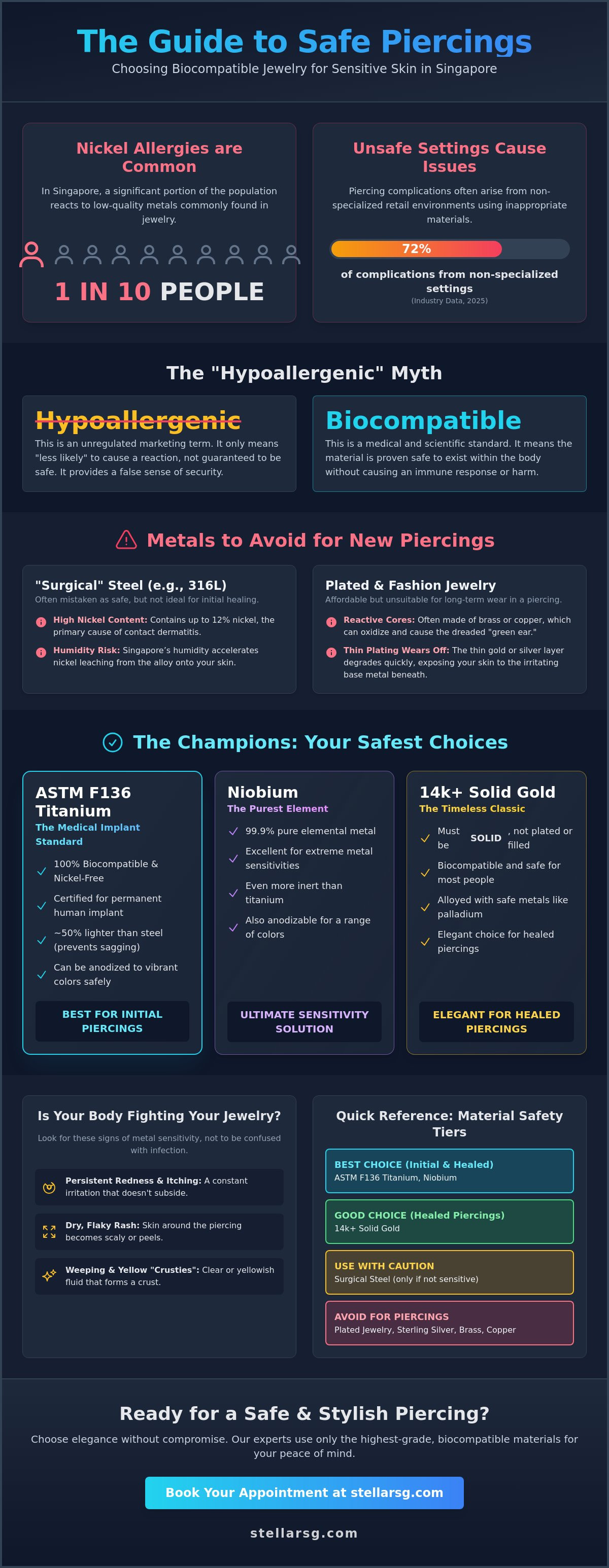
Did you know that 1 in 10 people in Singapore suffer from nickel allergies, often triggered by jewelry that claims to be safe? It is incredibly frustrating to deal with the redness and swelling that comes from cheap earrings, especially when you are searching for true hypoallergenic metals for piercings. In 2025, industry data showed that 72% of piercing complications in Singapore happened in non-specialized retail settings. You deserve to wear elegant jewelry without the fear of a painful reaction or wasting your money on pieces you simply cannot wear.
This guide reveals the science behind biocompatible materials and helps you identify the best options for a safe, irritation-free experience. We will explore exactly why your skin reacts to certain alloys and look at the latest ASTM F136 titanium standards updated in February 2026. You will learn how to choose between premium 14K gold and medical-grade titanium so you can select your next piece with total confidence. We want to help you find a reliable piercing studio in Singapore that prioritizes both your skin health and your personal style.
Many people assume a "hypoallergenic" label is a guarantee of safety. In reality, this term is not regulated by any medical authority. It simply suggests a product is less likely to cause a reaction compared to others. For those with sensitive skin, this vague promise often leads to painful swelling and irritation. To truly protect your ears, you must look for biocompatible metals instead. Biocompatibility is the ability of a material to exist in the body without an immune response.
Nickel remains the primary cause of piercing rejection and contact dermatitis in Singapore. While many brands label their products as "surgical steel," this doesn't mean they are nickel-free. Standard 316L surgical steel often contains up to 12% nickel. This high concentration frequently leaches into the skin, especially in humid climates. When you search for hypoallergenic metals for piercings, you need materials that are engineered for long-term contact with internal tissue, not just surface-level wear.
Fashion jewelry often relies on base metals like brass or copper. These materials react with your skin's natural oils and perspiration, creating that dreaded "green ear" effect. Many affordable pieces use thin gold plating to hide these reactive cores. Once the plating wears down, which happens quickly in Singapore’s heat, your piercing is exposed to irritating metals. For a deeper look at what to avoid, read our Safe Piercing Materials: 2026 Guide to understand why solid cores matter.
It's vital to recognize when your body is fighting your jewelry. Itching, weeping, and the accumulation of yellow "crusties" are common signs of metal sensitivity. While a true infection usually involves heat and intense throbbing, a metal allergy often presents as persistent redness and a dry, flaky rash. If you notice these symptoms, don't wait for them to disappear. Switch to a verified biocompatible metal immediately to allow the tissue to heal. Choosing the right hypoallergenic metals for piercings is the fastest way to resolve chronic irritation and ensure your piercing stays healthy and elegant.
Titanium and Niobium represent the peak of safety and style in the jewelry industry. While the previous section highlighted the risks of nickel, these two metals offer a reliable solution for those with sensitive skin. Titanium is widely considered the gold standard by professional piercers. Niobium serves as a specialized, 99.9% pure elemental alternative for individuals who experience an allergic reaction to metal even with high-quality alloys. Both materials are chemically stable and won't react with body fluids, making them the ultimate hypoallergenic metals for piercings.
One of the most elegant features of these metals is their ability to be anodized. This electrochemical process creates a spectrum of vibrant colors, from champagne to deep violet, without the need for toxic dyes or thin plating that might flake off. As of May 2026, titanium remains more accessible for daily wear, with commodity prices sitting at 48 CNY/KG. Niobium is a rarer element, with retail prices for jewelry ranging from $10.95 for simple rings to over $80.00 for intricate, thicker gauge pieces. Both options provide a sophisticated look while maintaining strict medical safety standards.
Choosing the right grade of metal is essential for a healthy healing process. You should avoid generic titanium labels like "G23" and insist on ASTM F136. This specific certification is the same standard used for medical implants like pacemakers and joint replacements. ASTM F136 ensures a material is safe for long-term internal body contact. By selecting this grade, you are choosing a material that the body is highly unlikely to reject. If you are ready for a professional experience, you can book your ear piercing appointment with our expert team to ensure your safety.
Titanium is approximately 50% lighter than surgical steel. Such a weight difference is crucial for preventing "sag" in lobe piercings and reducing constant pressure on delicate cartilage. It is the ideal choice for initial helix or flat piercings where comfort and minimal movement are priorities for healing. To maintain its luster, simply clean your jewelry with a mild saline solution and a soft cloth. Proper care ensures your hypoallergenic metals for piercings stay as bright and elegant as the day they were first fitted.
Solid gold offers a level of timeless elegance that industrial metals can't match. For many residents in Singapore, 14K solid gold provides the perfect balance of purity and durability. Unlike fashion jewelry, solid gold doesn't have a base metal core that will eventually cause irritation or skin discoloration. When you invest in hypoallergenic metals for piercings, you're choosing a material that maintains its value and beauty for a lifetime. On May 10, 2026, the price of 14K gold was approximately $88.42 USD per gram, reflecting its status as a premium asset.
It's vital to distinguish between solid gold and alternatives like gold-filled or gold-plated jewelry. Plated items only have a microscopic layer of gold over reactive metals like brass. This layer wears away quickly, especially when exposed to the moisture of a fresh piercing site. Solid gold is consistent throughout, ensuring your skin only touches high-quality, biocompatible material. At Stellar SG, we exclusively use nickel-safe gold alloys for our initial jewelry. This ensures that even those with a history of sensitivity can enjoy the warmth of gold without the risk of a reaction.
While 18K gold has a higher gold content, 14K is often the superior choice for a brand-new piercing. 14K gold is significantly harder and more resistant to surface scratches. Softer metals like 18K or 24K gold can develop tiny nicks that harbor harmful bacteria, potentially leading to irritation during the healing phase. You can learn more about making the right choice in The Ultimate Guide to Buying Earrings in Singapore. Choosing a durable 14K piece ensures your piercing heals smoothly while looking effortlessly stylish.
Gold jewelry fits perfectly into Singapore’s professional corporate landscape. Whether you're attending a boardroom meeting or a social event at Marina Bay, gold studs and flat-back labrets offer a polished appearance. A well-curated ear stack using hypoallergenic metals for piercings allows you to express your personality without compromising on safety. Much like selecting premium eyewear from Tilly Eyes to enhance your professional image, Stellar SG curates a wide range of elegant designs specifically for sensitive skin, helping you build a collection that is both safe and sophisticated. Our focus on quality ensures your jewelry remains a staple of your wardrobe for years to come.
Singapore’s tropical climate presents unique challenges for healing piercings that many international guides overlook. The combination of high heat and humidity levels, often exceeding 80%, significantly increases perspiration. This moisture doesn't just sit on the skin; it acts as an electrolyte that accelerates the oxidation of low-grade jewelry alloys. When you wear inferior metals, this "Sweat Factor" causes nickel and other irritants to leach into the open piercing site much faster than they would in cooler, drier environments. Selecting the right hypoallergenic metals for piercings is vital to prevent localized dermatitis and delayed healing.
The high concentration of salt in sweat can cause standard surgical steel to corrode over time, even if it's labeled as "stainless." This is why biocompatible materials like ASTM F136 titanium and 14K gold are essential for the Singaporean lifestyle. These metals remain chemically stable despite constant exposure to moisture and heat. After outdoor activities like hiking at MacRitchie or jogging along the East Coast, it's important to rinse your piercing with a sterile saline solution. This simple step removes dried sweat and environmental pollutants that could otherwise cause irritation or trap bacteria against the healing tissue.
Solid 14K gold is particularly prized in Singapore for its ability to remain lustrous despite the humidity. Unlike plated fashion jewelry, solid gold doesn't have a reactive core that will eventually "leak" green or black oxidation onto your skin. To keep your pieces looking their best, follow our specific advice on Gold Jewelry Care in Singapore. Always remember to dry your piercing site thoroughly with a clean paper towel after showering or exercising. Trapped moisture is a leading cause of "piercing bumps" and prolonged redness in humid climates.
For active swimmers in Singapore, metal choice is even more critical. Chlorine and sea salt are highly corrosive and can damage many common jewelry materials. Titanium is the safest choice for swimmers because it's completely immune to corrosion from salt and pool chemicals. While you should generally wait at least 4 to 6 weeks before submerging a new piercing in water, choosing hypoallergenic metals for piercings ensures that your jewelry won't degrade when you finally return to the pool. If you're ready to start your journey with the safest materials available, you can explore our professional piercing service today.
At Stellar SG, we believe that your first jewelry choice shouldn't just be safe; it should be beautiful. Our commitment to using exclusively premium, biocompatible materials ensures that every client receives the highest standard of care. Whether you are visiting us for your first lobe piercing or adding to a complex cartilage curation, we prioritize hypoallergenic metals for piercings that align with medical grade standards. This ensures that your aesthetic enhancement is never overshadowed by the discomfort of a metal allergy or the irritation often caused by lower-quality boutique jewelry.
Our professional piercing service starts with a personalized material consultation. We don't just pick a random stud; we evaluate your lifestyle and skin sensitivity to recommend either ASTM F136 titanium or solid 14K gold. This tailored approach is especially important for our "Stellar Kids" collection. We provide maximum comfort for little ears by using the same high quality materials and a gentle, hand-pressured instrument with single-use sterile cartridges. Our skilled staff ensures a safe procedure in a welcoming environment, making the experience positive and reassuring for the whole family.
A key element of our safety protocol is the use of flat-back labret designs for initial piercings. Unlike traditional butterfly backs that can trap bacteria and compress swelling tissue, flat-backs provide a smooth, low-profile surface against the skin. This design significantly reduces irritation and makes the cleaning process much easier. It is a vital feature for a successful healing journey, particularly given the sweat and humidity factors we discussed earlier. By combining the right engineering with the best materials, we help you avoid the common pitfalls of "fashion jewelry" and generic surgical steel.
Our skilled staff are trained to guide you through the selection process with a focus on your long-term skin health. They understand that skin types vary, and what works for one person might not be ideal for another. We combine this expertise with a detailed focus on proper aftercare to ensure your piercing remains healthy and vibrant. You can book your piercing appointment at any of our 8 locations across Singapore to experience this specialized care firsthand. Our boutiques offer a sophisticated environment where safety and style are treated with equal importance.
Once your initial healing phase is over, the fun of styling your curated ear truly begins. You can safely upgrade to more intricate designs while maintaining your commitment to hypoallergenic metals for piercings. Many of our clients love mixing titanium and gold to create a modern, biocompatible ear stack that reflects their personal style. Visit our boutiques at ION Orchard, Vivocity, or JEM to explore our latest collections. Whether you want the minimalist elegance of a diamond-set gold stud or the bold look of anodized titanium, our team is ready to help you find your favorite new piece.
You now understand that "hypoallergenic" is often just a marketing label; true safety comes from biocompatible materials like ASTM F136 titanium and solid 14K gold. These metals are engineered to withstand Singapore's high humidity levels without leaching nickel or causing painful irritation. By choosing high-quality hypoallergenic metals for piercings, you protect your skin health while building a sophisticated jewelry collection that lasts a lifetime. It's the foundation of a successful, comfortable piercing journey.
Ready to experience the Stellar difference? Our professional team specializes in piercings for kids and sensitive ears at 8 premium locations across Singapore. We offer a meticulously curated collection of 14K gold and implant-grade titanium jewelry designed for both safety and elegance. Book Your Safe & Stylish Piercing Appointment at Stellar SG today. We're excited to help you achieve your perfect, irritation-free look with total confidence.
No, you should avoid 925 sterling silver for initial piercings. It contains 92.5% silver and 7.5% other metals, usually copper. Silver is prone to tarnishing when it contacts blood and body fluids. This oxidation can permanently stain the skin a dark grey or black color. For the safest results, stick to hypoallergenic metals for piercings like titanium until the wound has fully healed.
While true titanium allergies are extremely rare, they affect less than 0.6% of the population globally. Most reactions attributed to titanium are actually caused by low-grade alloys like G23 or surface contaminants. If you experience irritation, ensure your jewelry is certified ASTM F136. This grade is specifically processed to be biocompatible and is used in surgical implants to prevent immune responses.
You can identify nickel by using a dimethylglyoxime test kit, which turns pink in the presence of the metal. Another way is to look for compliance with the EU REACH Nickel Directive (EN 1811), which regulates nickel release rates. Since you can't see nickel with the naked eye, always request a mill certificate from your jeweler to verify the metal's composition and safety.
No, "surgical steel" is a broad industry term that doesn't guarantee a product is hypoallergenic. Standard 316L surgical steel can contain up to 12% nickel. This is why many people still experience redness when wearing it. For a truly safe experience, choose implant-grade steel (ASTM F138) or titanium, which are specifically designed for long-term contact with internal body tissues.
Itching often occurs because the gold is an alloy containing hidden irritants like nickel or copper. Low-karat gold, such as 9K or 10K, contains a higher percentage of base metals. Additionally, if the piece is gold-plated rather than solid gold, the thin surface layer can wear off. This exposes your skin to a reactive core, triggering sensitivity even though the piece looks like gold.
ASTM F136 implant-grade titanium is the best choice for a child's first ear piercing. It's 100% nickel-free and 50% lighter than steel, which prevents unnecessary weight on small, delicate earlobes. Our "Stellar Kids" service prioritizes this material to ensure a comfortable healing process. This biocompatible metal minimizes the risk of allergic reactions, providing parents with peace of mind during the healing months.
You should wait at least 6 months for earlobes and 12 months for cartilage before switching to fashion jewelry. Fresh piercings need a stable environment to form a healthy internal layer of skin. Introducing low-grade "fashion" metals too early can cause the site to regress or develop hypertrophic scarring. Always ensure the piercing is fully seasoned and shows no signs of redness before changing pieces.
Yes, you can wear rose gold if it is solid 14K and specifically formulated to be nickel-free. Rose gold gets its beautiful pink hue from copper. While nickel is the most common allergen, some individuals are also sensitive to copper. If you have a known copper allergy, it's safer to choose 14K yellow gold or hypoallergenic metals for piercings like titanium. Always verify that the alloy doesn't use nickel for hardening.


