 欧元、澳元、英镑、日元、印度卢比


全部的: $0.00
结账时计算税费和运费
 SGD


Scar tissue doesn’t automatically rule out a new piercing. Your re-piercing scar tissue experience depends on how the original piercing healed, the scar’s thickness and your anatomy. An in-person assessment can help determine whether the old spot or a nearby placement is suitable. If the piercing has closed, wait until it is fully healed, generally at least three months, before considering re-piercing.
It’s understandable to wonder whether a scar will make re-piercing more painful or harder to heal. Scar tissue can be thicker and less flexible than the surrounding skin, which may affect placement, sensitivity and healing.
This guide explains what to share about your previous piercing, what may influence discomfort and healing, and why a new opening might sit beside rather than directly through a scar. You’ll also learn what signs to watch for as the area heals, so you can make a more informed decision.
Before re-piercing, explain what happened to the original piercing and how the area healed. That history helps assess the scar, possible placement and healing ahead.
Share the piercing’s history and any changes in the skin. Explain when it closed, whether you removed the jewellery because of infection, and whether you had swelling, redness, irritation bumps or slow healing. Mention any snagging or stretching, too. These details help show how the tissue was affected, rather than treating the scar as an isolated mark.
Discuss tenderness, ongoing symptoms and whether the original hole has fully closed. An old piercing that remains partly open is different from one that has healed over. Mention any previous earlobe repair or other surgery, too. Clear details help a professional understand how long the area has been closed and whether it appears fully healed before assessing re-piercing.
Healing time is the period the new piercing needs to settle, while downsizing means changing to shorter jewellery as swelling reduces. Re-pierced ears usually take 6-12 weeks to heal completely. After earlobe repair, re-piercing generally waits about 6 to 12 weeks, depending on healing and the surgeon’s recommendations. In most cases, a closed piercing should be fully healed for at least three months before it is pierced again.
These timelines describe different situations, so tell the nurse whether the hole closed naturally or after repair. Jewellery may need downsizing after 6-12 weeks; timing depends on how swelling has changed. A piercing can take up to 24 months to heal completely, so the surface looking settled doesn’t always mean deeper tissue has finished healing. Follow care guidance throughout that longer process.
A professional piercer assesses the scar, piercing history and anatomy before deciding whether re-piercing is suitable. They consider how long the hole has been closed, whether the skin has healed, and whether the scar is thick, fibrous or less elastic. Scar tissue may affect placement and healing. Swelling, redness, irritation bumps and slight asymmetry can occur as a piercing through scar tissue heals.
Describe any previous problems and point out where the scar feels sensitive or firm. An in-person assessment helps determine whether the old location is appropriate or whether a nearby position makes more sense. Rowan suggests waiting at least two weeks before re-piercing in the same ear location, but that advice doesn’t replace an assessment of a closed, fully healed piercing.
Seek medical advice in Singapore if a new piercing develops excessive redness, swelling, pain or discharge. These symptoms can signal a problem that needs prompt attention, rather than routine healing discomfort. A piercing nurse can assess piercing suitability, but worsening symptoms call for a healthcare professional’s review.
A suspected keloid also needs medical assessment, especially if a raised scar keeps growing beyond the original piercing wound. Tell the doctor when it appeared and how it has changed. Mention any family history of keloids before considering another piercing, since it can affect the risk discussion. Don’t pierce through an area with active symptoms or a changing scar before it has been medically assessed.
A scar doesn’t automatically prevent re-piercing, but its thickness, flexibility and position matter. A professional assesses your anatomy and how the original piercing healed, then considers whether the new opening should pass through the scar or sit nearby. If scar tissue interferes with the old ear piercing, the new opening should be as close as possible without going through the scar.
Scar tissue can be thicker and less elastic than unscarred skin, and may change the shape or flexibility of cartilage. That can affect how jewellery sits and how the area heals. A fresh, unscarred area generally heals better and is less likely to stretch or pull through an earlobe. Still, the best placement depends on the individual tissue, not just the scar’s visible outline.
For a closed piercing, a professional considers how long it has been closed and whether it is fully healed. They also assess whether the scar is thick, firm or unstable, and whether the surrounding tissue has thinned or changed shape. These factors help determine whether a piercing can return to the same location, sit slightly beside it, or should be avoided there.
Choose a professional piercer experienced in working on surgically altered tissue. A portfolio of this work can help you understand their relevant experience. While individuals interested in facial aesthetics often seek solutions like a non-surgical blepharoplasty alternative to avoid incisions and scar formation, managing skin that has already undergone surgery requires specialized care. During an in-person assessment, discuss the original piercing, any surgery or repair, and the result you hope to achieve. The piercer can explain how each possible placement relates to the scar and your anatomy.
For a nearby placement, the aim is to avoid the thickest or least stable part of the scar while keeping the new piercing close to the previous position when appropriate. A slightly different location may take longer to heal than re-piercing in the original spot. If scar tissue is dense or the area has major anatomical changes, another location may be more suitable than forcing jewellery through it.
Jewellery material also matters for comfort during healing. Hypoallergenic options include 14-karat gold. Ask how the chosen piece fits the planned placement, since a suitable position and appropriate jewellery work together. The decision isn’t based on the scar alone: anatomy, healing history, tissue condition and the intended location all shape the recommendation.
Pain during re-piercing through scar tissue varies from person to person. Some people find an old ear or nose scar easier to pierce than expected, while others feel more discomfort. Location and tissue matter. An earlobe generally hurts less to re-pierce than thicker cartilage, such as the helix. The re-piercing scar tissue experience can differ from one site to another.
A closed piercing doesn’t tell you exactly how a new one will feel. The original opening may have healed with a thin, flexible scar, or the tissue may feel thicker and firmer. Those differences can change the sensation during piercing. Your previous experience with pain is useful context, but it can’t precisely predict how another piercing will feel.
Location is one of the clearest distinctions. Earlobes are soft tissue, while the helix contains thicker cartilage. Re-piercing an earlobe may feel less painful than piercing through cartilage, even when both areas have scars. A scar near cartilage can also alter the area’s shape or flexibility, so placement and tissue condition matter alongside personal sensitivity.
People describe re-piercing through an old scar differently. One person may find the process easier than their first piercing; another may feel more discomfort where the scar is thick. Neither experience sets a rule for everyone. Your re-piercing scar tissue experience also depends on the exact spot and how your tissue responds.
Before your appointment, explain if the original jewellery was removed because of pain, irritation or another problem. Say whether the area was tender after the hole closed, and point out any sensitivity that remains. These details help put your concerns alongside the scar’s appearance, piercing history and proposed placement.
During the assessment, discuss whether the intended opening would pass through the scar or sit slightly beside it. A nearby location may involve different tissue, so the sensation may differ from piercing through the old scar. Ask the nurse to explain the planned placement before proceeding. That conversation helps you understand what area is being pierced and share concerns about a specific spot.
After re-piercing, tenderness can occur as the new opening begins to heal, and scar tissue may also swell, redden or become irritated. Notice whether discomfort changes rather than judging the piercing by one moment. Excessive redness, swelling, pain or discharge are reasons to seek prompt medical advice. This helps distinguish routine healing sensations from symptoms that need attention.
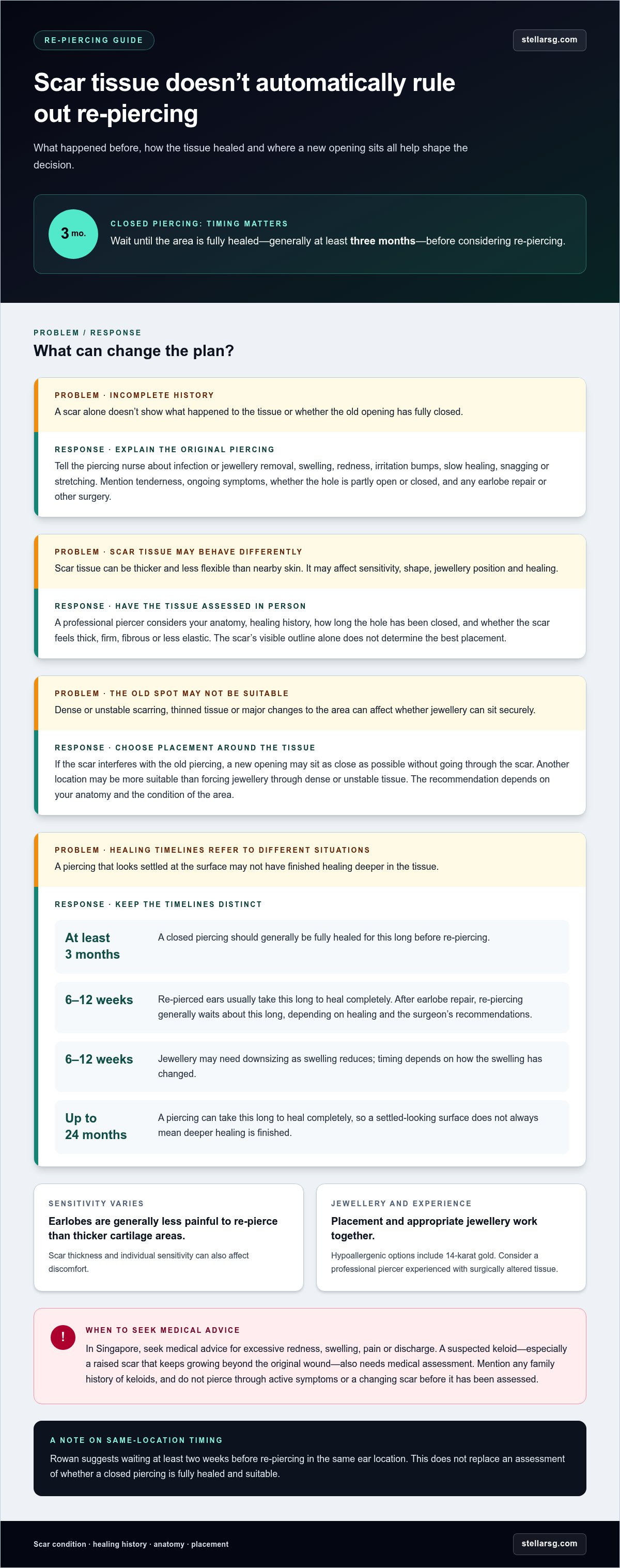
Yes, a piercing can sometimes be re-established through scar tissue, but suitability depends on the scar, your anatomy and how the first piercing healed. If the piercing has closed, wait until it is fully healed, generally at least three months, and have the area assessed in person before deciding.
Scar tissue can be thicker, more fibrous and less elastic than untouched skin. Those qualities affect how a new opening settles and holds jewellery. The result also depends on the original piercing’s history: a hole that closed cleanly differs from tissue altered by repeated irritation, trauma or surgery. A professional assessment considers these details together, rather than judging only by the scar’s appearance.
Piercing through scar tissue can involve swelling, redness, irritation bumps or slight asymmetry during healing. These changes can affect comfort and how jewellery sits. Careful placement matters, especially in cartilage, where a scar may have changed the area’s shape or flexibility. The piercer assesses the tissue and anatomy before choosing an approach, and may recommend avoiding the scar if its condition makes the placement unsuitable.
Technique also matters. A piercing needle is described as the safest and most precise method for re-piercing. For a new ear piercing, simple studs or hoops can limit movement and irritation compared with elaborate or dangling earrings. Cartilage has different tissue characteristics from the earlobe, so the intended location and the scar’s condition remain important parts of the assessment.
Surface piercings need separate consideration. They’re considered long-term temporary piercings, which matters when weighing a site affected by scarring. Scar tissue, placement and how the area has healed all influence whether jewellery can sit as intended. A surface piercing isn’t interchangeable with an ear piercing through the lobe or cartilage.
Healing also depends on what happened before. Consider whether the reason for removing the original piercing still applies, such as snagging or irritation. Share that history during the in-person assessment. If the scar is dense or unstable, or the area has significant thinning or anatomical changes, another placement may be more appropriate than piercing through it.
After re-piercing, follow the care guidance you receive and avoid unnecessary movement of the jewellery. Watch for excessive redness, swelling, pain or discharge, which call for prompt medical advice. The goal isn’t simply to reopen the old channel, but to choose a considered placement that suits the healed tissue.
A new piercing can sometimes sit near a scar instead of passing through it. The right position depends on the scar’s thickness and stability, the surrounding tissue, and how the original piercing healed. An in-person assessment helps determine whether the nearby skin can support the new opening and jewellery.
For an old ear piercing affected by scar tissue, the recommended placement is as close as possible to the previous location without going through the scar. This can preserve the original look while avoiding the thickest tissue. The exact position also depends on the shape of the earlobe or cartilage and whether the surrounding skin has stretched or thinned.
A piercer assesses the scar and your anatomy before choosing a spot. They consider whether the tissue feels dense or unstable, whether the original site has changed shape, and whether another piercing could cause repeated trauma or rejection. For example, thin tissue beside a firm scar may not support jewellery as well as healthy surrounding tissue. Placement should account for both appearance and how the jewellery will sit.
Healing can differ when the new opening sits slightly away from the original channel. Re-piercings usually heal a little faster, unless the new piercing is in a different nearby location, which may take longer. Scar tissue can also contribute to swelling, redness, irritation bumps or slight asymmetry during healing. Both the new position and the tissue it passes through influence what to expect.
Some scars need more time before another piercing is considered. For extreme scarring, the recommendation is to wait at least 1 year after surgery or the cause of the scar before re-piercing. After earlobe repair, the usual wait is about 6 to 12 weeks, depending on healing and the surgeon’s recommendations. These timelines concern different situations, so the reason for the scar matters.
A history of keloids changes the discussion. Someone who has developed keloids before may be advised against re-piercing through scar tissue. Scar injections, laser treatment and silicone patches may improve a scar’s appearance, but they don’t guarantee it can be pierced. For those exploring non-surgical options to address scar texture or skin rejuvenation, specialized practices like Monday Aesthetics & Consulting, PLLC offer clinical aesthetic consultations. The scar’s condition and the person’s history still matter when choosing a location.
The best alternative isn’t simply any point beside the scar. It’s a position with suitable tissue, enough support and a sensible relationship to the original piercing. Ask to have the proposed opening marked and explained before proceeding. If the scar is unstable, the area has changed significantly, or repeat trauma seems likely, avoiding that location may be the safer choice.
Stellar SG’s Ear Piercing Service can be a natural next step if you’re considering an ear piercing after a previous one. Bring your piercing history and questions about the scar, healing and possible placement to an in-person conversation before deciding what suits you. If the area has a changing scar, suspected keloid or signs of infection, seek medical advice before arranging a new piercing. Stellar SG also offers jewellery alongside its ear piercing service, so you can explore a new piercing and an earring choice together.
Visit stellarsg.com to explore Stellar SG’s Ear Piercing Service and jewelry.
Decide what you want from a new piercing, not just whether the old opening can be used. Consider how a nearby placement might complement your ear, how much sensitivity you’re comfortable managing, and whether you’re ready to care for a fresh piercing as it heals. These priorities give your next conversation a clear, personal starting point.
Your re-piercing scar tissue experience can be shaped by more than the scar itself. Your preferred position, comfort and healing needs all matter. Stellar SG offers ear piercing and jewellery, giving you a place to explore a new piercing and an earring choice together. Bring details of your earlier piercing so the conversation reflects your experience.
Contact Stellar SG about re-piercing to talk through your next step. With thoughtful planning, you can move forward at a pace that feels right and choose a look that feels like you.
Re-piercing means making a new opening after an earlier piercing has closed, or creating one near the original site. It’s different from putting jewellery back into a channel that remains open. For example, an earlobe hole that has healed over may need a fresh piercing, while a partly open channel needs individual assessment. The scar’s position helps guide where the new opening may sit.
For re-piercing at Stellar SG, plan on purchasing a new stud rather than bringing your old earrings. Personal ear studs can’t be used for the service. The selected stud becomes the jewellery for the fresh piercing, so consider its material and design before proceeding. An old pair may still suit an existing, healed piercing, but it can’t replace the stud used during re-piercing.
Follow the aftercare instructions for the specific location and keep the initial stud in place. Stellar SG advises waiting 2 months before changing an earlobe stud and 3 months for a helix stud. Its guidance also says to keep studs in 24/7 during the first year. Don’t change jewellery early just because the skin looks settled; follow the aftercare directions throughout healing.
Not necessarily. Discomfort and healing depend on the placement, scar tissue and your individual response. A re-pierced earlobe may feel different from a helix piercing because the helix involves thicker cartilage. A nearby position can also heal differently from the old channel. Your first piercing offers useful context, but it can’t predict exactly how the next one will feel or heal.
A previous problem doesn’t automatically rule out re-piercing, but the cause and current condition matter. Explain whether you removed the earring because of infection, irritation, snagging or another concern. Ongoing discharge, excessive redness, swelling or pain calls for prompt medical advice. Once the area has healed, a professional can assess its condition, history and anatomy before considering another opening.
Scar tissue forms as the body heals after an injury or surgery. Around a piercing, it may feel thicker, firmer or less flexible than nearby skin. A small earlobe mark, for example, can differ from scarring that changes cartilage shape. Its appearance alone doesn’t show how well it will hold jewellery, so its texture, position and effect on the surrounding tissue matter.
Pain varies, even for the same person across different ear locations. Some people find an old scar easier to pierce than expected; others notice more discomfort in thicker tissue or cartilage. Your re-piercing scar tissue experience may depend on the exact spot and your sensitivity there. Mention tenderness before your appointment so the professional understands your concerns about the planned placement.
The re-piercing scar tissue experience varies, so it may feel easier, similar or more uncomfortable than your first piercing. Some people notice little difference in an old earlobe scar, while thicker tissue or cartilage can feel more sensitive. The scar’s texture and the new location both matter. Your first piercing is useful context, but it can’t predict precisely how the next one will feel.


