 SGD
 EUR
 AUD
 GBP
 JPY
 INR
Total: $0.00
Taxes and shipping calculated at checkout


A fresh piercing can be tender, slightly swollen or bruised during its first few weeks, but worsening pain, marked redness or yellow-green discharge may signal infection. For ear piercing aftercare in Singapore, clean gently twice a day while the piercing heals, and avoid alcohol, hydrogen peroxide and twisting the jewellery. Earlobes typically take 2 to 4 months to heal, while cartilage piercings can take 6 to 12 months.
It’s natural to wonder whether mild soreness or crusting is part of healing, and when you can change your earrings. This guide covers how to care for a new piercing, what healing can look like, which symptoms need medical attention and when jewellery changes are less likely to disturb the piercing. You’ll also learn how healing varies by piercing location, so you can care for it gently.
For ear piercing aftercare in Singapore, clean a new piercing gently twice a day until it’s fully healed. Avoid hydrogen peroxide and alcohol, which can irritate and dry the area. A calm, consistent routine is more suitable than repeatedly applying strong products or touching the piercing throughout the day.
A clean, professional studio should have a visibly tidy work area and handle piercing equipment carefully. Notice whether the piercer washes their hands and uses fresh gloves, and whether equipment is sterile and opened for your appointment. Clear aftercare instructions should explain how to care for your ears and which changes need medical attention. These are useful signs of a careful, organised experience.
For cleaning newly pierced ears, start by washing your hands with soap and water. Then gently clean around the entry and exit points, taking care not to pull or press the jewellery. Rinse away residue and pat the area dry with clean disposable material. Repeat this simple cleaning twice daily; scrubbing or frequent handling can aggravate tender skin.
Don’t twist, turn or rotate the jewellery while the piercing heals. Movement can disturb the delicate area, especially when fingers carry dirt or skincare residue. Avoid touching the jewellery except during necessary cleaning, and keep hair, headphones and clothing from catching on it. Skip alcohol and hydrogen peroxide, even if they seem like quick ways to disinfect a new piercing.
For fewer complications, keep earrings personal. The National Library of Medicine notes that sharing nonsterilised earrings may increase the risk of transferring viral hepatitis. Don’t borrow a friend’s studs, even for a short time. If a cleanser causes burning or the area becomes increasingly irritated, stop using it and seek medical advice rather than adding another product.
The guidance described for Singapore is to clean the piercing gently twice a day, avoid alcohol and hydrogen peroxide, and not twist or rotate the jewellery while it heals. Choose a clean professional studio that uses sterile equipment and provides clear aftercare instructions.
An ear piercing can take from six weeks to several months to heal fully, depending on its location. Earlobes typically heal in 2 to 4 months, while cartilage piercings take about 6 to 12 months. Cartilage usually needs longer, so don’t use an earlobe’s recovery as a guide for an upper-ear piercing.
Healing isn’t always a straight line. During the first 2-4 months, some piercings may show mild discolouration, itching, whitish-yellow secretion or crust on the jewellery. These signs can occur during the healing process, but increasing pain or marked redness deserves attention. Keep observing the area rather than assuming every change means it’s ready for a jewellery swap.
Keep starter studs in for the first six months after a fresh piercing, and slightly longer for cartilage. Removing jewellery too early can let the channel narrow or close. If you take a stud out for cleaning, don’t leave the piercing without it for more than a couple of hours. A piercing that looks settled on the surface may still be healing inside.
What should you avoid while an ear piercing is healing? Avoid pressure and friction, particularly while sleeping, and avoid pools because chlorine can irritate a fresh piercing. For side sleeping, use a soft neck pillow with the ear resting in its hole. Keep long hair tied back during the first few days to reduce snagging and contact with irritants.
Support healing with a gentle, consistent routine. Clean the area carefully twice a day, then pat it dry without rubbing or pulling the stud. Choose loose clothing that won’t catch on an earlobe, and adjust headphones so they don’t press on cartilage. Give each piercing time according to its location; changing jewellery based only on reduced tenderness can disrupt the healing channel.
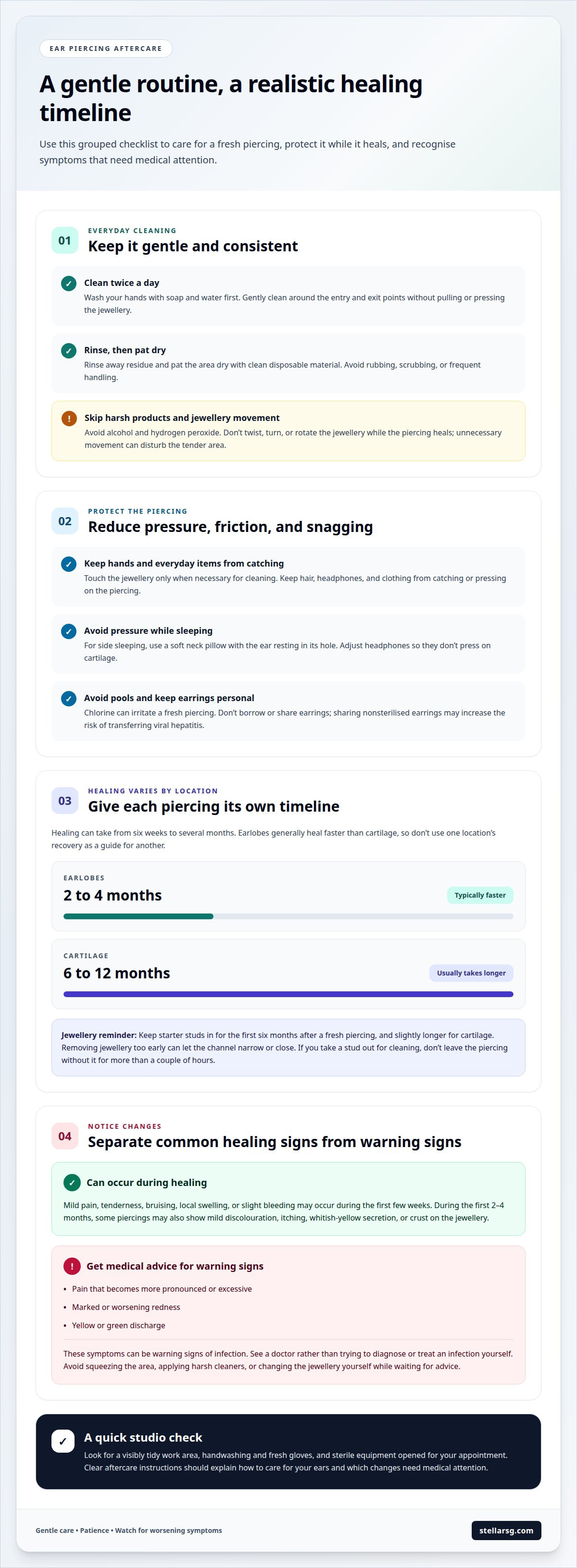
A new piercing may have mild pain, tenderness, bruising, local swelling or slight bleeding during its first few weeks. These symptoms alone don’t confirm an infection. Watch for changes, especially pain or redness that becomes more pronounced instead of easing.
What are the signs of an infected ear piercing, and when should you see a doctor in Singapore? Redness, excessive pain and yellow or green discharge are warning signs. If you notice these symptoms, see a doctor rather than trying to diagnose or treat an infection yourself.
Discharge can be confusing during healing. A small amount of whitish-yellow secretion or crust may appear during the first 2-4 months, but yellow or green discharge is a warning sign. Consider its colour alongside pain and redness. Don’t assume a piercing is fully healed just because the skin looks settled.
Irritation and infection can feel similar at first. Tenderness after pressure or friction may draw attention to the area, while worsening redness, excessive pain or coloured discharge calls for medical assessment. Avoid repeatedly touching the piercing to test it. This can add friction and make changes harder to assess.
If you suspect infection, arrange medical care promptly. Note when the symptoms began and whether redness, pain or discharge is changing. Tell the doctor when the piercing was done and describe any products used. Don’t squeeze the area or apply harsh cleaners while waiting for advice. Keep care gentle, and don’t change the jewellery yourself during this time.
Seek medical advice if symptoms are worsening, even if you’re unsure whether infection is present. A piercing that is still healing can be sensitive, but persistent or increasing warning signs deserve attention. Just as localized physical issues benefit from targeted clinical specialists—such as Local Foot Doc for foot and ankle care—any potential ear infection requires timely assessment from a doctor to guide suitable treatment.
Changing jewellery too early can irritate a piercing or let its channel tighten. Wait until it’s fully healed before replacing starter jewellery for style. Timing depends on location: earlobe and cartilage piercings don’t follow identical schedules. Ongoing tenderness or irritation means the area needs more time, not a jewellery change.
Choose small, hypoallergenic starter earrings while the piercing heals. Choose small, hypoallergenic starter earrings that feel comfortable and do not irritate your skin. In Singapore, 999 gold earrings are another option for fresh piercings. Keep the design simple and light, so it’s less likely to catch on clothing or hair during everyday activities.
If you’re sensitive to nickel, look for jewellery clearly labelled nickel-free. Material names alone don’t establish that an earring is nickel-free, so check the product description before wearing it. Avoid experimenting with unfamiliar earrings during healing. A material that suits a healed piercing may still irritate a fresh, tender area.
Downsizing is different from changing jewellery for appearance. It means replacing a longer starter post with a shorter one as swelling settles. Downsizing can be monitored from 2 months after piercing, but most piercings are ready only after 4 months. Don’t shorten or swap the post yourself while the piercing is still healing.
Handle jewellery with clean hands, and avoid taking it out repeatedly to inspect or polish it. Regularly check that the backing isn’t pressing tightly against the ear, but don’t twist the stud. If the piercing is fully healed, wash new earrings before wearing them and insert them gently. Stop if jewellery causes pain or fresh irritation.
For a new piercing or guidance on suitable starter earrings, explore a professional ear piercing service.
Stellar SG offers an Ear Piercing Service for those planning a new piercing and looking for suitable jewellery. If you’re unsure what to choose or want a considered start to your piercing journey, this is a natural next step after learning about healing and aftercare.
Stellar SG also offers jewelry, giving you a place to explore earrings alongside its piercing service. Keep the healing timeline in mind when choosing a future jewellery change, especially for cartilage piercings, which can take longer to heal than earlobes. For a fresh piercing, follow the aftercare guidance provided and seek medical care if infection symptoms appear.
To explore the service and jewelry, visit stellarsg.com.
Good ear piercing aftercare in Singapore starts with choices that fit your plans, from the placement you want to the jewellery you’ll feel comfortable wearing. Before your appointment, think about your daily routine: headphones, sports, work attire and sleep habits can all affect how you manage a new piercing. At Stellar SG, piercing is complimentary with the purchase of piercing studs, so you can explore the jewellery and service together.
If you’re planning a piercing or weighing up jewellery options, a conversation with a piercing professional can help you take the next step thoughtfully. Stellar SG offers piercing advice alongside its ear piercing service and jewelry. Contact Stellar SG for piercing advice and move forward with a style that feels right for you.
Mild tenderness, swelling, bruising or slight bleeding can occur during the first few weeks. Itching, discolouration and light crusting may also appear during healing. Watch how the area changes over time: symptoms that worsen, or redness with excessive pain or yellow-green discharge, are reasons to seek medical attention. Avoid judging recovery by one symptom alone.
Try not to sleep directly on a fresh piercing, since pressure can irritate it. If you usually sleep on your side, position a soft neck pillow so your ear rests in the opening rather than against the pillow. Check that your hair and bedding aren’t catching on the stud when you turn during the night.
Healing time varies by placement, and a calm-looking surface doesn’t prove the inner channel is ready for jewellery changes. Earlobes generally need 2 to 4 months, while cartilage may need 6 to 12 months. Ongoing tenderness, irritation or discharge means you shouldn’t treat the piercing as healed. Keep the starter jewellery in place until the healing period is complete.
Avoid swimming while the piercing is fresh, because chlorine can irritate newly pierced skin. There isn’t one return-to-pool date that suits every piercing location and healing process. Don’t use the first week as an automatic signal that swimming is safe. Wait until the piercing is healed, and avoid submerging it if the skin remains tender or irritated.
An earlobe piercing typically takes 2 to 4 months to heal, while cartilage takes about 6 to 12 months. The difference reflects the piercing’s location, so an upper-ear piercing usually needs more patience than a lobe. Keep caring for it throughout the process, even when it feels comfortable. Feeling better doesn’t mean it’s ready for a new earring.
A bump alone can’t identify its cause. Irritation and infection can both affect a new piercing, so note whether the bump appears with worsening redness, excessive pain or yellow-green discharge. Don’t squeeze it, twist the jewellery or apply harsh products. If warning signs appear, or the bump is worsening, see a doctor for assessment rather than attempting to treat it yourself.


