 SGD
 EUR
 AUD
 GBP
 JPY
 INR
Total: $0.00
Taxes and shipping calculated at checkout


A piercing can look settled before its deeper tissue has finished healing. Knowing what a normal healing piercing looks like means watching for mild redness, tenderness, or crusting to gradually ease, rather than judging by appearance alone. Earlobe piercings generally take 6-8 weeks to heal, while cartilage piercings such as helix, tragus, and conch placements generally take 6-12 months.
It’s understandable to wonder whether lingering sensitivity or a little crust means something is wrong. Early healing can involve these signs, but worsening pain, swelling, or unusual discharge needs attention. The key is to notice how your piercing changes over time.
This guide explains common healing signs, how to tell when an ear piercing may be healed, and why cartilage often takes longer to heal than the earlobe. You’ll also find typical healing times by location and straightforward care guidance for recovery.
A healed ear piercing has no pain when touched, redness, swelling, or discharge. The jewellery should move freely without resistance. A little dry, flaky skin can remain, but it differs from persistent soreness or a worsening bump. During the first day or two, slight bleeding or blood-tinged fluid can occur. Some redness, warmth, tenderness, and swelling can occur during healing. Mild crusting or itching can accompany healing.
Jewellery material may matter when irritation persists. Solid 14K or 18K gold is identified as a material that produces no contact reaction. If redness or itching continues around the jewellery, consider whether the metal is irritating the skin. Don’t assume that a piercing is healed just because its surface looks calm. Look at the overall pattern: discomfort should ease, not build, and the area should not develop new swelling or discharge.
A small bump can follow friction or repeated pressure, such as sleeping on an ear piercing. Avoid squeezing it or repeatedly handling the jewellery, which can add irritation. Mild redness during the initial 72 hours can be normal; deep or vibrant redness after a month may point to ongoing irritation. If a bump does not improve after 3-4 weeks of proper aftercare, have it assessed by a piercer. Severe pain that worsens after 48 hours is not a typical healing pattern.
In Singapore, seek prompt assessment from a healthcare provider if you suspect an infection, especially if you notice spreading redness, increasing pain, warmth, thick discharge, or fever. Worsening swelling after the first few days, foul-smelling discharge, or a red line spreading from the piercing also needs attention. Don’t remove the jewellery yourself if you suspect an infection, as this may trap it inside. These warning signs differ from mild tenderness that gradually eases or clear fluid that dries into a crust.
Cartilage often takes longer to heal than the earlobe, and how the surface looks can be misleading. Healing time varies by placement, so consider tenderness and discharge alongside how long you’ve had the piercing.
Cartilage healing is the gradual recovery of tissue around a piercing through the firmer part of the ear. Cartilage has less blood flow than earlobes, which can delay internal healing. Helix, tragus, and conch piercings generally take 6-12 months to heal fully. The timeline matters because a calm-looking surface doesn’t necessarily mean the deeper channel has finished maturing.
A cartilage piercing may look healed on the outside by the third month while the inner channel is still healing. The maturation stage begins around the second month and may continue beyond the sixth. Reaching six months doesn’t prove that healing is complete. Ongoing tenderness, fresh irritation, or discharge can mean the area needs more time or assessment.
Cartilage and nostril piercings have different typical healing timelines. Helix, tragus, and conch cartilage piercings generally take 6-12 months, while nostril piercings generally take 4-6 months. These ranges show why one piercing’s progress can’t reliably predict another’s. The location and tissue involved matter more than whether both piercings appear settled.
For example, a nostril piercing that feels comfortable at four months doesn’t mean a helix is ready for a jewellery change at the same point. A cartilage piercing can also look clear while its inner channel remains sensitive. Treat each placement as a separate healing process, and don’t use the shorter nostril timeline as a guide for cartilage.
A professional piercer can assess the piercing’s appearance and jewellery fit if its progress is unclear. Describe specific changes, such as tenderness that returns after pressure or discharge that reappears after settling. A calm-looking surface alone doesn’t confirm that the inner channel has matured. If a cartilage piercing is still changing around the sixth month, professional assessment can help distinguish ongoing healing from irritation that needs attention.
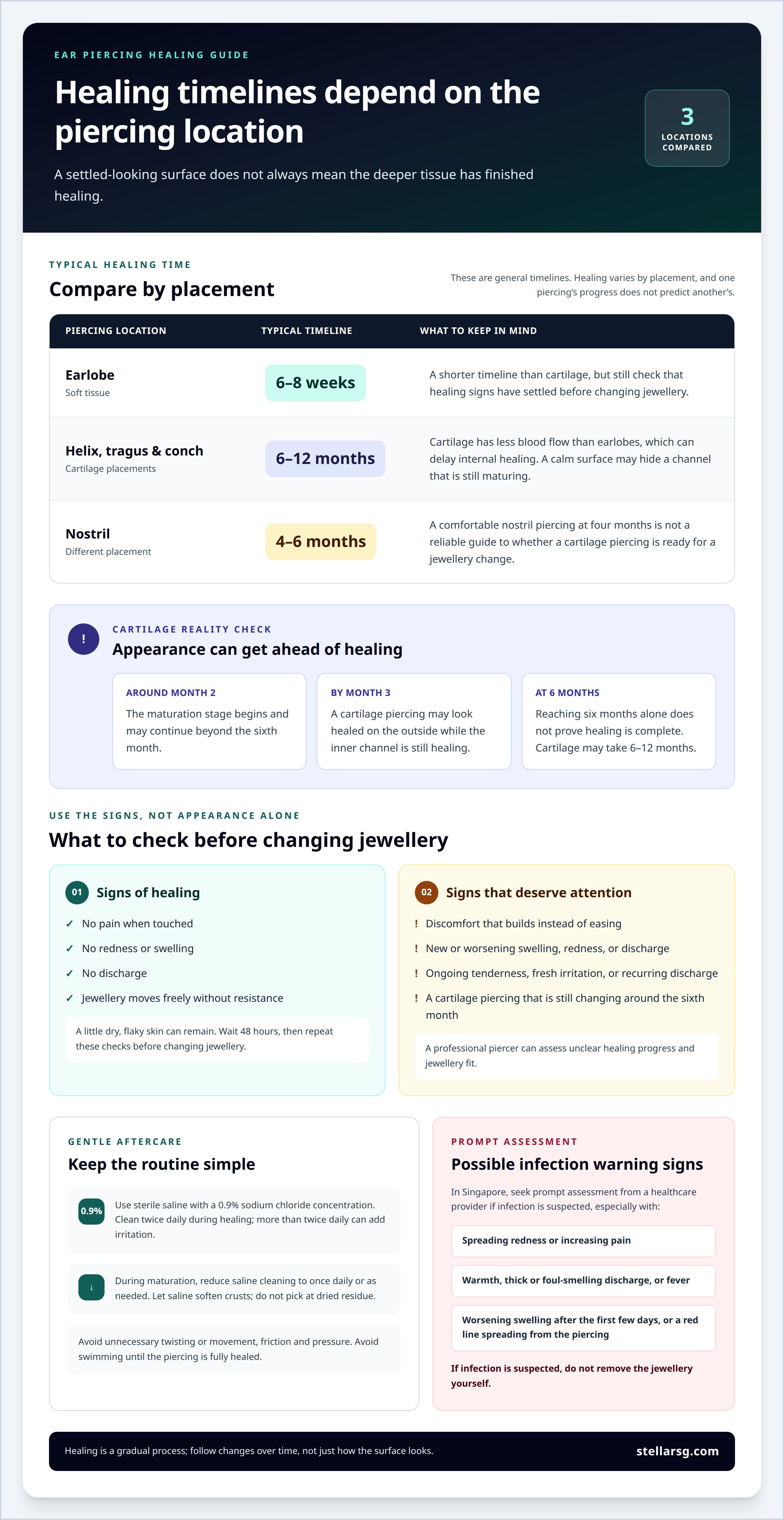
For a healing piercing, use sterile saline with a 0.9% sodium chloride concentration. The recommended routine is twice-daily cleaning during healing, not repeated washing throughout the day. Cleaning more than twice daily can add irritation instead of helping. A sterile saline mist can flush debris and soften crusts without touching the piercing wound. Let the solution do the work rather than picking at dried residue around the jewellery.
During the maturation stage, reduce saline cleaning to once daily or as needed. This adjustment reflects the piercing’s changing needs, not a fixed calendar date. If a setback follows friction or pressure, return to strict aftercare and avoid physical trauma. A setback should usually settle within 1-2 weeks after consistent care resumes. If redness, tenderness, or discharge worsens instead, treat that change differently from a minor flare-up.
Jewellery handling matters because twisting or moving it unnecessarily can disturb the placement. Don’t change ear-piercing jewellery simply because the outside looks settled. Wait 48 hours, then repeat the healing checks before changing it. Look for no pain when touched, no redness or swelling, no discharge, and jewellery that moves freely without resistance. If any of these signs are absent, the piercing may need more time.
Water exposure also affects aftercare choices. Avoid swimming until the piercing is fully healed, including in pools and other swimming settings. Healing time depends on placement, so an earlobe and a cartilage piercing may not reach that point together. For example, a cartilage piercing can look calm while its internal tissue continues to mature. Keep care gentle and consistent rather than increasing saline use to speed the timeline. A simple routine is more useful than repeated cleaning or frequent jewellery checks.
Healing timelines vary by placement. Don’t judge an earlobe and a cartilage piercing by the same calendar. Use typical healing ranges to understand how long each location may take to heal fully, not as a reason to change jewellery early. The main takeaway is that cartilage piercings often take months longer to heal than earlobe piercings.
Some rook, daith, and industrial piercings can take 12-18 months to heal. That longer range shows why a single estimate cannot cover every cartilage placement. For example, a septum piercing’s typical 2-3-month timeline is much shorter than the 6-12 months often needed for helix, tragus, or conch cartilage.
Appearance alone doesn’t settle the question. Swelling, warmth, tenderness, or discharge that returns can mean the piercing still needs care, even if its surface looks calm. A helix may appear healed after 4-6 weeks, while its internal channel continues to mature. Keep the location-specific timeline in mind before changing jewellery, and seek assessment for worsening symptoms rather than relying on the calendar.
If you’re considering an ear placement, explore the ear piercing service and choose with its healing timeline in mind.
Stellar SG provides ear-piercing services for those considering a new ear piercing. The healing timelines in this guide can help you decide whether an earlobe or cartilage piercing suits your plans. Placement matters: earlobes generally heal faster than cartilage, which can take months.
Stellar SG also offers jewellery, with options to consider alongside your piercing choice. If you’re planning an ear piercing, explore the service and choose a placement with its typical healing time in mind. Allowing enough time before changing jewellery can help you make an informed decision.
For an appointment, contact Stellar SG.
If you’re still asking what a normal healing piercing looks like, let your healing pattern guide your next decision. Notice what changes and what stays the same, then consider those observations when choosing a new ear piercing. A thoughtful choice takes into account both the look you want and the care it requires.
Stellar SG offers an Ear Piercing Service and Jewelry, bringing placement and adornment together as you plan your next look. For a personal next step, ask Stellar SG about piercing care. Choose at your own pace, and enjoy making a considered choice that feels right for you.
A gradual improvement usually fits normal healing better than symptoms that intensify or spread. For example, tenderness after accidentally bumping an earlobe should ease, not become increasingly painful. A small bump that persists without improvement after 3-4 weeks of proper aftercare deserves assessment. Seek medical attention for fever, expanding redness, worsening pain, or thick discharge. If infection seems possible, don’t remove the jewellery yourself.
A healing piercing has an opening where jewellery passes through the skin, with a small area of tissue around it. Clear or pale-yellow fluid may dry into a light crust beside the jewellery; that appearance alone doesn’t mean pus. A little flaky skin can also remain after healing. Look for changes around the entry and exit points, not just the visible front of an earring.
If you’re wondering what a normal healing piercing looks like, focus on the overall trend rather than a single moment. Mild redness, slight crusting, or tenderness after contact can occur during healing. Over time, these signs should ease, not intensify. For example, a piercing that looks less irritated week by week is more reassuring than one developing spreading redness, increasing swelling, or new discharge.
Early symptoms can include mild redness, warmth, swelling, tenderness, itching, and crusting. A small amount of blood or blood-tinged discharge may appear during the first day or two. Redness and tenderness can occur during the first 1-2 weeks. The timeline depends on placement: earlobes generally take 6-8 weeks, while cartilage commonly takes several months to heal fully.
Normal healing tends to settle gradually. Infection is more concerning when symptoms worsen or spread. Compare the area over time rather than judging it at one moment: increasing pain, swelling after the first few days, warmth, or thick green or yellow discharge needs attention. Clear fluid that dries into a pale crust looks different from thick discharge. Fever or a spreading red line also warrants prompt medical assessment.
Seek prompt medical attention for fever, rapidly spreading redness, increasing pain, spreading warmth, thick discharge, or a red line extending from the piercing. These signs matter even if the jewellery still looks properly positioned. Don’t try to treat a suspected infection by removing the jewellery yourself, as this may trap it inside. If symptoms are severe or progressing quickly, seek urgent healthcare rather than waiting for them to settle.


