 SGD
 EUR
 AUD
 GBP
 JPY
 INR
Total: $0.00
Taxes and shipping calculated at checkout


Numbing cream can soften a piercing’s sharp sting, but it won’t switch off the sensation. If you’re wondering whether numbing cream for piercings works, the short answer is that it may dull feeling near the skin’s surface while pressure and deeper sensations remain.
It’s understandable to look for ways to feel more comfortable before an appointment. Keep in mind that a piercing passes through tissue deeper than topical cream can meaningfully numb, and cream residue may interfere with the procedure.
This guide explains how numbing cream affects the skin, when using it may be unsuitable, and why timing and application matter. You’ll also find practical alternatives for easing discomfort, from calm breathing to clear communication with your piercer, so you can feel more prepared for your appointment.
Numbing cream may reduce a sharp sting, but pressure and deeper sensations can remain. Whether numbing cream for piercings works depends partly on the product and how it is used.
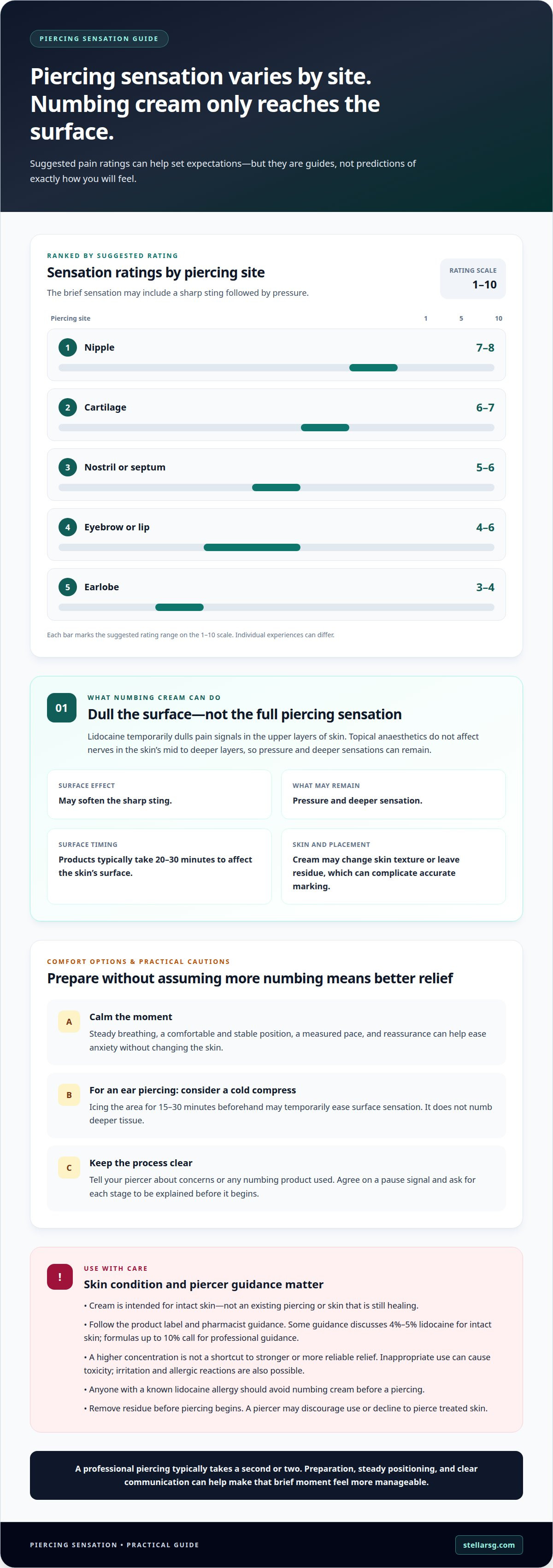
Lidocaine temporarily dulls pain signals in the upper layers of skin, rather than numbing the full area involved in a piercing. The Royal Children’s Hospital explains that topical anaesthetics don’t affect nerves in the skin’s mid to deeper layers.
That distinction matters: a cream may soften surface sensation without removing the feeling of pressure. Some guidance discusses 4% to 5% lidocaine for intact skin, while formulas up to 10% call for professional guidance. Don’t treat a higher concentration as a shortcut to stronger or more reliable relief.
Piercing pain varies by location, and the sensation can include a brief sharp sting followed by pressure. Suggested ratings place earlobe piercings at 3-4 on a 1-10 scale, cartilage at 6-7, and nostril or septum at 5-6.
Eyebrow and lip piercings are rated 4-6, while nipple piercings are rated 7-8. These figures are guides, not predictions of exactly how a person will feel. Knowing the likely sensation can help you prepare for the procedure and separate ordinary nerves from the short moment of piercing.
Numbing cream isn’t automatically more effective than other ways to manage discomfort. It may dull surface sting, while calm pacing, steady breathing, a comfortable position and reassurance can help ease anxiety without changing the skin.
For an ear piercing, icing the area for 15-30 minutes beforehand may offer another option. A cold compress can temporarily ease surface sensation, but it doesn’t numb deeper tissue. Choose an approach that keeps the skin suitable for accurate marking, and tell the piercer if you’ve used a numbing product.
In Singapore, don’t assume every lidocaine cream is available over the counter or suitable for piercing use. Follow the product label and pharmacist guidance. Possible concerns include irritation, an allergic reaction and toxicity from inappropriate use. Anyone with a known lidocaine allergy should avoid numbing cream before a piercing.
Some products intended for injections contain much higher chemical concentrations and can cause serious side effects. Most creams aren’t sterile or designed for open wounds, and residue may enter the fresh channel. A piercer may discourage their use because cream can alter skin texture or complicate accurate placement. If you’ve applied numbing cream, tell the piercer before the procedure. They may decline to pierce treated skin.
Topical anaesthetics mainly change sensation at the skin’s surface. For a piercing, that limited reach matters because the procedure involves tissue beyond the surface.
Topical numbing products temporarily dull surface sensation, rather than switching off feeling throughout the area. The Royal Children’s Hospital (RCH) explains that topical anaesthetic drugs don’t affect nerves in the skin’s mid to deeper layers.
Skin treated with cream may also feel or behave differently during marking. Some numbing products can constrict blood vessels, changing tissue texture and tension. If the skin shifts while the placement is marked, it may be harder to assess the chosen point accurately. That’s why the skin’s condition matters beyond a brief reduction in surface sensation.
Topical numbing can soften surface sensation before a piercing, but it can’t meaningfully numb the deeper tissue involved. Products typically take 20-30 minutes to affect the skin’s surface, so even correct timing doesn’t make the deeper sensation disappear.
The effect is limited: you may notice less sharpness at the surface while still feeling pressure during the procedure. Cream also doesn’t guarantee that the skin remains unchanged for marking. The practical question isn’t only whether sensation fades, but whether treated skin is suitable for accurate placement.
Application matters, too. Cream is intended for intact skin, not an existing piercing or an area that’s still healing. Clean, dry skin free from oils helps avoid mixing the product with other substances. Keep cream away from the eyes and mucous membranes, and remove residue before piercing begins.
Over-the-counter availability doesn’t mean a cream suits everyone or every piercing site. Read the product label for instructions and warnings, and don’t assume a higher concentration is a simple upgrade. A product designed for surface treatments, for example, may dull the outer skin without reaching the tissue that creates pressure during a piercing.
Careful placement offers a practical alternative to changing the skin before a piercing. It starts with clear marking and a steady position, so the planned entry point can be assessed before the procedure. Since a professional piercing typically takes a second or two, preparation and a calm, clear process are important.
Good communication supports that process. Before the procedure, describe any concern about movement or discomfort and agree on a simple signal if you need a pause. For example, you might ask the piercer to explain each stage before beginning. Knowing when marking ends and the needle is about to pass can make the appointment feel more manageable.
Positioning matters, too. Sit or lie in a way that keeps the area accessible and still, rather than tensing or turning away at the last moment. If you feel faint or need to change position, say so before the procedure starts. A measured pace gives the piercer a clearer opportunity to place the piercing carefully.
Skill and preparation don’t remove every sensation, but they keep the focus on accurate placement rather than trying to numb the surface. For an ear piercing, the mark, the position of the tissue and your ability to stay still all matter. A calm exhale as the piercer prepares can help you avoid holding your breath or moving suddenly.
Numbing cream may reduce surface sting, but it won’t reliably remove the sensation of a piercing. The procedure passes through tissue beyond the skin’s surface, so pressure and deeper sensations may remain. The key point: topical anaesthetic may change part of the experience, but it won’t make the procedure sensation-free.
Timing affects the result. Numbing cream is generally applied 30-60 minutes before a piercing, and applying it too late is a common reason people feel it hasn’t worked. Even with enough time, effectiveness depends partly on the product and how it’s applied. Follow the label, use it only on intact skin, and tell your piercer before the procedure.
For traditional ear piercings, numbing products may not be necessary. Most traditional ear piercings aren’t considered painful enough to justify them. If you feel especially sensitive or anxious, discuss that before the appointment. Clear communication helps the piercer understand what you’ve used and how you’re feeling.
Some piercers advise against topical numbing because cream can affect the skin’s texture and make accurate marking harder. Residue may also enter a fresh piercing channel and contribute to irritation or delayed healing. Don’t apply anaesthetic inside the nose for a nostril or septum piercing, or put cream on an already pierced or healing area.
If you’ve applied numbing cream, tell the piercer before the procedure begins. They need that information to assess the treated skin and decide whether the planned placement can proceed. Remove excess cream, but don’t conceal its use to avoid delaying the appointment. A conversation beforehand is more useful than assuming the product suits every piercing site.
For a considered approach to ear piercing, explore the ear piercing service and plan your appointment with clear expectations.
Stellar SG provides ear piercing services and sells jewelry in Singapore. If you’re considering numbing cream, focus on your piercing choice and the experience you want, rather than applying a product that may affect the skin.
Choosing jewelry is also part of planning the look you want. You can explore Stellar SG’s jewelry collection as you consider an ear piercing. If you have concerns about numbing cream or are ready to plan your piercing, contact Stellar SG.
If you’re still wondering whether numbing cream for piercings works, let comfort guide your next step, rather than expecting to feel nothing. Consider what would help you feel prepared, such as understanding the process or having a chance to share concerns before your appointment. A clear conversation can set realistic expectations and help you choose a plan that feels right for you.
Stellar SG offers an Ear Piercing Service and jewelry in Singapore. For personal piercing advice or help planning your next step, contact Stellar SG. Take your time, ask what matters to you, and look forward to choosing a look that feels like your own.
Yes. Cream residue may irritate a fresh piercing channel and contribute to delayed healing. A piercing creates an open route through tissue, while most numbing creams aren’t sterile or intended for open wounds. Don’t apply cream to an existing or healing piercing. If you used cream before an appointment, tell the piercer and remove excess before the procedure.
Use preparation and steady communication to make the appointment feel more manageable. Try slow breathing, choose a position that lets you stay still, and agree on a pause signal with the piercer beforehand. Ears may be iced for 15-30 minutes before an ear piercing. Avoid putting ice directly on skin, and follow the piercer’s instructions for the procedure.
Arrive rested, hydrated and fed. Guidance suggests getting 7-8 hours of sleep the night before, drinking water during the 24-48 hours beforehand, and eating a full meal around 3-4 hours before the appointment. If a meal isn’t practical, have a nutritious snack 1-2 hours beforehand. Avoid alcohol and caffeine for at least 24 hours before an ear piercing.
Lidocaine isn’t suitable for everyone, so follow the product label and avoid it if you have a known lidocaine allergy. Use numbing cream only on intact skin, never on a fresh piercing or healing area. Keep it away from the eyes and mucous membranes. Tell the piercer before your appointment if you’ve applied any product, including lidocaine cream.
Non-product strategies can help manage anxiety without altering the skin. Before the appointment, ask the piercer to explain the sequence, settle into a stable position and agree on a signal if you need a pause. During the procedure, focus on a slow exhale rather than holding your breath. These steps support calm communication and stillness.
Stronger doesn’t mean more appropriate for a piercing. Lidocaine formulas up to 10% should be used only with professional guidance, and some products intended for injections contain much higher chemical concentrations that can cause serious side effects. Don’t substitute an injection product or increase a cream’s amount to seek deeper numbness. Follow the product warnings and disclose use before the appointment.


