 欧元、澳元、英镑、日元、印度卢比


全部的: $0.00
结账时计算税费和运费
 SGD
SGD


You’ve spent the last 42 days admiring your new lobe piercing, but the itch to swap those starter studs for a pair of elegant 18K gold hoops is becoming hard to ignore. Many jewelry lovers in Singapore rush this transition, only to find their piercing site irritated or closed up within just 12 hours. Knowing exactly when to change earrings after piercing is the difference between a lifetime of style and a painful setback.
We understand that while safety is your priority, you're also eager to showcase your personal aesthetic. It's completely normal to feel limited by initial jewelry, especially when you're dreaming of more sophisticated designs. This 2026 guide provides the exact healing timelines for every ear location, from the lobe to the helix, and highlights the professional signs that your ears are ready for a change. You'll learn how to switch your jewelry comfortably and where to source premium, skin-safe replacements in Singapore to keep your look both healthy and beautiful.
An ear piercing is more than a style statement. It's a controlled puncture wound that requires precise biological steps to heal correctly. Unlike a surface scratch, a piercing must heal from the outside in. This process creates a "fistula," which is a delicate tunnel of new skin cells that connects the entry and exit points. Because the exterior skin heals faster than the internal tissue, many people mistakenly assume their piercing is ready for new jewelry far too soon. Understanding The Science of Piercing Healing is the first step toward a lifetime of healthy, stylish ears.
The timeline for when to change earrings after piercing depends entirely on how quickly your body can reinforce this fistula. In Singapore's humid climate, maintaining a clean environment is vital as moisture can slow the initial drying process. Our piercing service experts recommend waiting at least 6 to 8 weeks for earlobes and significantly longer for cartilage. Rushing this window disrupts the cellular work happening beneath the surface.
Removing your starter studs prematurely is the leading cause of piercing complications. When you pull a post through an unhealed fistula, you cause micro-tears in the delicate new skin. These tears create an entry point for bacteria, significantly increasing your risk of infection. In many cases, a piercing hole can shrink or close entirely within 10 to 15 minutes if the jewelry is removed before the proliferative stage is complete.
Trauma from early changes often leads to hypertrophic scarring, commonly known as "piercing bumps." These raised areas of scar tissue are difficult to treat and can ruin the aesthetic of your piercing. If you're unsure about the state of your healing, it's best to book an appointment for a professional assessment. Safety and patience ensure that you can eventually enjoy the full range of premium jewelry without the setback of permanent scarring or closure.
Healing isn't a guessing game. It's biological science. Your body's ability to repair tissue depends heavily on blood flow. Earlobes are rich in blood vessels, which bring oxygen and nutrients to the wound site quickly. Cartilage is avascular. This means it lacks its own direct blood supply and relies on diffusion from surrounding tissue. This fundamental difference is why a lobe heals in weeks while a helix takes months. Following APP's official aftercare guidelines ensures you don't disrupt this delicate process prematurely. Understanding when to change earrings after piercing requires looking at the specific anatomy of your ear.
The fleshy lobe is the most popular choice for a reason. Its soft tissue allows for a relatively swift recovery. In 2026, the gold standard remains a minimum of 6 weeks before you consider a swap. You must keep your medical-grade starter studs in for this entire duration. Removing them too early can cause the tunnel to collapse or trigger an inflammatory response. For a deeper look at local safety standards, check our Ultimate Guide to Ear Piercing in Singapore. Even after 8 weeks, the new skin is thin. Always choose lightweight, hypoallergenic metals for your first few pairs.
Cartilage piercings require a long-term commitment to care. Unlike lobes, these areas are prone to piercing bumps and irritation if the jewelry moves too much. A critical step in this timeline is downsizing. Between week 8 and week 12, you should visit a professional to swap the initial long post for a shorter one. This prevents the jewelry from snagging on hair or masks, which is a frequent issue for helix placements in Singapore's humid climate. While you might feel healed at 4 months, the internal tissue often needs up to a full year to stabilize completely. Patience is your best tool for a beautiful, lifelong piercing.
Individual health factors can shift these dates significantly. Your consistency with aftercare, your sleep quality, and even your hydration levels influence cellular repair. Those with slower healing rates or compromised immune systems should wait an additional 25 percent longer than the standard baseline. If you're unsure about your healing progress, you can book an appointment for a professional assessment. Never force a jewelry change if you see redness, swelling, or discharge. Safety and style go hand in hand when you respect your body's natural pace.
Remember that when to change earrings after piercing is a milestone, not a race. Rushing the process often leads to setbacks that restart the healing clock entirely. Stick to the schedule to ensure your ears remain healthy and ready for a lifetime of elegant jewelry choices.
Healing is a journey, not a race. While the 6 week mark is a standard guideline for lobe piercings, your body follows its own biological calendar. Before you reach for those new premium studs, you must ensure the piercing site has transitioned from a fresh wound to a stable channel of skin. Determining when to change earrings after piercing requires a careful, honest assessment of your healing progress.
Use this five point checklist to verify your readiness:
In Singapore, our average humidity often hovers around 84%. This moisture rich environment presents unique challenges for healing. High humidity means sweat can accumulate quickly around the piercing site, often mimicking the appearance of discharge or making the skin feel "mushy." It is vital to distinguish between salty sweat and actual wound fluid.
If you spend 8 hours a day in air conditioned offices, your skin may become deceptively dry, leading to micro-cracks around the piercing. To ensure you are ready to swap your jewelry, keep the site dry during the final 14 days of healing. Use a clean paper towel to pat the area dry after outdoor activities or showers. A dry piercing is a stable piercing.
If you feel a localized "throb" or heat radiating from the ear, stop immediately. These are signs of active inflammation or a brewing infection. You should also postpone your swap if you have suffered a snag or trauma, such as a hairbrush catching the earring, within the last 72 hours. Such incidents reset the healing clock for the delicate internal tissue.
Changing jewelry too early can cause the fistula to collapse or scar. If you are unsure about your progress, it is best to seek a professional opinion. You can book an appointment at one of our studios for a quick check. Our staff can verify if your skin is ready for our premium gold or silver collections, ensuring your style transition is both elegant and safe.
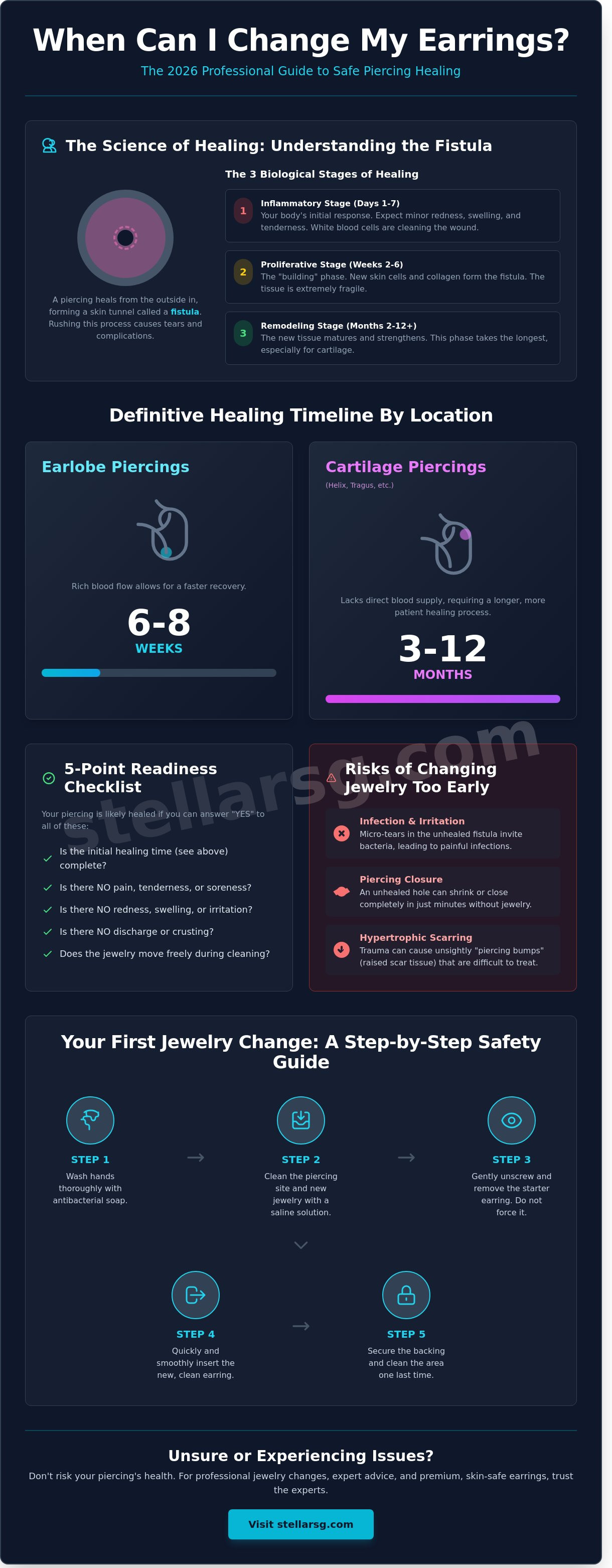
The moment your piercing is ready for a new look is exciting, but your first swap is a critical step in long-term ear health. Knowing exactly when to change earrings after piercing is only half the battle; the actual process requires precision. You aren't just changing an accessory; you're managing a biological site that's still maturing. Before you touch your ears, wash your hands thoroughly with antibacterial soap for at least 20 seconds. Sterilize your new jewelry using a 70% isopropyl alcohol solution or a dedicated jewelry cleaner to ensure no bacteria enters the fresh channel.
Timing is everything during this first transition. We recommend the "Quick Swap" rule: never leave the piercing empty for more than 60 seconds. Even after six to eight weeks, a new piercing can begin to close or shrink within minutes. Have your new, sterilized pair sitting on a clean tissue within reach before you even think about removing the starter studs. This efficiency prevents trauma to the delicate skin and ensures a seamless transition to your new style.
Removing professional starter jewelry requires a gentle touch. For butterfly backs, grip the front of the stud firmly while slowly pulling the back off. If you have threaded posts, remember the "lefty-loosey" rule to unscrew the decorative end. If the jewelry feels stuck, don't pull. This resistance often comes from a small amount of natural crusting. Soak a cotton pad in saline solution, hold it against the lobe for two minutes to soften any debris, and try again. Once the jewelry is out, wipe the lobe with a fresh saline cloth before immediately inserting the new pair.
Your first "fashion" pair must prioritize biocompatibility. Even if you've reached the recommended timeframe for when to change earrings after piercing, the internal fistula is still delicate. Avoid "costume jewelry" or mystery alloys that often contain nickel, which is the leading cause of allergic contact dermatitis in Singapore. Instead, opt for 14k or 18k gold, or medical-grade titanium. These materials are non-reactive and support the final stages of the healing process. You can explore the Stellar SG jewelry collection for safe, elegant options that combine premium style with clinical safety standards.
If you're unsure about the state of your healing or want a professional to handle your first jewelry change, our expert team is here to help. Book your appointment at one of our Singapore studios for a professional assessment and a safe, stylish upgrade.
Determining when to change earrings after piercing is a vital milestone in your style journey, but the transition requires more than just a calendar check. At Stellar SG, we believe the first jewelry swap should be handled by an expert to protect the delicate, newly formed fistula. Our specialists assess the maturity of your piercing, ensuring the internal tissue is resilient enough to handle new hardware without the risk of micro-tears or immediate closure. This professional evaluation eliminates the guesswork and keeps your ears healthy as they move toward permanent healing.
We take pride in offering a specialized experience for every client. For parents, we provide a caring and patient environment for children, ensuring their first earring change is a positive memory rather than a stressful event. Our staff uses medical-grade hygiene protocols and premium materials to prevent irritation in sensitive ears. By visiting us, you're not just getting a jewelry change; you're receiving a professional health check for your piercing that ensures long-term comfort and style.
Professional downsizing is a critical step that many people overlook during the healing process. Initial piercing studs are purposefully long to accommodate swelling, but once that swelling subsides, a long post can snag on clothing or migrate at an awkward angle. Our experts recommend a downsizing session at the 6 to 8 week mark for most lobe piercings. This keeps the jewelry flush against the skin, maintaining the correct alignment as the piercing matures. You can visit our studios at premier locations across Singapore, including ION Orchard and VivoCity, for this essential service. Book your appointment for a professional styling session to ensure your earrings fit perfectly and look elegant.
Our commitment to your ear health doesn't end once the piercing is done. We help you transition from the "healing phase" to the "styling phase" with a curated selection of premium gold and silver jewelry. Our ear styling services allow you to work with a consultant to create a cohesive look that matches your unique anatomy and personal aesthetic. We focus on high-quality materials that are safe for daily wear, even for those with metal sensitivities. Visit our Piercing Service page to learn more about our dedication to safety and how we help you achieve a sophisticated, well-curated ear gallery.
Achieving a sophisticated ear stack requires patience and precise timing. While lobe piercings typically heal in 6 weeks, cartilage piercings often require a full 6 to 12 months before they're ready for a jewelry swap. Understanding when to change earrings after piercing is essential to avoid complications like infection or permanent scarring. Look for the 5 signs of readiness, such as the absence of redness and the presence of a stable, clear exit hole. Rushing this process can damage the delicate fistula, so it's always better to wait for total comfort. Don't risk your healing progress by choosing low-quality metals during your first change.
When you're ready for an upgrade, our skilled staff at Stellar SG provides the expert care you deserve. We operate 8 convenient locations in Singapore’s premier malls, making professional styling accessible and safe. You can choose from our curated collection of premium, hypoallergenic gold and diamond jewelry to ensure your ears stay healthy and stylish. Our team prioritizes your safety and aesthetic goals, ensuring every transition is seamless and elegant. Your path to a curated, professional look starts with expert guidance and high-quality materials.
Book Your Professional Ear Styling Appointment at Stellar SG
We look forward to helping you express your unique style with grace and confidence.
No, you shouldn't change your earrings after 3 weeks because the internal wound requires at least 42 days to form a stable skin layer. Even if there's no pain, the delicate fistula can tear or collapse easily. In Singapore's humid climate, premature changes increase the risk of trapping bacteria. Patience ensures your style remains elegant and your ears stay healthy for the long term.
Your piercing hole can begin to shrink or close within 10 to 30 minutes if left empty during the first few months. If you can't insert new jewelry, don't force it as this causes permanent scarring. Visit a professional piercer at a Singapore studio immediately. They use sterile tapers to safely guide the jewelry back in without damaging the sensitive tissue.
You shouldn't leave your earrings out for more than a few minutes during the first 6 months of healing. Even after the initial 6-week mark, a new piercing can close completely within 24 hours. To maintain your look, keep high-quality studs in your ears constantly for 12 months. This allows the piercing channel to toughen and become permanent.
Slight spotting or a few drops of blood can occur during your first jewelry change, but it isn't the ideal standard. This often indicates the internal tissue hasn't fully healed or you've been slightly too rough. If bleeding persists for more than 5 minutes, it's a sign to put your original sterile studs back in and wait another 14 days before trying again.
You should never twist or rotate your earrings while they're healing. Old advice suggested this to prevent sticking, but 2026 safety standards show that twisting actually tears the new skin cells and introduces bacteria into the wound. Simply clean the area with a saline spray twice daily. This modern approach ensures a faster, more comfortable recovery for your premium piercing.
It's best to wait at least 3 months before switching to hoop earrings or heavy dangles. While you can technically change your studs after 6 weeks, hoops put uneven pressure on the healing channel and can cause "cheese-cutter" scarring. For the most elegant results, stick to lightweight gold or titanium studs until the 90-day mark to ensure the piercing is fully reinforced.
Medical-grade titanium or 14k gold are the superior choices for your first jewelry change to prevent allergic reactions. Many Singapore residents find that nickel-based alloys cause itching or redness in the heat. Choosing premium materials ensures your ears stay comfortable and stylish. When considering when to change earrings after piercing, always prioritize biocompatible metals that support the final stages of skin repair.
An infection typically involves thick yellow discharge, localized heat, and throbbing pain, whereas irritation is usually just pink and itchy. If you notice redness spreading more than 5mm from the hole, seek professional advice. Knowing when to change earrings after piercing involves monitoring these signs closely. Irritated ears usually calm down within 48 hours of using a sterile saline soak.


