 欧元、澳元、英镑、日元、印度卢比


全部的: $0.00
结账时计算税费和运费
 SGD
SGD


What if the quickest-looking way to pierce your ear isn’t the right fit for every placement? If you’ve searched “pierxing gun,” you may have found conflicting claims about pain, hygiene and healing. A piercing gun pushes a stud through tissue, while a hollow needle makes an opening before jewellery is inserted, so the methods aren’t identical. Your choice deserves more than a quick comparison, especially because earlobe and cartilage piercings have different considerations.
It’s reasonable to want a comfortable experience and clear answers before deciding. This guide explains how piercing guns work, where they may be used and what their limitations are. You’ll also learn what to ask about hygiene, jewellery, aftercare and practitioner experience, so you can compare options with confidence in Singapore. If you’re considering Stellar SG’s professional ear-piercing service, ask which method is currently offered for your preferred placement before choosing.
A piercing gun is a handheld device that guides an earring stud through the earlobe. With a piercing needle, a practitioner makes an opening with a sharp, hollow needle, then inserts the jewellery. The device and jewellery are not the same: with many gun systems, the starter stud itself passes through the tissue. Designs vary, so “pierxing gun” doesn’t describe one universal mechanism or hygiene setup. The Ear piercing instrument overview explains the range of devices and concerns raised about their use.
In a typical procedure, the practitioner marks and positions the intended spot, aligns the device, then activates it so the stud passes through the earlobe and its backing secures it. The motion may be spring-driven or use another mechanism, depending on the design. Some systems use disposable cartridges or components; others have reusable parts. Ask which device is being used and which parts are single-use instead of assuming every gun works the same way.
The practitioner should explain the steps and show you the earring before beginning. The gun guides the stud through the tissue, and the stud is the jewellery left in place. Check that the jewellery is suitable for an initial piercing and that its backing won’t press tightly against your ear. A clear explanation helps you understand what will touch your ear and how the equipment is handled.
Safety isn’t determined by the device alone. Hygiene practices, careful placement, practitioner training and suitable jewellery all matter. A clean-looking room is not a substitute for asking how reusable equipment is cleaned and how single-use components are handled. If the process or answers are unclear, you should feel comfortable pausing before proceeding.
Gun-style systems are commonly associated with earlobe piercings, but that doesn’t make every device or technique appropriate for every person. Earlobes are soft tissue; cartilage is firmer and has different anatomy and healing considerations. A method used for an earlobe shouldn’t automatically be assumed suitable for cartilage. Placement, anatomy and the practitioner’s training should guide the recommendation.
Before deciding, name the exact location you want pierced and ask which method the practitioner recommends, why, and what alternatives are available. Ask how the equipment and jewellery are handled, too. In Singapore, methods can differ between providers, so confirm the details directly rather than relying on the term “piercing gun” alone.
Safety depends on more than the device. The planned placement, practitioner training, equipment handling, jewellery selection and aftercare instructions all belong in the conversation. A cartridge designed for single use may reduce contact with some reusable parts, but it doesn’t by itself establish that every part of the procedure is hygienic or appropriate for your ear.
Placement and hygiene both inform a responsible discussion about piercing method. Ask the practitioner to explain their recommendation for your specific piercing, including how the equipment is cleaned or replaced and what jewellery will be used. A clear, unhurried answer is a useful sign that your questions are being taken seriously.
The earlobe is soft tissue, while the upper ear contains cartilage. Because these locations differ, a method considered for an earlobe shouldn’t automatically be assumed suitable for cartilage. The Association of Professional Piercers advises against piercing guns and discusses concerns including tissue trauma and sterilisation limitations. Its guidance reflects the organisation’s professional standards, not a Singapore legal requirement. Read its piercing gun guidance, then ask a practitioner to explain the method they recommend for your exact placement and why.
Keep the conversation practical. Ask how the practitioner prepares the area and handles equipment before and after use. If any components are reusable, ask how they’re cleaned and sterilised. If parts are single-use, ask which ones and whether they’re opened for your procedure. Don’t treat a disposable cartridge, a tidy workspace or a particular device as proof that the whole process is hygienic.
If you’re comparing options in Singapore, weigh method, placement and hygiene together rather than relying on the label “pierxing gun” alone. Review Stellar SG’s ear-piercing service details and confirm the method and procedure information directly before making a decision.
A piercing gun and a piercing needle create an opening in different ways. With a gun-style device, an earring stud is driven through the tissue; with needle piercing, a practitioner uses a sharp, hollow needle to make the opening, then inserts jewellery. Neither method guarantees a painless or trouble-free experience. Comfort can vary with placement, individual sensitivity, the practitioner’s technique and how well you understand the procedure.
The main difference is the tool and how the opening is made. A gun uses the stud as it passes through the tissue, while a needle creates the opening before jewellery is placed. Ask how the practitioner controls placement, what jewellery will be inserted, and how each tool and its components are handled. The National Environmental Health Association’s Policy Statement on Ear Piercing Guns discusses public health concerns associated with gun use, including potential hygiene and disease-transmission risks. It’s a policy perspective, not a guarantee about the safety of any individual procedure.
| What to compare | Piercing gun | Piercing needle |
|---|---|---|
| Mechanism | The device guides an earring stud through the tissue. | A needle makes the opening; jewellery is inserted separately. |
| Placement | Ask whether this device is appropriate for your exact location. | Ask why the practitioner recommends this method for your location. |
| Hygiene | Ask which parts are disposable and how reusable parts are handled. | Ask how the needle and other procedure supplies are kept sterile. |
| Practitioner questions | Ask about training, jewellery choice and aftercare. | Ask about training, jewellery choice and aftercare. |
A quick-looking procedure isn’t automatically the most comfortable or appropriate one. Preparation, a placement discussion, hygienic handling and clear aftercare all deserve consideration, regardless of the tool. The earlobe and cartilage are different locations, so don’t assume that a method considered for one suits the other. Ask the practitioner to explain their recommendation for the exact piercing you want, and take time to consider the answer.
Comparison takeaway: Choose by placement, hygiene and the practitioner’s explanation, not speed alone. If you’re considering Stellar SG’s ear-piercing service details, confirm which method is currently offered and whether it suits your intended placement.
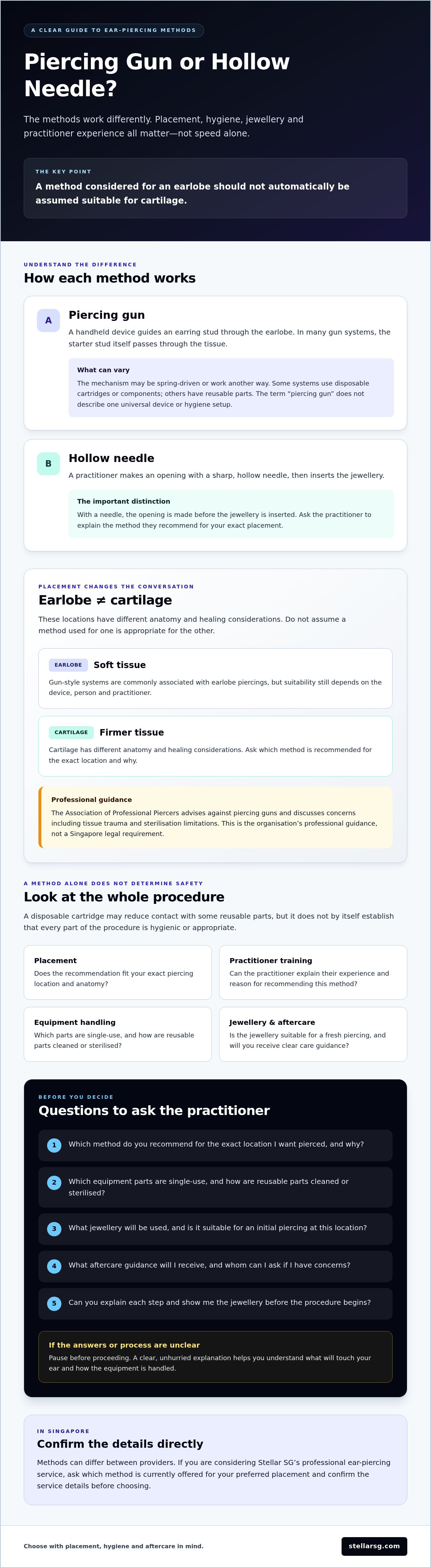
A little preparation can make it easier to choose a service that feels right for you. Before deciding, focus on the planned placement, the practitioner’s explanation and the care involved, rather than choosing based on speed or a device name alone. If you searched for “pierxing gun,” use these questions to get clear, specific answers from a Singapore provider.
Service details can vary, so confirm them directly before travelling. Check whether an appointment is required, which location provides the service you’re considering and whether your intended placement is available there. Don’t assume that every location offers the same method or procedure.
Ask whom to contact with questions after your visit. If you have a medical condition, a history of healing problems or another health concern, seek advice from a qualified healthcare professional before proceeding. If you notice unusual symptoms or are concerned about how a piercing is healing, consult a healthcare professional rather than relying only on general aftercare guidance.
For broader preparation, read the ear piercing guide. You can also review Stellar SG’s professional piercing service and confirm the current method, appointment requirements and location details directly. Before deciding, make sure you understand the process, jewellery and aftercare.
A considered choice comes down to the details: where you want the piercing, why the practitioner recommends a particular method, how equipment is handled, what jewellery will be used and what aftercare guidance you’ll receive. These questions matter more than choosing based on speed or the label “pierxing gun.” Understand the plan before deciding, and feel comfortable asking for clarification.
A conversation with the practitioner gives you a chance to discuss your placement goals and comfort level. Ask which method is available for the location you have in mind and why it’s recommended. You can also ask what initial jewellery options are suitable and how the practitioner will help you decide on placement. A good explanation should address your questions without promising a painless experience or guaranteed healing.
If you have allergies, sensitive skin, a relevant medical condition or a past healing concern, raise it privately before proceeding. The practitioner can explain what they can advise on and whether you should speak with a qualified healthcare professional first. Share only what you’re comfortable discussing, but don’t leave out information that may affect your decision.
Stellar SG provides professional ear-piercing services at multiple retail locations in Singapore. Before travelling, check the method, appointment requirements and service details directly. Confirm the location you plan to visit, its current opening details and whether an appointment is needed. Don’t assume every location has the same service arrangements.
Arrive with your questions ready. Confirm the procedure and jewellery for your intended placement, ask what aftercare guidance you’ll receive, and find out where to direct follow-up questions. If an explanation feels unclear, take time to get the information you need before deciding. For a broader overview of preparation and local options, consult a current Singapore ear-piercing guide and verify details directly with the provider.
To check the practical details, explore ear piercing appointment details and confirm current availability and arrangements before planning your visit.
A piercing choice should feel informed, not rushed. A piercing gun and a needle work differently, and neither the device name nor a quick procedure tells the whole safety story. Consider your placement, ask the practitioner to explain the recommended method, and get clear answers about hygiene, jewellery and aftercare. Earlobes and cartilage also have different anatomy, so confirm what’s appropriate for the location you want pierced.
In Singapore, Stellar SG provides professional ear-piercing services at multiple retail locations, with curated earrings available at its locations. Check the current method and appointment details directly before visiting. Ask questions about the procedure and aftercare, and take the time you need to feel comfortable with your decision.
Ready to explore your options? Explore ear-piercing appointment details and confirm the current service information before planning your visit. With thoughtful questions and clear guidance, you can take your next step with confidence.
There isn’t one answer for every device or procedure, so ask how the equipment is handled and whether the method suits your placement. The Association of Professional Piercers advises against piercing guns and raises concerns about sterilisation and tissue trauma. A disposable cartridge alone doesn’t establish that the entire procedure is hygienic. Ask about reusable parts, jewellery, practitioner experience and aftercare before deciding.
Don’t assume a gun used for an earlobe is suitable for cartilage. The earlobe is soft tissue, while cartilage has different anatomy and calls for a method discussion specific to its location. The Association of Professional Piercers advises against guns, including for cartilage piercings. Ask the practitioner which method they recommend for the exact placement, why they recommend it and what alternatives are available.
Pain varies from person to person, and there’s no dependable rule that a piercing gun always hurts more or less than a needle. The placement, individual sensitivity and practitioner’s technique can all affect how the experience feels. Rather than relying on general pain claims, ask the practitioner to explain what to expect, how they’ll prepare you and what you can do if you feel uncomfortable during the procedure.
A piercing gun guides an earring stud through the tissue, while a piercing needle makes an opening before jewellery is inserted separately. These are different methods, and neither guarantees a comfortable experience or uncomplicated healing. Ask which approach is suitable for your intended placement, how the equipment is handled and what jewellery will be used. The method should be explained clearly before you agree to proceed.
Some piercing devices have reusable components, while other systems use disposable cartridges or parts. The word “gun” doesn’t tell you which design a provider uses or how its equipment is handled. Ask which parts are single-use and how reusable components are cleaned or sterilised. A disposable component may reduce contact with some parts of the device, but it isn’t proof that every part of the procedure is hygienic.
Choose by asking about your exact placement, the recommended method, equipment hygiene, initial jewellery and aftercare. Confirm appointment requirements and current service details directly before visiting. Stellar SG provides professional ear-piercing services at multiple retail locations in Singapore, with curated earrings available there. Ask directly about the current method and appointment details. If you have a health concern, seek advice from a qualified healthcare professional before proceeding.


