 欧元、澳元、英镑、日元、印度卢比


全部的: $0.00
结账时计算税费和运费
 SGD
SGD


Could caring for a new ear piercing be simpler than you think? If you’re unsure what to clean it with, how often to do it or whether a little redness is normal, you’re not alone. A clear ear piercing aftercare singapore routine can fit around your commute, workday and sleep.
The key is gentle, consistent care and less unnecessary handling. Use sterile saline as directed, and avoid habits that can irritate a healing piercing. Some tenderness, itching or slight redness can happen early on, but changes that persist or worsen deserve attention.
This guide covers a straightforward daily routine, what to avoid and how to distinguish expected healing changes from signs that may need professional advice. You’ll also learn when to contact a qualified piercer and when to speak with a healthcare professional.
A gentle, consistent routine is usually more helpful than switching products or following different advice each day. Aftercare means protecting a fresh piercing as it heals and following instructions suited to its location. For ear piercing aftercare singapore readers can use, start with the guidance from the piercer who knows where and how the piercing was placed.
Healing is gradual, and there isn’t one completion date that applies to everyone. Earlobes and cartilage heal differently, and individual factors can affect how the area settles. Treat general timelines as estimates, not a reason to stop care early or change jewellery before you’ve been advised it’s appropriate. For placement context, see our complete guide to ear piercings.
The area may feel mildly tender or itchy, or look slightly red, at first. The NHS explains that some redness and sensitivity can occur after a piercing, but symptoms that are severe, persistent or getting worse need individual assessment. One symptom alone can’t confirm an infection or identify the right treatment. If you feel unwell or the area is deteriorating, seek advice from a healthcare professional rather than trying different products.
For broader background, Wikipedia’s overview of the healing process for body piercings explains why healing and aftercare are part of the piercing process. Use general information as context, not as a substitute for tailored advice about your piercing.
The earlobe is soft tissue, while cartilage is firmer and shaped differently. A pillow, headphone or accidental bump may put more pressure on one placement than another. Cartilage can also take longer to heal than a lobe, so don’t assume a piercing is ready for less care or a jewellery change just because it looks settled.
Follow the site-specific instructions you were given, and ask your piercer if you’re unsure how to care for that placement or whether pressure could be irritating it. Avoid twisting or handling the jewellery just to check on progress. If you received a professional ear piercing at Stellar SG and have questions about the original instructions, you can review the ear piercing service information.
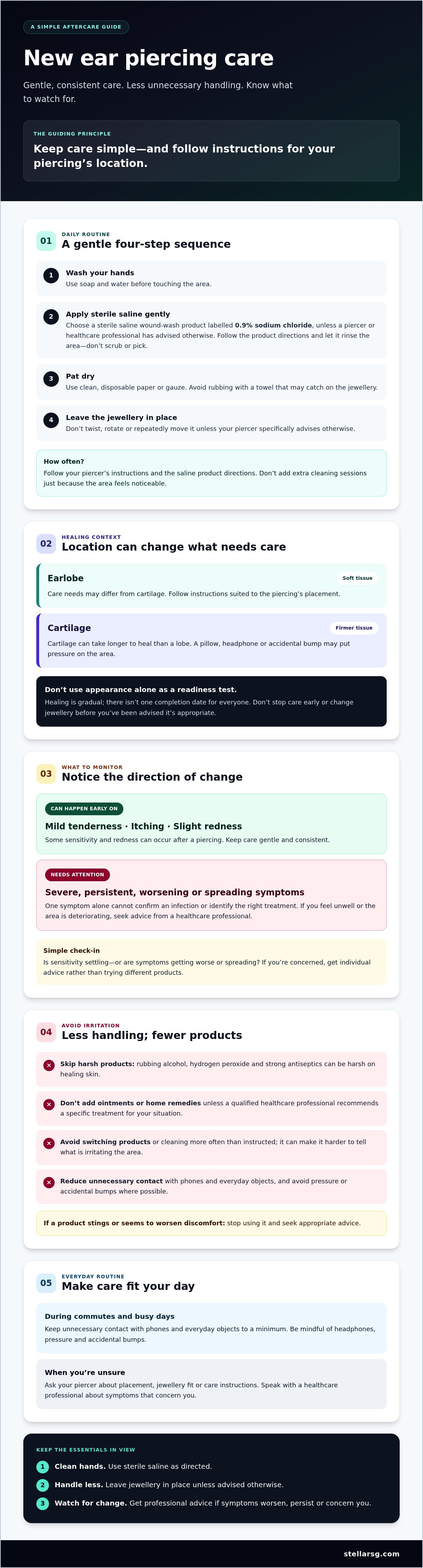
A repeatable routine makes ear piercing aftercare singapore easier to manage: clean hands, gentle care and minimal handling. Use a sterile saline wound-wash product labelled as 0.9% sodium chloride, unless your piercer or a healthcare professional has given you different instructions. Follow the product directions and keep care simple rather than layering on extra products.
Use this as a gentle framework, adjusting it to the instructions for your piercing and saline product:
Don’t add extra cleaning sessions just because the area feels noticeable. Check your piercer’s instructions for how often to clean, since guidance can depend on the piercing and the product. The NHS offers practical information on preventing and identifying piercing infections, including when symptoms need medical attention.
Rubbing alcohol, hydrogen peroxide and strong antiseptics can be harsh on healing skin. Avoid applying them, ointments or home remedies unless a qualified healthcare professional recommends a specific treatment for your situation. Switching between products can also make it harder to tell what’s irritating the area. If a product stings or seems to worsen discomfort, stop using it and seek appropriate advice.
Keep jewellery care separate from piercing care. A guide to cleaning stud earrings can help with the jewellery itself, but cleaning an earring doesn’t replace gentle care of the healing skin. If you’re wondering whether the jewellery material is suitable, see this guide to safe piercing metals.
If you’re unsure about your piercing’s original care instructions, review Stellar SG’s ear piercing service details for relevant information.
A new piercing can be mildly tender, itchy or slightly red at first. These changes may settle, but there’s no single symptom that can confirm an infection or show which treatment is right for you. For ear piercing aftercare singapore, pay attention to how the area changes over time, not just how it looks at one moment.
Mild, short-lived sensitivity can occur as a piercing begins to heal. Notice whether it eases or becomes more pronounced. Increasing pain, swelling, warmth, spreading redness or discharge deserves professional advice, especially if several changes occur together. The NHS describes signs that may need medical attention in its guidance on piercing infection symptoms.
A photo or checklist can help you notice changes, but neither can assess the piercing or diagnose a problem. Avoid repeatedly touching or pressing the area to test it. If you’re uncertain, describe what you’ve noticed and when it began to a healthcare professional.
Contact a qualified clinician promptly if symptoms are worsening, persistent or concerning. Seek urgent medical care for severe symptoms or signs that you may be becoming unwell, such as feeling feverish or shivery. Don’t wait for every possible symptom to appear before asking for help.
If infection is a concern, don’t remove the jewellery or change your care routine unless a healthcare professional advises you to. The NHS recommends leaving jewellery in place unless a doctor tells you otherwise. A piercer may be able to advise on jewellery fit, placement or the original care instructions, but suspected infection and significant worsening symptoms need healthcare advice, not a retail recommendation.
Medical information disclaimer: This section offers general information, not a diagnosis or a substitute for medical care. Piercings and symptoms vary. A healthcare professional can assess your individual situation and advise on appropriate next steps.
A healing piercing doesn’t need to take over your day. Reduce avoidable contact and pressure, then follow the care instructions for your piercing. A little planning can make ear piercing aftercare singapore easier during commutes, work and everyday errands.
On a crowded MRT or bus, it’s easy to brush an ear with a hand, bag strap or another object without noticing. Keep your hands away from the jewellery, and take care when changing clothes, putting on a mask or adjusting accessories. If a phone rests against the pierced ear, use the other side or speaker mode where practical. Clean personal items according to their own care instructions, and avoid letting them press against the piercing.
Headphones, helmets, hats and glasses can put pressure on certain placements. Notice whether they rub, catch or leave the area uncomfortable. If an item you need for work or travel repeatedly presses on the piercing, ask your piercer about options suited to its location. Don’t adjust or remove jewellery to make equipment fit without professional guidance.
Try not to sleep directly on a new piercing if that creates pressure or discomfort. Depending on where the piercing sits, you might rest on the opposite side or adjust your usual position. For exercise, consider whether clothing, a helmet or equipment could catch or rub against it, and follow your piercer’s advice for activities that affect your placement.
Ask for specific guidance before swimming or taking part in activities that expose the piercing to water or may disturb it. Advice can depend on the piercing and how it’s healing, so don’t rely on a general rule from someone else’s experience. If an everyday item consistently causes irritation, a qualified piercer can help you understand whether it’s a placement or fit question. For details about Stellar SG’s professional ear piercing service, see the ear piercing service information.
Good ear piercing aftercare singapore includes knowing who can help with which questions. Your original piercer is a useful contact for jewellery fit, placement and the care instructions you were given. A healthcare professional is the right person to assess possible infection, significant worsening symptoms or other health concerns.
Ask a qualified piercer if jewellery feels too tight, catches on clothing or you’re unsure how to follow the routine for your piercing’s location. They can advise on piercing-related details, but they can’t diagnose or treat a medical condition.
If you suspect infection, symptoms are severe or getting worse, or you feel unwell, seek advice from a healthcare professional promptly. Don’t rely on a retail recommendation for a medical concern, and don’t remove the jewellery or change treatment unless a clinician advises you to.
Stellar SG offers professional ear piercing at its Singapore retail locations. If you’re considering a piercing or want to review the service details, visit the ear piercing service information. This is service information, not a promise of aftercare consultations or follow-up assessments.
A few details can help the right professional understand your concern. Before contacting them, note:
These notes won’t replace an assessment, but they can make your questions clearer. If you’re unsure whether a concern is about jewellery or your health, choose the safer route and contact a healthcare professional for symptoms that are worsening or making you feel unwell.
For appointment details, refer to the ear piercing service information. Seek medical care separately for health concerns.
Healing well starts with a gentle, consistent routine. Clean the area as directed, avoid unnecessary handling and follow guidance suited to your piercing’s location. Mild sensitivity may happen, but symptoms that worsen or leave you feeling unwell deserve advice from a healthcare professional.
That’s the foundation of ear piercing aftercare singapore: understand what to expect for your own piercing, ask a qualified piercer about jewellery fit or care instructions, and seek medical advice for possible infection or significant changes.
Stellar SG offers professional ear piercing at Singapore locations including ION Orchard, JEM, VivoCity and Bugis Junction. If you’re considering a piercing, book an appointment with Stellar SG.
With thoughtful care and the right guidance, you can give your piercing a calmer start and enjoy your new look with confidence.
For ear piercing aftercare in Singapore, wash your hands first, then gently rinse the piercing with sterile saline wound wash labelled 0.9% sodium chloride. Pat it dry with clean disposable gauze or paper, and avoid scrubbing, picking or moving the jewellery. Follow your piercer’s instructions for your piercing’s location. Don’t use a jewellery-cleaning routine as a substitute for caring for the healing skin.
A common professional aftercare recommendation is to clean a new piercing twice a day with sterile saline. Follow the instructions from your piercer and the saline product, since advice may vary with the piercing site and your circumstances. More cleaning isn’t necessarily better. Avoid adding extra sessions or changing products repeatedly if the area feels noticeable. If the routine causes discomfort or you’re unsure, ask your piercer or a healthcare professional.
Slight redness, tenderness or itching can occur shortly after a piercing, and mild early sensitivity may settle. These signs alone can’t confirm infection. Notice whether symptoms improve or instead worsen, spread or persist. Increasing pain, swelling, warmth, discharge or feeling unwell calls for professional advice. If you’re concerned, contact a healthcare professional for an individual assessment rather than relying on a photo or trying to diagnose the piercing yourself.
No. Avoid using rubbing alcohol or hydrogen peroxide on a healing piercing, as harsh products may irritate the skin. Use sterile saline as directed unless a healthcare professional has advised a specific treatment for your situation. Don’t apply ointments, antiseptics or home remedies without reliable, individual guidance. Keeping the routine simple makes it easier to notice whether the piercing is settling or becoming more uncomfortable.
Healing time depends on the piercing’s location and the individual. Earlobe piercings typically take about 6 to 8 weeks, while cartilage piercings can take 4 to 12 months. These are general estimates, not a guarantee that a piercing is ready for a jewellery change or reduced care. Continue following your piercer’s instructions, and ask them before changing jewellery if you’re unsure whether the piercing has healed.
Contact a healthcare professional promptly if the area is getting more painful, swollen, warm or red, has discharge, or you feel unwell. One symptom alone can’t confirm infection, so don’t self-diagnose or try to treat it with harsh products. Leave the jewellery in place unless a doctor advises otherwise, and don’t change your care routine without professional guidance. Seek urgent care for severe symptoms or signs of spreading illness.
Ask your piercer for advice before swimming while the piercing is healing. Water exposure and activity can affect a fresh piercing, and guidance may depend on its location and healing progress. Don’t assume that a piercing is ready for swimming just because it feels comfortable. If you’re unsure, wait for advice from your piercer or a healthcare professional, and follow any specific instructions they give you about water exposure.


