 SGD
 EUR
 AUD
 GBP
 JPY
 INR
Total: $0.00
Taxes and shipping calculated at checkout


A piercer who can’t clearly explain their experience, hygiene practices and aftercare hasn’t answered the questions you need before proceeding. Knowing what to ask your piercer before getting pierced helps you make an informed choice about the procedure, jewellery and care your new piercing will need.
It’s natural to focus on how the piercing will look, but comfort and healing matter too. Just as you would research qualified aesthetic providers such as Cosmetic Facial before undergoing facial treatments, choosing a piercer requires vetting their standards and care. Ask who will perform the piercing, how they prepare, what jewellery is suitable for a fresh piercing, and how to care for it at home. If an answer is unclear, pause and ask for an explanation before deciding.
This guide covers practical questions about aftercare instructions and products, jewellery materials, healing times and jewellery changes, as well as your piercer’s experience with your chosen placement. You’ll also learn what a helpful answer should address, so you can feel prepared and confident about your next step.
Ask for clear aftercare steps before the piercing, both verbally and in writing. Find out which product to use, how often to clean the area, and whom to contact with concerns. For aftercare, sterile saline spray containing 0.9% NaCl is recommended twice daily. Keep the fresh piercing clean, avoid touching it, and don’t remove the jewellery too soon.
Healing depends on placement. Healing time varies by placement, and cartilage piercings may take longer to heal than fleshy ear piercings. Ask what timeline applies to your chosen piercing and which changes are expected during healing. For an industrial piercing, redness and swelling may last about a week, with tenderness lasting about a month.
Ask which changes could signal infection or another complication, and when to seek medical care rather than studio advice. Tenderness, redness or swelling can occur during healing, but your piercer should explain how to respond if symptoms worsen or concern you. Avoid using a cream or other product unless it’s specifically recommended for your aftercare.
Before your appointment, arrive clean and don’t attend under the influence of alcohol or drugs. Disclose medicines, allergies and relevant health conditions, and ask how they may affect your piercing plan. Ask for specific advice about swimming and medication during healing. Don’t stop prescribed medication without speaking to its prescriber.
Before the needle is used, ask how the placement is chosen, what pain to expect, and how the area will be marked. The piercer should assess your anatomy and let you approve the marking in a mirror. Ask about hygiene, gloves and equipment; piercing needles should be single-use and opened from sealed sterile packaging.
If you have allergies, a medical condition or a history of keloids, explain this before the procedure. Ask how those details affect jewellery choice, placement and aftercare, and make sure you understand the answers before proceeding. For individuals also looking to address wider skin texture issues or scarring, medical aesthetic centres such as RJ Clinic offer advanced clinical skin treatments to support overall skin health.
Ask what the starter jewellery is made from and which standard supports that description. Acceptable options include implant-grade titanium ASTM F-136 or ASTM F-1295, implant-grade steel ASTM F-138, and solid, nickel-free gold of at least 14k. Ask to see the material details, rather than relying on a label such as “hypoallergenic.” If you have a known metal sensitivity, tell the piercer before choosing.
For a healing piercing, implant-grade titanium, niobium or surgical steel are recommended material options. Solid gold of at least 14k is another acceptable starter choice when it’s nickel-free. Ask whether the jewellery is suitable for initial wear, not just attractive for a healed piercing. Material and finish matter because starter jewellery stays in place while the channel heals.
Threading is another detail worth asking about. With externally threaded jewellery, grooves on the bar can drag through the healing channel during insertion or removal. Ask whether the jewellery is internally threaded or threadless, and how its design keeps rough edges away from the piercing. A smooth post is a practical feature to discuss before choosing a style.
Size and style should suit both the placement and your anatomy. Ask the piercer to explain the post length, thickness and end shape selected for your ear, including cartilage placement. A recommended post thickness is at least 1.2 millimetres (16 gauge). Jewellery that’s too heavy can make recovery difficult, so ask how its weight affects comfort and healing.
Choose a design you’ll be comfortable wearing throughout healing. Frequent changes can disturb a new piercing, so consider the long-term look before deciding. If you’re planning an ear piercing, you can explore the ear-piercing service details alongside these material and fit questions.
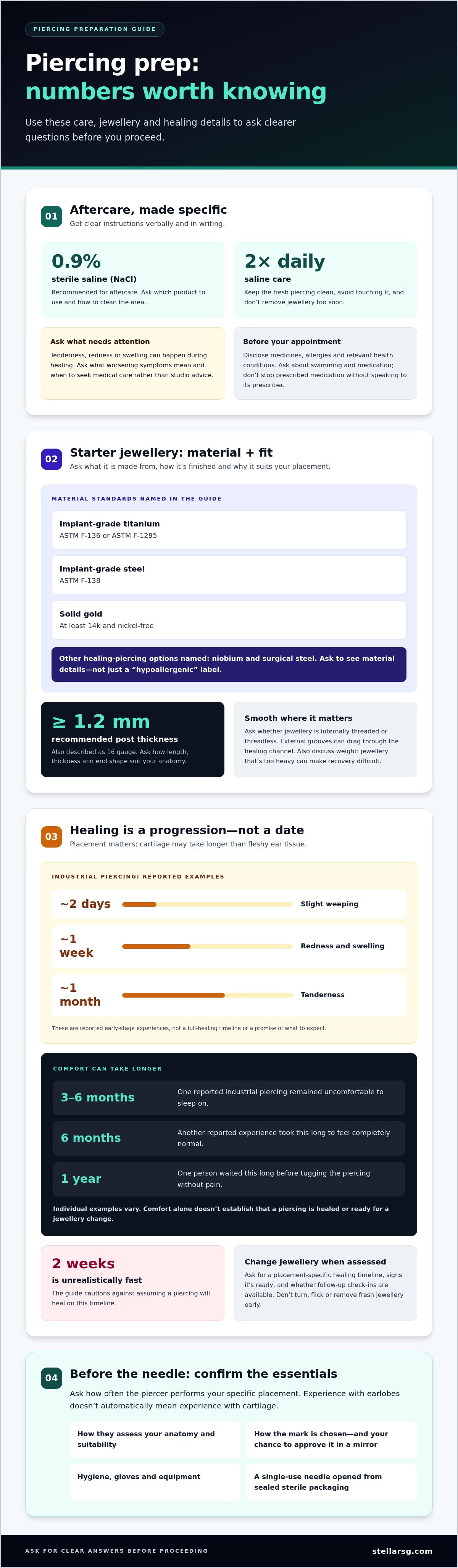
Ask how healing progresses for your exact placement and what signs show it’s ready for a jewellery change. A two-week healing timeline is unrealistically fast for a piercing. Healing depends on placement, and fleshy ear areas generally recover faster than cartilage. Ask for a timeline for your piercing and which changes to expect at each stage.
Industrial piercings show why one estimate can’t describe every stage. Reported experiences include slight weeping for about two days, redness and swelling for about a week, and tenderness for about a month. These early changes don’t mean the piercing is fully healed. Ask what symptoms to monitor and how long to wait before changing jewellery.
Healing can affect everyday comfort, too. One reported industrial piercing remained uncomfortable to sleep on for 3–6 months, while another took 6 months to feel completely normal. One person reported waiting a year before tugging the piercing without pain. These examples show why comfort alone shouldn’t determine whether jewellery is ready to change.
Choose a starter piece you’re happy to wear while healing. Ask whether the piercer offers follow-up check-ins and can help change jewellery once the piercing has healed. A professional assessment can help distinguish a healed channel from one that still needs time. Don’t turn or flick fresh jewellery, or remove it early just to try another style.
Plan your post-healing look without rushing the transition. Ask which shapes and weights suit the placement once healed, and whether the post needs a different fit. For cartilage, let healing guide the change rather than choosing a date based on appearance alone. Keep a note of your piercing date and follow-up advice so you can discuss your progress clearly.
Ask how often the piercer performs your chosen placement and what experience they have with its specific anatomy. Experience with earlobes, for example, doesn’t automatically demonstrate experience with cartilage placements. Ask how they assess suitability, position the mark and choose jewellery for your ear.
Ask for practical details, not just a general statement about experience. Find out what they consider before proceeding, how they respond if the placement doesn’t suit your anatomy, and what aftercare they recommend for that piercing. A clear explanation helps you understand their approach and decide whether you’re comfortable continuing.
Ask how the piercer keeps their skills current and whether they follow recognised professional standards. The Association of Professional Piercers (APP) is a professional standards body, and its member studios can be found through its directory. Membership can be one point to consider, alongside a direct discussion of experience with your requested placement.
Notice how your questions are handled. A careful professional should explain the procedure in plain language, listen to your concerns and give you time to decide. If an answer about placement, experience or aftercare is unclear, ask for clarification before consenting. Make sure you understand the plan before the piercing begins.
In Singapore, age and parental-consent requirements, appointment arrangements and walk-in policies vary by studio. Ask about the policy for your situation, including whether you need an appointment and what consent documents are required.
For an ear piercing, experience should include a considered discussion of placement, anatomy and jewellery fit. To discuss an ear-piercing appointment, bring your placement ideas and questions about the procedure.
Stellar SG offers an Ear Piercing Service for those ready to turn thoughtful questions into a considered next step. If you’re planning an ear piercing, use the points in this guide to discuss placement, jewellery and aftercare before proceeding. Explore Stellar SG’s jewellery collection as you consider the look you want.
A clear conversation can help you understand the service and make a choice that feels right for you. Bring questions about the piercing and the jewellery you’d like to wear, and take time to discuss the details. Contact Stellar SG to learn more about its Ear Piercing Service.
A piercing is a personal choice, and feeling ready matters as much as liking the final look. Knowing what to ask your piercer before getting pierced can turn uncertainty into a clear conversation. You don’t need to have every detail decided in advance. Bring your priorities, explain any concerns, and take the time you need to understand the plan.
If you’re considering an ear piercing, Stellar SG offers an Ear Piercing Service and jewellery. A conversation can help you explore whether the service and jewellery suit what you have in mind, without rushing your decision. It’s a thoughtful next step when you’re ready to move from research to a personal discussion.
Contact Stellar SG with your questions, and take your next step with confidence.
Pause before proceeding and ask for a clear explanation in everyday language. Knowing what to ask your piercer before getting pierced can help you identify which details still need answers, such as the procedure, jewellery or aftercare. If the piercer needs to clarify something, give them time to do so. You can postpone rather than consent while you still feel uncertain.
Choose starter jewellery for its suitability for a fresh piercing, not appearance alone. Ask to see the material description and how the piece fastens, then consider whether its shape fits your everyday routine. For example, a decorative end should sit comfortably without catching on clothing. Keep your preferred post-healing style in mind, but prioritise a piece you can wear during healing.
A common recommendation is no more than three piercings in one sitting, or up to four if all are earlobe piercings. Think about how many fresh areas you can comfortably care for at once, including during sleep and daily routines. If you’re considering several placements, ask how the combination may affect aftercare and whether spacing appointments would be more manageable.
Start with your preferred look, then consider your ear’s shape and how the placement will sit with other earrings. Bring a reference image if it helps explain the style you have in mind. Before the piercing, review the proposed mark in a mirror and speak up if it doesn’t match your preference. A small adjustment beforehand can make the final arrangement feel more considered.
It depends on the placement and how you sleep. For cartilage piercings in both ears, consider doing one ear at a time so you can rest on the unpierced side. Ask how caring for both sides could affect your routine, especially if you usually sleep on one side. Earlobe placements may have different practical considerations, so discuss your plan before choosing both ears.
No. Asking what to ask your piercer before getting pierced is a reasonable part of deciding whether you’re ready. Keep your questions respectful and focused, such as asking what a particular step involves or how to care for the piercing at home. A thoughtful conversation helps you understand what to expect and gives the piercer a chance to address your concerns.


