 SGD
SGD EUR
EUR
 AUD
AUD
 GBP
GBP
 JPY
JPY
 INR
INR
Total: $0.00
Taxes and shipping calculated at checkout


You shouldn't have to choose between a curated ear stack and your favorite playlist. Many enthusiasts believe that a new helix or tragus piercing requires months of silence or enduring sharp, throbbing pain. Protecting new piercings while wearing headphones is a common concern, especially when you fear that a heavy ear cup could lead to infection or cause your jewelry to migrate. We believe your aesthetic and your lifestyle should coexist beautifully, without the stress of physical discomfort or the risk of rejection.
Learn how to enjoy your music without compromising your healing journey with our expert-led guide to headphone safety for new piercings. We'll explore which headphone styles offer the most physical ease, the critical hygiene routines for your gear, and why high-quality 18k gold flat-back labrets are a game-changer for tech-savvy clients. From bone-conduction technology to smart padding modifications, you'll discover how to maintain your style and your sound simultaneously. Our professional insights ensure your journey toward a refined look is as comfortable as it is elegant.
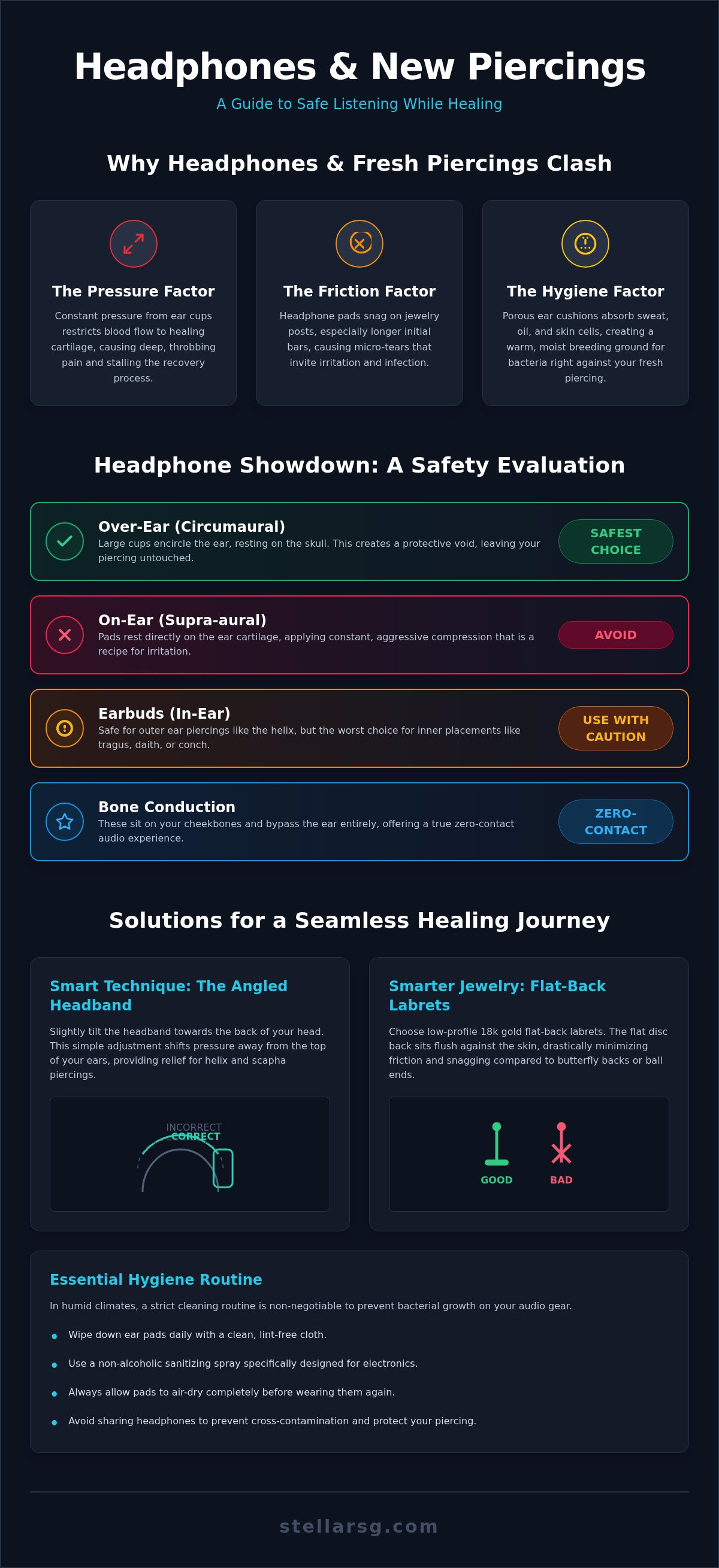
Modern life demands connectivity. Healing ears demand space. When you place a headset over a fresh wound, you're introducing a mechanical stressor that the body isn't designed to handle during recovery. The primary challenge in protecting new piercings while wearing headphones is the "Pressure Factor." Cartilage, unlike earlobes, has a limited blood supply. Constant pressure from tight ear cups restricts this flow even further, stalling the Body piercing healing process and causing deep, throbbing discomfort.
Beyond pressure, friction is a silent enemy. Headphone pads, especially those made of mesh or textured fabric, easily snag on jewelry posts. If your piercer used a longer bar to accommodate initial swelling, that extra length acts like a hook. Every time you adjust your headset, you risk tugging on the delicate fistula. This friction is a major hurdle in protecting new piercings while wearing headphones, as it causes micro-tears that invite irritation.
Hygiene is the final hurdle. Ear cushions are porous. They absorb sweat, skin cells, and oils, creating a warm breeding ground for microbes. When these cushions sit against a new piercing, they trap heat and moisture. This creates a "greenhouse effect" inside the ear cup, which can lead to localized infections or persistent swelling. Without a dedicated cleaning routine, your expensive gear becomes a vector for bacteria.
Migration occurs when the body physically moves the jewelry to a new position to escape constant external pressure. It's often subtle until the angle of your earring looks "off." Chronic irritation also triggers piercing bumps, which are small elevations of tissue or hypertrophic scarring. Ignoring the pain doesn't just prolong healing; it can lead to permanent changes in your ear's silhouette. Choosing a professional piercing service is the first step to avoiding these complications through proper initial placement.
Different placements face different risks. The helix and scapha sit right where over-ear pads exert the most force. Conversely, inner-ear placements like the tragus or daith are often safe from over-ear cups but suffer when using earbuds. Earbuds block airflow to the canal, trapping humidity directly against the wound. Identifying your personal "contact zones" is vital. We recommend that you book an appointment for a consultation to ensure your new jewelry is placed perfectly to accommodate your daily tech habits.
Selecting the right audio gear is just as important as choosing your jewelry. The architecture of your headset determines how much physical stress your new piercing endures daily. For most, over-ear (circumaural) headphones are the safest option. These designs feature large cups that encircle the entire ear, resting on the skull rather than the delicate cartilage. This creates a protective void, ensuring your jewelry remains untouched and free from pressure.
On the opposite end of the spectrum, on-ear (supra-aural) headsets are the "danger zone." These models rest their weight directly on the ear leather. This constant compression is a recipe for irritation bumps and delayed healing. If you're serious about protecting new piercings while wearing headphones, avoid on-ear styles entirely until your piercer confirms the fistula is fully matured. The mechanical force they apply is simply too aggressive for a fresh wound.
Earbuds (in-ear) offer a middle ground but require strategic use. They're excellent for helix or industrial piercings because they leave the outer rim of the ear completely free. However, they're the worst choice for tragus, daith, or conch placements. Since earbuds sit directly in the concha or against the tragus, they can introduce bacteria and physical trauma to these specific sites. Following NHS piercing aftercare advice is critical here; any equipment entering the ear must be sanitized to prevent localized infections. If you aren't sure which style suits your new look, you can always consult our expert piercers for a personalized recommendation based on your ear anatomy.
For those seeking a truly zero-contact experience, bone conduction headphones are an underrated alternative. These devices sit on your cheekbones, bypassing the ear entirely. They're the ultimate solution for those who want high-quality audio without risking their aesthetic investment during the first few weeks of recovery.
Earbuds are ideal for outer-rim placements like the flat or helix. If you must use them for a piercing that is still tender, try the "one-ear" trick. Wear only one earbud in your healed ear while leaving the new piercing side completely open. This allows you to stay connected without risking your health. Remember that cleaning your earbuds is a non-negotiable daily task. Use a sterile wipe to ensure no microbes reach your jewelry or the surrounding skin.
Protecting your aesthetic investment shouldn't mean sacrificing your audio experience. While we've discussed the mechanical risks of pressure and friction, practical solutions exist for the modern music lover. Protecting new piercings while wearing headphones requires a blend of creative positioning and professional jewelry management. It's about finding the balance between your lifestyle and your body's need to heal without interruption. This focus on bodily harmony is shared by specialists like Precision Spinal Care, who emphasize how proper spinal alignment supports the body's natural ability to recover from daily physical stressors.
One of the most effective methods is the "Angled Headband" technique. Instead of resting the headband directly over the apex of your skull, shift it forward toward your forehead or back toward the nape of your neck. This change in geometry often creates a natural gap between the ear cup and your healing cartilage. It's a simple adjustment that significantly reduces the risk of snagging while maintaining a secure fit for your device.
For essential gaming sessions or long work calls, consider applying "Donut Pillow" logic to your headset. You can use sterile gauze buffers to create a small, circular "nest" around the piercing site. This elevates the headphone pad slightly, ensuring the weight of the device rests on the gauze rather than the jewelry. This aligns with professional piercing aftercare standards, which emphasize avoiding undue trauma from friction and pressure during the early stages of recovery.
Beyond shifting the headband, focus on the "cup tilt." Most premium headphones feature swiveling hinges. By tilting the bottom of the cup outward, you can relieve pressure on a fresh helix while maintaining a decent seal for sound. Always test the "wiggle room" before you commit to a long session. If you feel any pulsing or sharp discomfort, remove the headset immediately. This allows blood flow to return to the area, preventing the irritation bumps often caused by chronic compression.
The length of your jewelry post is a critical factor in your comfort. Most initial piercings use a longer bar to accommodate swelling, but this extra length is prone to catching on headset foam. Once the initial swelling subsides, usually after four to six weeks, consulting your professional piercer about downsizing is essential. Switching to a low-profile, 18k gold flat-back labret reduces the physical profile of the jewelry. This makes protecting new piercings while wearing headphones much easier. There's simply less metal for the ear cup to press against, creating a safer environment for your healing journey.
Singapore's tropical climate presents a unique challenge for anyone healing a new ear curation. The combination of high humidity and consistent heat creates an environment where bacteria thrive, particularly on porous surfaces like headphone cushions. When protecting new piercings while wearing headphones, you must account for the "Singapore Factor." Sweat trapped between your skin and the ear cup foam can quickly lead to irritation or localized infection if not managed with precision and care.
Your post-use routine is just as vital as the piercing itself. After every listening session, ensure the ear area is completely dry. Use a piece of sterile non-woven gauze to gently pat away any moisture. Never leave the area damp. This simple step prevents the skin from softening too much, which can make it more susceptible to tearing or bacterial entry. If you've just finished a commute in the heat, a quick application of sterile saline spray helps neutralize the salts in your sweat, keeping the site pristine.
Hygiene also extends to your social habits. During the healing phase, sharing headphones is a high-risk activity. Even with close friends or family, the transfer of skin flora can introduce unfamiliar microbes to your wound. Keeping your tech exclusive to you is a non-negotiable rule for a successful healing journey.
Maintaining your equipment is a specialized task that requires a methodical approach to ensure your tech remains an asset rather than a liability:
It's normal for a new piercing to feel warm, but "healing heat" should subside quickly after you remove your headphones. If the warmth persists or is accompanied by yellow discharge and persistent swelling, you may be facing a sweat-induced infection. In these moments, a total "tech break" is required. Prioritize your health over your audio. For a deeper look at managing complications, read our troubleshooting difficult piercings guide.
If you notice any unusual changes in your piercing's appearance after using your headset, don't wait for the issue to escalate. Book a professional check-up at one of our central Singapore locations to ensure your healing remains on track.
Success in protecting new piercings while wearing headphones begins long before you put on your headset. It starts with the initial consultation. Our experts at Stellar SG understand that your jewelry must accommodate your digital life. By assessing your ear anatomy alongside your preferred headphone style, we ensure your piercing is placed to avoid primary pressure points. This proactive approach minimizes the risk of migration and chronic irritation from the very first day.
Choosing the right materials is the next pillar of safety. We exclusively use 18k gold for our premium ear piercings. This high-purity metal offers superior biocompatibility, which is essential when the area is subjected to the occasional heat and pressure of a headset. High-purity 18k gold provides an inert, biocompatible surface that prevents irritation for sensitive skin, even when moisture and heat are trapped by headphones in Singapore's intense humidity.
Our signature 18k gold flat-back labrets are the gold standard for comfort. They feature a low profile that sits flush against your skin. Unlike traditional butterfly backs or bulky hoops, these studs don't "poke" or snag on your headphone pads. We utilize internally threaded and threadless designs to ensure the jewelry surface is perfectly smooth. This eliminates micro-crevices where bacteria hide, providing a safer experience for tech users.
Designing your ear stack is a personal journey. At Stellar, we offer custom "Ear Curation" services that account for your aesthetic goals and your tech habits. Whether you're a professional gamer or a daily commuter, we help you choose placements that look elegant and remain comfortable. Don't forget the importance of your follow-up appointment. Downsizing your jewelry post-swelling is the most effective way to ensure long-term success when protecting new piercings while wearing headphones.
Our commitment to your healing journey continues long after the needle. We provide detailed aftercare instructions and specialized jewelry options that cater to your specific needs. Every step of our process is designed to be reassuring, elegant, and safe. We believe that your style should never be a source of physical stress.
Our piercers are dedicated to providing a sophisticated and attentive experience for every client. We take the time to understand your lifestyle, ensuring your new curation fits seamlessly into your daily routine. Ready for a new look? Book your appointment at Stellar SG today.
Achieving a stunning ear curation shouldn't require you to silence your favorite music. Protecting new piercings while wearing headphones is entirely possible when you prioritize specialized jewelry and mindful hygiene. By choosing deep-cup over-ear models and maintaining a meticulous cleaning routine, you can navigate the healing process with confidence. Remember that the foundation of a successful piercing lies in professional placement and the use of premium, biocompatible materials like 18k gold.
At Stellar SG, we combine medical-grade sterilization standards with the artistry of expert piercers across more than 8 convenient locations. Whether you're looking for a low-profile flat-back labret or a complete ear curation designed for your lifestyle, we're here to provide a safe, elegant, and attentive experience. Take the first step toward a beautiful and comfortable recovery today.
Book Your Safe & Elegant Piercing Appointment
Your journey to a refined look is our priority, and we look forward to helping you shine.
You should wait at least 4 to 6 weeks before wearing over-ear headphones. This period allows the initial swelling to subside and the fistula to begin its stabilization process. Cartilage piercings often require even more time due to their limited blood supply. If you must use them sooner, ensure the ear cups are deep enough to create a complete void around the jewelry without any physical contact.
No, you should avoid earbuds entirely during the first few months of healing a tragus piercing. The physical pressure of an earbud sits directly against the tragus, which can lead to significant trauma or piercing migration. This contact also traps bacteria inside the ear canal. It is much safer to use over-ear headphones with extra-deep cups that bypass the inner ear area completely until your piercer confirms recovery is complete.
Yes, chronic pressure from a tight headset can cause a piercing to shift into a crooked angle over time. This process is known as migration and is a common result of constant mechanical stress on healing cartilage. Protecting new piercings while wearing headphones is essential to maintain the elegant alignment of your jewelry. If you feel any pulsing or pressure, it is a sign that the headset is disrupting the natural healing path.
Remove the headset immediately and apply a sterile saline spray to soothe the area. Pain is your body's primary signal that the pressure is too high or that friction has caused micro-tears in the tissue. Take a total break from headphones for several days to allow blood flow to return to the cartilage. If the pain is accompanied by persistent redness or unusual discharge, contact your professional piercer for a check-up.
Gaming headsets are often more problematic because they typically feature a tighter clamping force than standard lifestyle models. This extra pressure is designed for sound isolation but can be devastating for a fresh helix or conch piercing. Additionally, gamers often wear headsets for several hours without breaks. This extended use traps heat and sweat, which creates a breeding ground for bacteria in Singapore's humid climate.
It is generally not recommended to use band-aids as they trap moisture and harbor bacteria directly against the wound. The adhesive can also catch on your jewelry and cause painful tugging during removal. A better approach is to use a clean piece of sterile gauze as a temporary buffer. However, the most effective solution is simply choosing headphones that provide enough physical space to avoid the need for any covering at all.
Wipe down all non-porous surfaces with 70% Isopropyl alcohol and clean mesh pads with a damp, soapy cloth. Sanitizing your equipment is a non-negotiable step for protecting new piercings while wearing headphones. You must ensure the pads are completely dry before putting them on. This prevents moisture from being trapped against your skin, which is a leading cause of localized infections for tech users in tropical environments.
Yes, bone conduction headphones are the safest alternative for all types of ear piercings. These devices rest on your cheekbones and bypass the ear architecture entirely. This zero-contact design eliminates the risks of pressure, friction, and bacterial transfer. They are an excellent investment for music lovers who want to enjoy high-quality audio while ensuring their healing journey remains seamless, elegant, and free from complications.


