 SGD
SGD EUR
EUR
 AUD
AUD
 GBP
GBP
 JPY
JPY
 INR
INR
Total: $0.00
Taxes and shipping calculated at checkout


If you’re wondering how to heal a difficult cartilage piercing, repeated tenderness or swelling can make it hard to tell ordinary irritation from a possible infection. Conflicting aftercare advice can add to the uncertainty, but stronger cleaning or more handling is not necessarily the answer.
Cartilage piercings can take 6 to 12 months to heal, sometimes longer. During that time, sleeping on the ear, wearing headphones that press on it, frequent touching, and harsh cleaning products may aggravate the area. A small bump or lingering soreness does not confirm an infection, but worsening symptoms deserve attention.
This guide covers gentle aftercare, common sources of irritation, and warning signs that call for medical care. It also explains how to prepare for professional guidance without putting extra pressure on the piercing. The aim is simple: care for the area gently and choose a clear next step if symptoms do not settle.
A piercing may be difficult to heal when tenderness, redness, or swelling lingers or keeps returning instead of steadily settling. That describes a pattern, not a diagnosis. Mild soreness that eases may differ from discomfort that grows, persists, or repeatedly flares, but neither pattern alone confirms the cause.
Cartilage is firmer and has less blood flow than the soft earlobe, so it may take longer to settle after piercing. Healing commonly takes 6 to 12 months, and can take longer. There is no fixed date that applies to everyone. The healing process for piercings involves stages, which helps explain why irritation during recovery can take time to resolve.
Pressure and movement can repeatedly disturb cartilage tissue while it is healing, making irritation slow to settle.
Small, repeated disturbances can add up. Sleeping with your ear pressed against a pillow, wearing headphones that rest on the piercing, or using a helmet that rubs the area may keep it tender. Hair, clothing, and towels can catch the jewellery. Frequent touching, twisting, or changing jewellery adds movement, even when you are trying to help.
Notice what consistently presses on or catches the site, then reduce that contact where practical. Healing varies, so do not judge progress by a promised recovery date. For broader information about ear-piercing placements, see Stellar SG's ear-piercing service information.
Irritation may involve tenderness, local redness, or mild swelling. Note whether these symptoms are easing or worsening, and whether they return after pressure or a snag. Mild soreness after an accidental bump may settle; increasing discomfort or recurring swelling deserves closer attention. These observations can help you describe what is happening, but they cannot establish the cause.
Appearance alone cannot reliably distinguish irritation from infection. If symptoms worsen or concern you, seek medical advice rather than relying on a photo or online description to diagnose the piercing. Knowing how to heal a difficult cartilage piercing starts with recognising when persistent symptoms need assessment, not more handling or guesswork.
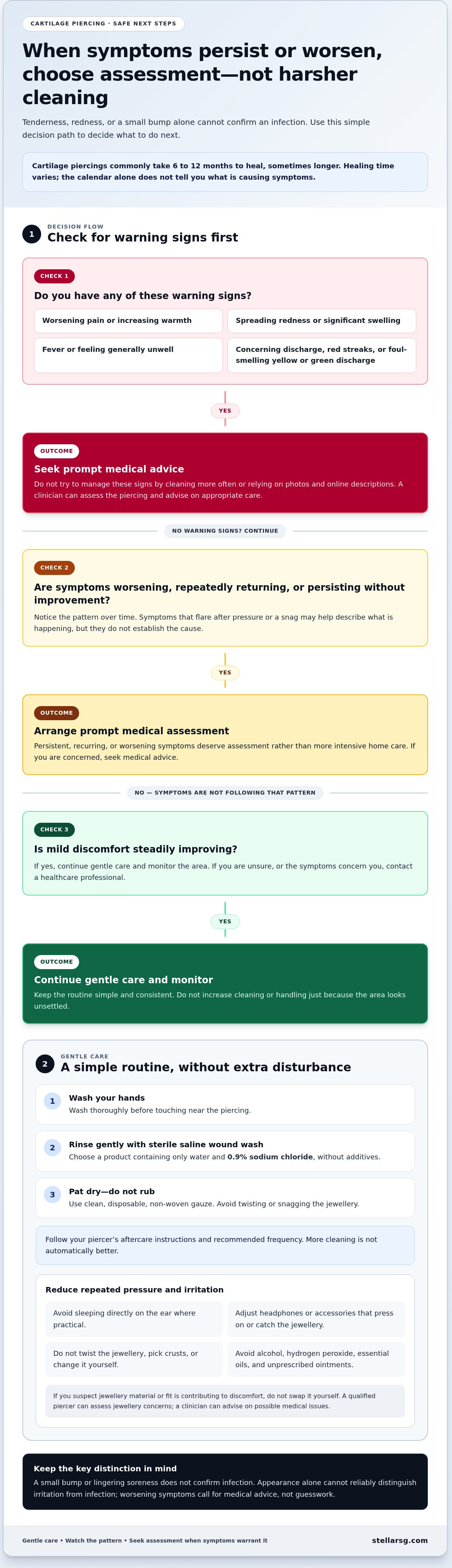
Keep care simple and consistent. Repeated cleaning and movement may add irritation, so a struggling piercing does not need stronger products or more handling. Wash your hands before care, gently rinse with sterile saline wound wash, then pat the area dry without rubbing. Follow your piercer’s aftercare instructions. If you are unsure what is appropriate, compare them with the Association of Professional Piercers’ aftercare guidelines.
More cleaning is not automatically better. Do not add extra sessions because the area looks unsettled. Follow the routine and frequency in your piercer’s instructions. If symptoms worsen, seek medical advice rather than cleaning more often or experimenting with products. The goal is to remove surface debris gently while leaving the piercing undisturbed.
Resist twisting the jewellery, picking away crusts, or changing it yourself. These actions can disturb delicate tissue and cause fresh tenderness. Avoid alcohol, hydrogen peroxide, essential oils, and unprescribed ointments, which may irritate the area. Do not apply products unless a healthcare professional recommends them for your situation.
Reduce pressure and friction where you can. Try not to sleep directly on that ear, and adjust headphones or accessories that press against or catch the jewellery. If you suspect the jewellery material is contributing to discomfort, do not swap it yourself. A qualified piercer can assess jewellery concerns, while a clinician can advise if symptoms suggest a medical issue. Stellar provides professional ear-piercing services. This guidance is not a substitute for medical care.
Gentle saline care cleans the area without repeatedly disturbing it. Aggressive cleaning can add irritation rather than help it heal. A calm, consistent routine is a sensible first step in how to heal a difficult cartilage piercing, while worsening symptoms call for professional assessment.
Tenderness or a small amount of redness may occur with irritation, but no single symptom confirms what is happening. Online articles, photos, and symptom checklists cannot diagnose an infection or replace medical assessment. Cartilage infections can become serious, so do not rely on home care alone if symptoms are getting worse or you feel unwell.
Seek prompt medical advice if you notice worsening pain, spreading redness, increasing warmth or swelling, concerning discharge, a fever, or a general sense of being unwell. Red streaks or foul-smelling yellow or green discharge also need prompt attention. A clinician can assess the piercing and advise on appropriate care.
If mild discomfort is steadily improving, continue gentle care and monitor it. Arrange prompt assessment if symptoms persist without improving, return repeatedly, or worsen. Fever, spreading redness, significant swelling, or concerning discharge should not be managed by simply cleaning more often. If symptoms are severe or rapidly worsening, or you feel seriously unwell, seek urgent medical care.
Cartilage concerns deserve care rather than guesswork. If you suspect infection, do not remove the jewellery unless a healthcare professional advises you to. Describe your symptoms clearly and seek medical guidance about what to do next.
Redness, swelling, tenderness, and bumps can have different causes, and their appearance can vary. A photo cannot show how warm the area feels, how quickly it is changing, or what is happening beneath the skin. For general information on signs of an infected cartilage piercing, use the source as background, not as a way to diagnose yourself.
Before an appointment, note when symptoms began, whether they are improving or worsening, and any discharge or changes in pain. Mention recent snags, pressure, cleaning products, or jewellery adjustments. These details can help a healthcare professional assess the situation. Do not start antibiotics or apply medication unless it is recommended for you. Knowing how to heal a difficult cartilage piercing includes recognising when gentle aftercare is no longer enough and clinical assessment is the safer next step.
Jewellery that presses, moves excessively, or catches on clothing can keep a cartilage piercing uncomfortable. Material sensitivity is another possibility, but redness or soreness alone cannot confirm it. If jewellery seems too tight, presses into the skin, or snags repeatedly, arrange an in-person assessment with a qualified piercer. If symptoms are worsening or suggest infection, seek medical advice instead.
Do not remove or change jewellery yourself, especially if there is significant swelling, concerning discharge, or another possible sign of infection. A clinician can advise on medical concerns; a qualified piercer can assess fit and jewellery-related irritation. No particular material or style is a guaranteed fix. Learn more about Stellar’s professional ear-piercing service.
| Possible trigger | What to notice | Next step |
|---|---|---|
| Pressure | The jewellery feels tight, presses into the skin, or the area is sore where it touches. | Reduce pressure and arrange an in-person fit assessment. Seek medical care if swelling or pain is worsening. |
| Snagging or movement | The piercing catches on hair, clothing, towels, or accessories, or shifts repeatedly. | Minimise contact and note what catches it. Do not twist or change the jewellery yourself. |
| Possible material sensitivity | Irritation seems to persist around the jewellery, but appearance alone cannot identify the cause. | Have the jewellery assessed by a qualified piercer; ask a clinician about persistent or concerning symptoms. |
| Daily pressure or friction | Discomfort flares after sleeping on that side or wearing headphones or a helmet. | Adjust habits where practical and track when symptoms occur. |
Sleeping directly on the piercing can put prolonged pressure on it. Headphones, helmets, or accessories may rub or press against the jewellery, while hair products and cosmetics can transfer onto the healing area. Keep products away where practical, and avoid anything that repeatedly touches or catches the site.
Keep a brief note of triggers, symptom changes, and any jewellery adjustments. Share those details during an assessment. This can help a professional consider whether pressure, movement, or another factor may be contributing, without treating any one clue as a diagnosis. Reviewing these influences can help you decide how to heal a difficult cartilage piercing safely.
If your piercing keeps flaring up, take a measured approach rather than changing several things at once. Reduce pressure and friction, continue gentle aftercare, and monitor whether symptoms are improving or worsening. Seek medical assessment promptly for concerning symptoms such as spreading redness, significant swelling, fever, or feeling unwell. Severe or rapidly worsening symptoms need urgent medical care.
A qualified piercer can discuss piercing placement, jewellery fit, and handling within their professional role, but cannot diagnose or treat a suspected infection. If infection or illness is a concern, speak with a healthcare professional. If symptoms are concerning, do not remove or change the jewellery on your own; seek advice first.
A brief record can make an appointment more useful. Note when symptoms started, what has changed, and whether discomfort is improving, recurring, or worsening. Include any products used, jewellery changes or adjustments, and situations that put pressure on or snag the ear.
These details support a professional assessment, but they cannot replace an examination. Bring your notes and explain what you have observed without trying to diagnose the cause yourself.
If symptoms seem linked to fit, placement, or jewellery movement, a piercer may be able to assess those piercing-related factors. For suspected infection, worsening pain or swelling, fever, or feeling unwell, seek healthcare assessment instead. When considering how to heal a difficult cartilage piercing, matching the concern to the right professional is an important part of a safe next step.
Healing can take time, and gradual improvement may not happen overnight. Keep care gentle and monitor the area, but do not wait for worsening symptoms to resolve on their own. Stellar provides professional ear-piercing services. Visit the ear-piercing service page for information.
Learning how to heal a difficult cartilage piercing starts with gentle care and reducing pressure, friction, and unnecessary handling. Notice whether symptoms are settling or getting worse, and remember that redness or tenderness alone cannot tell you the cause.
If discomfort persists or worsens, seek an appropriate assessment. A piercer can offer guidance on jewellery fit and placement, while a healthcare professional should assess possible infection or symptoms such as fever, spreading redness, or feeling unwell. Keep a brief record of changes and products used so you can explain what is happening clearly.
Healing may take patience, but you do not have to guess your next step. For professional ear piercing at Stellar SG, with retail locations across Singapore, explore Stellar’s ear-piercing service. Keep care gentle and seek medical help promptly if symptoms worsen.
A cartilage piercing commonly takes 6 to 12 months to heal, and sometimes longer. The timeline varies with the piercing, your body, and repeated pressure or irritation. It may look settled before the tissue has fully healed, so do not assume it is ready for a jewellery change just because it feels comfortable. Follow your piercer’s aftercare guidance, and seek assessment if symptoms persist or worsen.
Some tenderness can occur during healing, particularly after pressure or an accidental snag, but persistent or worsening soreness deserves attention. Notice whether discomfort is gradually easing or becoming more intense, and whether it returns after a specific trigger. Soreness alone cannot identify the cause. If it is accompanied by spreading redness, warmth, significant swelling, concerning discharge, fever, or feeling unwell, contact a healthcare professional promptly.
Yes, sterile saline wound wash can be used to rinse a piercing gently. Choose a product containing only water and 0.9% sodium chloride, without additives, and follow your piercer’s instructions. Wash your hands first, avoid twisting the jewellery, and pat the area dry with clean disposable gauze. More cleaning is not automatically better. If the site worsens or you are unsure what care is appropriate, seek professional advice.
Do not remove jewellery from a piercing you suspect is infected unless a healthcare professional advises you to. The opening may begin to close, which could interfere with drainage and complicate assessment or treatment. Cartilage infections can be serious, so seek medical advice for worsening pain, spreading redness, heat, significant swelling, concerning discharge, fever, or feeling unwell. Avoid changing the jewellery yourself while waiting for advice.
No. Twisting or rotating the jewellery can disturb healing tissue and add irritation. Leave it in place during routine care rather than turning it to clean around the piercing. Wash your hands before care, rinse gently with sterile saline as directed, and pat dry without rubbing or snagging. If jewellery feels tight, catches repeatedly, or presses into the skin, have it assessed instead of adjusting it yourself.
Try not to sleep directly on a healing cartilage piercing. Sustained pressure can leave it tender or aggravate irritation. If you are a side sleeper, adjust your position or use a travel pillow with a central opening so your ear can rest without pressing against the surface. Keep pillowcases clean and notice whether soreness is worse after sleep. If symptoms continue to worsen, seek professional assessment.
Seek prompt medical advice for worsening pain, spreading redness, warmth, significant swelling, concerning discharge, fever, or feeling unwell. Red streaks or foul-smelling yellow or green discharge also warrant prompt attention. Get urgent medical care if symptoms are severe or rapidly worsening, or you feel seriously unwell. Online information cannot diagnose an infection. Do not remove the jewellery or start medication on your own; ask a healthcare professional what to do.


