 欧元、澳元、英镑、日元、印度卢比


全部的: $0.00
结账时计算税费和运费
 SGD
SGD


What if the best way to get a yes is to show you’re ready to hear “not yet”? If you’re wondering how to convince my parents to let me get a piercing, it’s natural to worry that the conversation will end in an immediate no or turn into an argument. A calm, thoughtful approach can help your parents understand why the piercing matters to you and take your request seriously.
You don’t need to have every answer or expect instant approval. You can prepare to explain what you want, listen to your parents’ concerns, and talk through practical responsibilities such as healing and aftercare. This guide will help you make a respectful case, answer safety questions, and respond if your parents are hesitant. You’ll also find ways to agree on a useful next step, such as gathering information together, even if the decision takes time.
Feeling excited about a piercing and nervous about asking your parents can happen at the same time. You can’t control their first response, but you can make it easier for everyone to talk openly by choosing a considerate moment and explaining what you’re asking for clearly.
Look for a calm, private time when your parents aren’t rushing to leave, dealing with a stressful situation, or focused on another task. Avoid bringing it up in the middle of an argument. An ultimatum or a surprise announcement can make the conversation feel like a demand instead of a request.
Start simply. Name the piercing you’re considering, then say why you’d like to talk about it. For example: “I’ve been thinking about getting my earlobes pierced. I like how earrings can express my personal style, and I’d like to talk through the idea with you. What’s your first reaction?” It sounds sincere because it’s direct, gives a reason, and leaves room for their response.
After you ask, pause and listen. Your parents may have questions or need a moment to think. Try not to fill every silence with more reasons. Giving them space shows that you’re inviting a real conversation, not expecting an immediate yes.
Use your own words rather than repeating arguments you’ve heard from friends or online. Maybe you like the look, see it as a way to express yourself, or have a personal reason for wanting it. You don’t need to make the choice sound profound. A straightforward explanation can be more convincing than an over-rehearsed speech.
Be specific about the location and what you have in mind. “I want a piercing” leaves your parents guessing; naming the ear placement gives them something concrete to consider. If you’re still deciding, say so honestly. You can also share a neutral resource about the history of body piercing to give your family broader context, while making clear that your own reasons matter most.
If you’re searching for how to convince my parents to let me get a piercing, remember that the goal of this first conversation isn’t to win a debate. It’s to help them understand your point of view and learn what concerns they may have. Their answer might not come right away. Thank them for listening, and let them know you’re willing to continue the conversation when they’ve had time to consider it.
Preparation isn’t about collecting arguments to wear your parents down. It’s about understanding what the decision involves and being ready to discuss their concerns honestly. A well-prepared request is specific, informed, and open to questions.
Your parents may want to know what piercing you’re considering, how it’s done, and what care it requires. They may also ask about healing, timing, school or activity rules, and whether you’re ready to take responsibility for daily aftercare. You don’t have to know everything. Knowing what you still need to check is part of being prepared.
Start with reliable information about professional ear piercing and aftercare, rather than relying only on friends’ experiences or social media. Read guidance together, and note any points that aren’t clear. Stellar SG’s Singapore ear-piercing guide can be one resource to review as a family.
Avoid promising that a piercing will be painless, heal without problems, or suit everyone. Healing and care can vary, so if you or your parents have questions about what to expect, write them down for a qualified professional. You can also review the studio’s published service information together to understand what it explains and what you may need to ask.
Think through how a piercing might fit into your routine before raising the subject. For example, consider whether school rules, sports, or other activities could affect the timing, and how you’d remember any recommended care. Be ready to explain how you’d handle those responsibilities without expecting your parents to manage them for you.
If you’re considering a studio in Singapore, check its current age, consent, and accompanying-adult requirements directly with that studio. Don’t assume they’re the same everywhere or rely on outdated information. Stellar SG provides ear-piercing services at its Singapore retail locations, and you can review its ear-piercing service information with your parents as part of your research.
Make a short list of questions to discuss:
If you don’t know an answer, say so. Try: “I’m not sure, but we can check the studio’s current information together before deciding.” That response shows care and maturity. It also keeps the conversation focused on learning, not winning.
It’s disappointing to hear “no,” especially when you’ve been looking forward to a piercing. But convincing your parents doesn’t mean pushing until they give in. The aim is to understand their concerns and decide whether there’s a respectful next step. A respectful conversation can continue even when the first answer is no.
Before replying, ask what worries them most. Is it healing, safety, cost, school expectations, or whether you’re ready to care for it? Listen to the full answer, then reflect it back: “It sounds like you’re most concerned about how I’d manage the aftercare. Is that right?” This shows you’re taking their concern seriously, even if you don’t agree with every assumption.
Answer only what you know. If a question needs research, don’t guess or turn uncertainty into a debate. Try saying, “I’m not sure about that. Could we look for reliable information together?” For questions about professional care or a studio’s procedures, you can suggest reviewing its service details together or asking a qualified professional. A considered answer builds more trust than a quick comeback.
A hesitant response and a firm no aren’t the same, but don’t assume that hesitation means your parents will eventually agree. Ask calmly: “Would you be open to talking about this again after we’ve looked into your questions, or would you prefer I leave it for now?” Their answer can help clarify whether they need more information, more time, or want to set a boundary.
If they’re open to revisiting it, agree on a practical next step. You might review professional ear-piercing information together, check current studio requirements directly, or choose a time to talk again. Waiting is a reasonable outcome. It gives everyone room to consider the decision without turning every conversation into another request.
If they say no clearly, acknowledge the answer, even if you feel upset. Don’t hide plans, arrange a piercing behind their backs, or use guilt, comparisons, or repeated pressure to change their minds. Those approaches can damage trust and make future conversations harder. If you’re thinking about how to convince my parents to let me get a piercing, remember that listening and honesty matter as much as explaining why you want one.
You could close with: “I understand you’re not comfortable with it right now. Thanks for explaining why. If you’re willing, I’d like to understand whether there’s anything that could change your mind, but I won’t make plans without talking with you.” That leaves the conversation calm and gives your parents a chance to respond without pressure.
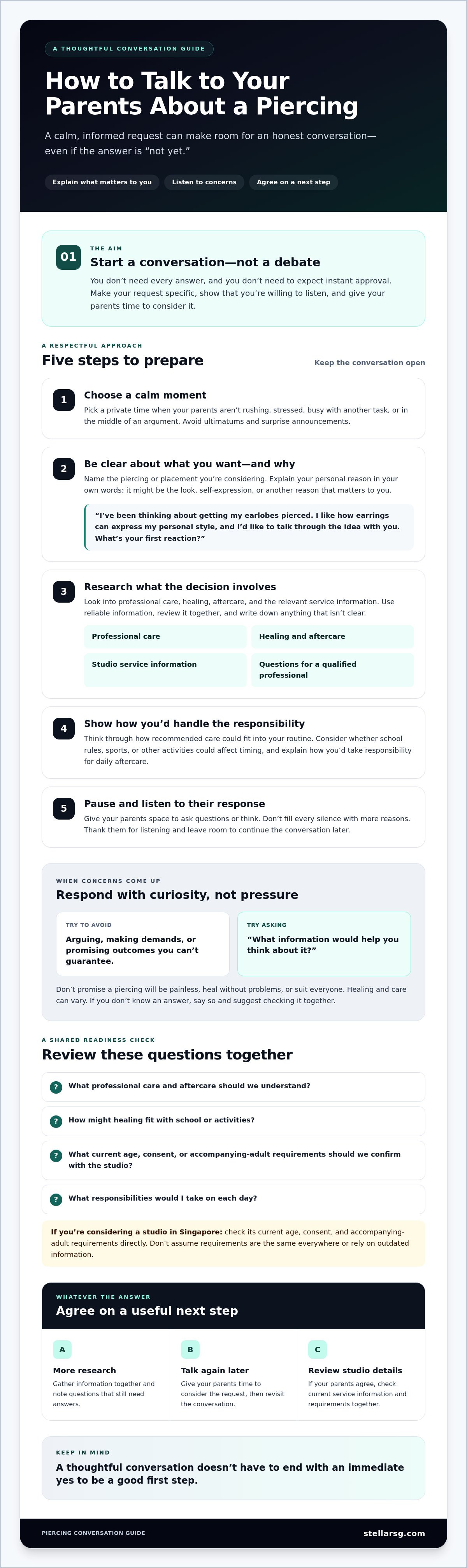
A shared plan makes the discussion practical. It isn’t a sales pitch or a promise that your parents will agree. It gives everyone a clear way to review what you want, what responsibilities are involved, and what questions still need answers.
Write down the exact piercing you’re considering, where it would be, and why you want it. If you’re still comparing options, Stellar SG’s ear-piercing types and styling guide can help you and your parents discuss possibilities more specifically.
Then make a checklist that gives your parents room to add their own questions. You might include:
Let your parents identify what information they’d need before making a decision. They might want to understand the service, discuss timing, or clarify what support they’d expect you to provide. Treat those points as part of the plan, not obstacles to argue away.
Once you’ve agreed that more information would be useful, review Stellar SG’s ear-piercing service details together. Stellar SG provides professional ear-piercing services at its retail locations in Singapore. If questions remain, contact the relevant studio to confirm its current policies, including age, consent, and accompanying-adult requirements, and ask any service-related questions directly.
Keep information gathering separate from approval. Reading about a service doesn’t mean your family has agreed to proceed. It simply helps everyone make a more informed decision. You can say, “Could we review this together and write down anything we still need to check?” That invites your parents into the process without putting pressure on them.
Keep the checklist flexible. If your parents want more time, add that as the next step. If they’re ready to consider it, agree on what to confirm before making any plans. A thoughtful plan shows you’re taking both your interest and your family’s concerns seriously.
Once you’ve shared your reasons and heard your parents’ response, let that answer guide the next step. A yes, a no, and a “not yet” each call for a different kind of follow-up. The aim is to move forward thoughtfully, without turning the conversation into a daily negotiation.
Before making plans, confirm the relevant studio’s current age, consent, accompanying-adult, and appointment requirements directly. Policies can change, so don’t rely on assumptions or information that may be out of date. Ask any service-related questions before deciding whether to proceed.
Plan any visit together. That gives your parents the chance to hear information firsthand, ask about the service and care, and discuss the decision with you. Agreement to consider a piercing doesn’t automatically mean every detail is settled. Make sure everyone understands what’s involved before arranging anything, and don’t book unless any required consent has been confirmed.
If your parents need more time, ask whether they’d be comfortable agreeing on when to revisit the subject. A clear check-in point can help you avoid restarting the same conversation every day. You might say, “I understand you need time. Would it be okay if we talked about this again after we’ve reviewed the information?”
If they give a firm no, thank them for listening and ask whether they’re open to discussing their reasons further. If they aren’t, respect that boundary. Don’t hide plans, make an appointment without their knowledge, or try to create pressure through arguments or comparisons. A pause can be part of making a responsible decision, even if it feels disappointing now.
Thinking about how to convince my parents to let me get a piercing can make the conversation feel like it has to end in approval. It doesn’t. You can still show maturity by listening, following through on what you agreed to, and allowing your parents time to consider the request. If the answer is “not yet,” use the time to reflect on whether you’re still comfortable with the choice and what questions remain.
If your family has agreed to proceed and confirmed the relevant studio’s current requirements, you can book an ear-piercing appointment together. Let the next step reflect a shared decision, not pressure to reach one quickly.
Learning how to convince my parents to let me get a piercing starts with a thoughtful conversation, not a perfect argument. Explain why the piercing matters to you, prepare to discuss safety and practical responsibilities, and listen carefully to your parents’ concerns.
A yes, a no, or a “not yet” can each lead to a clear next step. If your parents need time, agree on whether and when to revisit the topic. If they’re open to the idea, review professional service details together and confirm current studio requirements before making plans. Respectful patience can help keep trust intact, whatever the answer.
When your family is ready to explore professional ear-piercing services, Stellar SG provides ear-piercing services at multiple retail locations in Singapore and offers a curated jewelry collection. You can explore professional ear-piercing services together as a resource for your discussion.
Stay curious, honest, and open to taking your time. A considered decision is a good step forward.
Choose a calm moment and make a clear, respectful request. Name the piercing you’re considering, explain why it matters to you, then ask what your parents think. Listen to their concerns before replying. It can help to research practical details in advance, but treat the conversation as a chance to understand each other, not a debate to win. They may need time before deciding.
Ask what specifically concerns them, such as the procedure, aftercare, or choice of studio. Acknowledge their worry without promising that a piercing is risk-free. Offer to review reliable service information together and write down questions you can’t answer. You and your parents can contact the relevant studio or a qualified professional for guidance. A calm, informed discussion is more helpful than dismissing their concerns.
Don’t hide plans or mislead your parents to get a piercing. Secrecy can damage trust, and studios may have age, consent, or accompanying-adult requirements to confirm directly. If your parents say no, ask whether they might be open to another conversation later, without pressuring them. Respecting their answer now can help preserve trust and leave room for a calmer discussion in the future.
Show responsibility through preparation and follow-through, not promises alone. Learn what aftercare guidance involves, consider how you’d manage it, and think about whether school, sports, or other commitments affect the timing. Be honest about what you still need to find out. Invite your parents to review the information with you and agree on which questions need answers before anyone makes plans.
Ask calmly whether their answer is final or whether they need more time or information. Listen without repeating your request until it feels like pressure. If they’re willing to revisit it, agree on a suitable time to talk again after looking into their concerns together. If they give a firm no, respect that boundary. Don’t get pierced secretly or ask someone else to bypass their decision.
Confirm the current requirements directly with the specific studio you’re considering. Age, consent, and accompanying-adult policies may vary by provider, so don’t rely on assumptions or social media advice. Before making plans, ask the studio what applies to your situation. If you’re under the age threshold set by that provider, involve your parent or guardian and follow the studio’s instructions.
Explain that aftercare is part of the decision, not an afterthought. Ask the studio what care guidance it provides and review that information with your parents. Be ready to discuss how you’ll follow professional instructions and raise questions if anything is unclear. Don’t guess at healing timelines or promise there’ll be no issues. Confirm care details with the relevant professional and include your parents in the conversation.


