 欧元、澳元、英镑、日元、印度卢比


全部的: $0.00
结账时计算税费和运费
 SGD
SGD


Is that tiny bit of crusty discharge a sign of a successful recovery or a looming infection? Understanding the piercing healing process is often the difference between a stylish new look and a painful trip to the clinic. In Singapore, where average humidity levels reach 84%, your skin faces unique environmental challenges that can easily extend recovery timelines.
We know it's frustrating to wait months for a simple lobe or cartilage piercing to settle. It's even more stressful when you can't tell the difference between normal lymph fluid and a genuine complication. You deserve a smooth, elegant transition from your initial appointment to wearing your favorite premium jewelry.
This guide helps you master the three essential stages of recovery. You'll learn how to manage your aftercare with our comprehensive 2026 expert checklist. We cover the specific signs of a healthy piercing, the impact of our tropical climate, and the precise moment it's safe to swap your starter studs for gold.
The journey to a beautifully healed piercing is a biological masterpiece. Many people believe a piercing is just a hole in the skin, but it's actually the creation of a fistula. This is a delicate, tube-like tunnel of skin that forms around your jewelry to protect the internal tissue. Understanding the piercing healing process helps you provide the premium care your body deserves during this transition.
It's vital to remember that piercings heal from the outside in. This often creates a false sense of completion; the surface might look calm and elegant while the internal tissue is still incredibly fragile. Because the visible edges seal first, you might be tempted to stop your aftercare routine too early. In Singapore's humid climate, staying diligent with your routine is essential to prevent moisture-related irritation during these internal changes.
Timing varies significantly based on the location of your new accessory. Earlobe piercings typically require a commitment of 2 to 4 months. Cartilage piercings, such as the helix, tragus, or conch, are more demanding and usually take 6 to 12 months to fully stabilize. You should also be aware of the "regression" factor. Any sudden trauma, like snagging your jewelry on a towel or sleeping on it, can restart the healing clock and cause the tissue to revert to an earlier, more sensitive stage.
This initial phase lasts approximately 1 to 2 weeks as your body reacts to the "foreign object." During this time, you'll notice slight swelling, redness, and perhaps a small amount of bleeding or tenderness. Biologically, your body is busy clotting blood and sealing the wound to create a protective barrier. The inflammatory stage is your body’s initial response to the piercing wound as it works to stabilize the area. For a professional start to this journey, you can explore our expert piercing services to ensure the procedure is done with maximum precision.
The proliferative stage is the most active part of the piercing healing process, lasting several weeks to a few months. This is when the fistula tunnel actually forms. You'll likely see "lymph," a clear or slightly pale fluid that dries into "crusties" around the jewelry. This fluid is a sign that your body is building new skin cells to line the tunnel. It's critical to avoid changing your jewelry during this stage; removing the stud can tear the fragile new skin and lead to scarring or closure.
Often called "seasoning," this final stage takes 6 months to a full year. The tissue inside the fistula strengthens and toughens up, becoming more resilient to jewelry changes. You'll know your piercing is seasoned when there's no more redness, discharge, or tenderness when the jewelry is touched. To understand the transition from healing to styling, read our guide on when to change earrings after piercing for a deep dive into Phase 3 safety. If you're ready to start your journey with a safe, professional procedure, book your appointment with our skilled staff today.
The Body piercing healing process requires patience, but the result is a lifetime of stylish, confident expression. By respecting these three biological phases, you ensure your piercing remains a beautiful and healthy addition to your personal style.
The first 30 days of your piercing healing process are the most critical for long term success. During this window, your body works tirelessly to create a "fistula," which is the tunnel of scar tissue that holds your jewelry. Understanding the difference between standard biological reactions and actual complications ensures you remain confident and stylish throughout your recovery.
Most clients experience a range of sensations that, while perhaps slightly uncomfortable, are signs of a healthy immune response. If you notice these symptoms within the first month, your body is likely on the right track:
While some discomfort is part of the journey, certain "alarm signs" indicate that you need professional intervention. If you experience any of the following, don't wait for the symptoms to resolve on their own. Visit a professional piercer or a healthcare provider immediately:
Monitoring your progress daily is the best way to ensure a safe and elegant result. If you feel any uncertainty about how your skin is reacting, it's always safer to book an appointment for a professional assessment by a skilled technician.
Singapore’s tropical climate presents unique challenges for your piercing healing process. With average humidity levels often peaking above 80%, the air itself acts as a barrier to efficient drying. Unlike drier climates where wounds scab and heal quickly, the moisture in the SG air keeps the piercing site damp for longer periods. This constant moisture can soften the skin around the jewelry, making it more susceptible to irritation or minor tears. Maintaining a dry environment is your first priority for a safe recovery.
Active lifestyles are the norm here, but the "Sweat Factor" is a significant risk. Whether you're jogging at East Coast Park or attending a HIIT session, sweat is inevitable. Sweat carries body oils and bacteria that can easily migrate into the piercing channel. You must clean the area immediately after every workout. If you're training in the 32°C heat, rinse your piercing with sterile saline within 15 minutes of finishing your session to prevent salt crystals from crystallizing inside the wound.
Temperature swings also play a role in how your body recovers. In Singapore, we often move between the 32°C outdoor heat and 22°C air-conditioned offices. These 10-degree shifts cause blood vessels to rapidly constrict and dilate. For a fresh piercing, these fluctuations can cause temporary discomfort or slight throbbing as the body regulates blood flow to the tissue. Staying hydrated helps stabilize this response and keeps your lymphatic system moving efficiently.
Singapore’s condo pools and Sentosa beaches are tempting, but you must follow the 1-week "No Swim" rule. Chlorine and sea salt aren't the only concerns; public water sources contain various bacteria that pose a high risk to unhealed tissue. If swimming is absolutely unavoidable, use these steps to protect your investment:
By staying diligent with these local adjustments, you'll ensure your stylish new addition heals perfectly despite the heat. If you're ready for a premium experience, you can book your appointment with our expert team today.
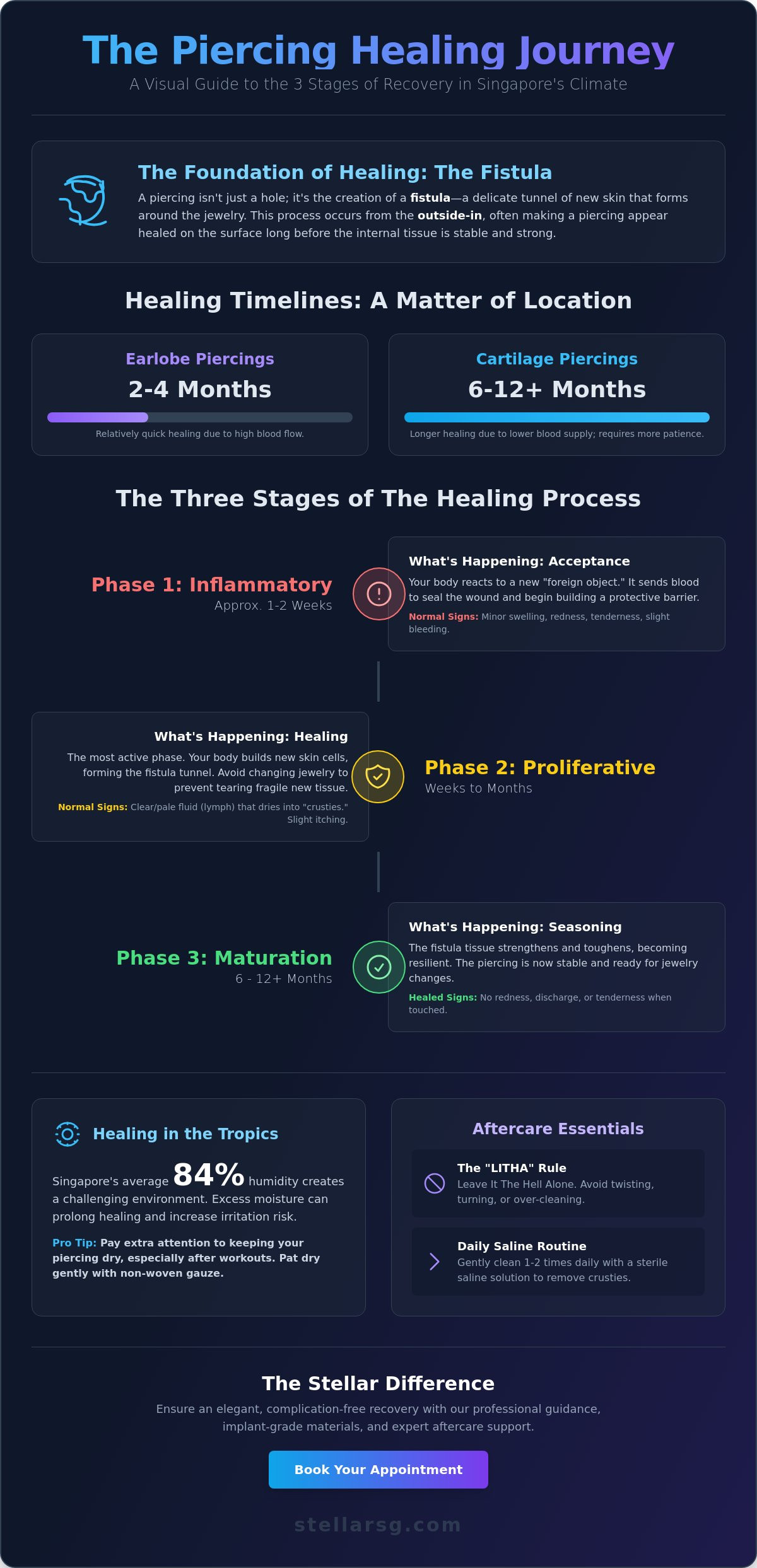
Consistency is the secret to a flawless piercing healing process. Most complications arise from over-cleaning or unnecessary physical interference. Professional piercers advocate for the "LITHA" rule: Leave It The Hell Alone. Your body is biologically designed to heal wounds; your primary role is to maintain a sterile environment and avoid disrupting the tissue as it regenerates.
Clean your piercing twice a day, every day. Excessive cleaning can dry out the skin and lead to irritation bumps, so stick to a strict 12-hour schedule.
In Singapore's humid climate, sweat and oil can accumulate quickly. If you've been outdoors or exercising, a quick rinse with cool water in the shower helps remove salt buildup. Always follow up with your saline routine to ensure the site remains pristine and dry.
Your daily habits significantly impact the piercing healing process. During the first 12 weeks, be mindful of "phone hygiene." Smartphone screens harbor more bacteria than most household surfaces. Clean your device daily with a 70% isopropyl alcohol wipe and use the speakerphone or earbuds to avoid direct contact with a fresh ear piercing.
Sleeping habits require a temporary shift. Pressure reduces blood flow and can cause the jewelry to migrate or heal at an angle. Use a donut-shaped travel pillow and place your ear in the center hole. This simple adjustment prevents the jewelry from pressing against your skull while you rest.
Avoiding common mistakes is just as vital as the cleaning itself. Stick to these three non-negotiables for a safe recovery:
Ready to start your journey with a professional touch? Book your ear piercing appointment at one of our Singapore studios for expert care and premium jewelry options.
Choosing a professional studio like StellarSG sets the foundation for a successful piercing healing process. Our expert piercers use sterile, precision techniques that minimize initial trauma to the tissue. This level of care ensures that the primary healing stage begins without unnecessary complications. We provide a safe, welcoming environment for everyone. Whether it is a toddler getting their first pair of studs or an adult adding to a sophisticated ear curation, our team prioritizes comfort and hygiene above all else.
Our commitment to your safety extends beyond the initial appointment. We understand that a piercing is a journey, not just a single moment. By combining premium aesthetics with medical-grade standards, we help you avoid the common pitfalls of DIY or low-quality piercings. You deserve a recovery that is as beautiful and seamless as the jewelry you choose to wear. To complement your new aesthetic, you might also consider custom-branded apparel from Stitchworx, which specializes in high-quality embroidery and printing for a personalized touch.
High-quality materials are non-negotiable for long-term recovery. We use 18K, 14K gold and implant-grade titanium to reduce the risk of allergic reactions and irritation. These materials are biocompatible; your body is less likely to treat the jewelry as a foreign threat. This leads to a smoother maturation phase and healthier skin. Explore our piercing services for a sterile experience that prioritizes your health. Our Stellar SG selection features elegant designs that prove safety and style coexist beautifully. We focus on "Sensitive" ears, ensuring that even the most reactive skin stays calm during the piercing healing process.
A successful recovery requires professional oversight even after you leave the studio. You can visit any of our 8 locations across Singapore, including NorthpointCity, Bugis Junction, NEX, WaterwayPoint, Century Square, Jem, ION Orchard, VivoCity for a professional check-up. Our staff is trained to spot early signs of irritation before they become significant issues. This proactive approach is part of our dedicated service to the Singapore community.
Mastering the piercing healing process requires a blend of patience and professional aftercare. You've learned that success depends on navigating the three stages of recovery while managing Singapore's unique humidity levels. Consistent cleaning and using the right materials are the best ways to prevent irritation. At Stellar SG, we make safety elegant. We use only implant-grade, hypoallergenic jewelry to protect your skin from the start. With 8+ locations in Singapore's most popular shopping malls, expert help is always nearby. We also offer specialized Stellar Kids protocols, providing a gentle and reassuring environment for our youngest clients. You deserve a piercing experience that's as stylish as it is safe. Our team is ready to guide you through every stage of your recovery with premium care and specialized knowledge. Don't leave your health to chance when you can choose proven expertise.
Book Your Safe & Stylish Piercing Appointment at Stellar SG
We look forward to helping you express your unique style with total peace of mind.
The piercing healing process duration depends entirely on the location of your new jewelry. Earlobes typically require 6 to 8 weeks to stabilize, while cartilage piercings like the helix or tragus can take 6 to 12 months to fully mature. It's vital to remain patient and consistent with your aftercare routine during this entire period to ensure a beautiful and healthy result.
Mild redness is a standard part of the initial 14 to 21 days as your body regenerates tissue. This is a natural response to the procedure and usually fades as the wound stabilizes. If the redness persists beyond 3 weeks or is accompanied by a throbbing sensation and heat, visit our skilled staff for a professional assessment to ensure everything is on track.
You should avoid swimming in public pools, hot tubs, or the ocean for at least 6 to 8 weeks. These water sources contain bacteria and chemicals that can disrupt the piercing healing process and lead to irritation. If you can't avoid the water, use a waterproof bandage and rinse the area thoroughly with sterile saline immediately after you exit the water.
These "crusties" are dried lymph fluid and dead skin cells, which are positive signs that your body is repairing itself. Don't pick at them with your fingernails, as this introduces bacteria and causes micro-tears. Instead, soak the area with a saline solution for 3 minutes to soften the debris, then gently wipe it away with a clean paper towel.
You can typically transition to cleaning once a day after 8 to 12 weeks of consistent care. Wait until you've experienced 10 consecutive days without any redness, swelling, or discharge. Even after this point, it's a good idea to let clean water run over the site during your daily shower to keep your premium jewelry looking its best.
Piercings heal from the outside in, meaning the surface skin often looks perfect while the internal tissue is still fragile. The internal tube of skin, called a fistula, can take up to 365 days to fully strengthen and lose its sensitivity. Avoid rotating or playing with the jewelry, because this can damage the delicate internal layers that are still forming.
Clean the area immediately with sterile saline and check for any bleeding or displacement of the jewelry. If the site feels significantly painful or the jewelry looks crooked, contact a professional piercer within 24 hours. They'll help you manage any sudden swelling and ensure your elegant piercing stays properly aligned during the recovery phase.
Singapore's high average humidity of 84% can trap moisture around the wound, which potentially encourages bacterial growth. It's essential to pat the area dry with a disposable paper towel after every shower or heavy sweat session. Keeping the site dry and breathable is a key step in our specialized care approach for the local climate.


