 SGD
SGD EUR
EUR
 AUD
AUD
 GBP
GBP
 JPY
JPY
 INR
INR
Total: $0.00
Taxes and shipping calculated at checkout


Did you know that 72% of piercing complications in Singapore arise from non-specialized retail settings? If you're currently dealing with a stubborn bump or persistent redness, you aren't alone in your frustration. It's exhausting to invest in a beautiful new look only to face constant swelling and the anxiety of a potential infection. You've likely tried every cleaning tip available, yet the healing process feels stalled. We understand that troubleshooting a piercing that won't heal is about more than just hygiene; it's about reclaiming your comfort and aesthetic confidence.
In this 2026 guide, you'll learn why your piercing is acting up and how to take the professional steps needed for a healthy recovery. We'll identify common culprits like moisture traps caused by Singapore's 84% average humidity and the irritation caused by low-quality materials. You'll gain a clear diagnosis of your issue and a step-by-step plan to achieve a comfortable, elegant heal. We also highlight exactly when you should seek an expert second opinion to ensure your safety and style remain uncompromised.
Understanding the Body piercing healing process is the first step toward peace of mind. Every body reacts differently, but healing is rarely a perfectly straight line. Standard inflammation, which includes minor swelling and occasional clear discharge, is expected during the first few weeks. However, if your piercing seems stuck in a cycle of "one step forward, two steps back," you're likely troubleshooting a piercing that won't heal. Stalled healing occurs when the tissue stops closing the wound and instead remains in a state of perpetual defense. This often looks like a piercing that was doing well but suddenly became tender and red without an obvious injury.
To determine if you have a problem, watch for specific red flags. These include redness that spreads away from the jewelry, skin that feels unusually thin or tight, and a piercing site that hasn't shown visual improvement for over a month. While lobes usually stabilize within 3 to 6 months, cartilage piercings in 2026 are still recognized for their notoriously long 9 to 12-month recovery window. If you're past these milestones and still experiencing discomfort, it's time to investigate the underlying cause.
It's easy to panic at the sight of a bump, but most issues are actually localized irritation rather than a true infection. Use this checklist to distinguish between the two:
An irritation bump is a physical response to friction or pressure. These bumps, often called granulomas, are the body's way of trying to protect a site that is being constantly disturbed by movement or poor-quality materials.
Helix and tragus piercings are far more prone to complications than simple earlobe procedures. This is largely due to the avascular nature of cartilage; it doesn't have the rich blood supply that lobes do to deliver healing nutrients quickly. You might experience a "delayed flare-up" where the piercing feels perfect for three months, only to suddenly become angry and swollen. This happens because the deeper tissue is still fragile even when the surface looks fine. If your cartilage piercing feels stubborn, a professional piercing service consultation can help determine if the issue is the angle of the jewelry or the material itself. Don't let a temporary setback discourage you; most cartilage issues are fixable with the right adjustments.
When troubleshooting a piercing that won't heal, the jewelry itself is often the primary suspect. Many clients believe their body is simply "allergic" to piercings. In reality, the issue frequently stems from low-grade materials or an improper fit. Surgical steel is a common choice, yet it often contains trace amounts of nickel that trigger chronic inflammation. This persistent irritation prevents the skin from forming a healthy seal around the jewelry. Research into the medical complications of body piercings shows that material sensitivity is a leading cause of localized swelling and delayed healing. Even a slight slant in the piercing angle can prevent the fistula from ever fully settling, creating a cycle of frustration.
Biocompatibility is non-negotiable for a successful recovery. Switching to high-quality materials like 18k solid gold or implant-grade titanium can transform your healing journey. You can explore the best metal for ear piercing to understand why these options are superior for sensitive skin. Unlike standard jewelry, professional-grade pieces use internal threading. This design ensures that the smooth part of the post passes through your piercing rather than a jagged screw thread. This prevents micro-tears that invite bacteria and disrupt the skin's delicate repair process.
The most overlooked fix for piercing bumps is a simple downsize. Your piercer likely used a longer bar initially to accommodate swelling. If you leave this long bar in too long, it begins to act like a lever. It snags on hair, clothing, and face masks, causing constant micro-trauma to the tissue. This "angle of irritation" is particularly dangerous for side-sleepers. The pressure of your head against a long bar can permanently shift the piercing's angle. Once a piercing is slanted, it won't heal correctly, leading to a persistent bump. Traditional "butterfly backs" exacerbate this by trapping moisture and bacteria against the wound. They're a nightmare for healing because they're nearly impossible to clean thoroughly.
Identifying these hidden issues is the first step toward recovery. If you suspect your jewelry fit or material is the problem, you can schedule a professional consultation to have your piercing's angle assessed by an expert.
Singapore's tropical climate presents unique challenges for anyone troubleshooting a piercing that won't heal. With an average humidity often exceeding 84%, the skin's ability to dry effectively is significantly compromised. This moisture-rich environment creates a persistent "moist wound" state that prevents the fistula from forming a stable, protective seal. Additionally, the "Sweat Cycle" is a constant factor in our heat. Perspiration carries salt, natural oils, and environmental pollutants directly into the wound, leading to stinging and localized inflammation. When you move between the chilled, dry air of an office and the intense outdoor humidity, your skin barrier faces constant stress, which can stall the natural recovery process.
Traditional professional piercing aftercare guidelines often assume a temperate climate where wounds dry naturally. In Singapore, you must prioritize active drying. Wet hair resting against a new helix or flat piercing is a common culprit for persistent "piercing bumps." After every shower, use a hairdryer on a "cool" setting to gently evaporate any trapped water around the jewelry. This proactive approach is essential because piercing aftercare for humid climates requires a shift toward a "dry-first" mentality. Even a sudden afternoon downpour can introduce irritants. If you get caught in the rain, rinse the area with sterile saline and dry it immediately to prevent moisture traps.
For the active Singaporean, daily habits often clash with healing goals. Commuters wearing helmets or gym-goers using over-ear headphones face constant mechanical pressure on their ears. This friction, combined with trapped heat, is a recipe for chronic irritation. If you're a music lover, follow our guide on protecting new piercings while wearing headphones to minimize contact. Strategic hair styling also plays a role in your success. Keep long hair tied back or pinned away from the wound. This prevents hair products, sweat, and oils from migrating into the piercing site. Troubleshooting a piercing that won't heal often comes down to these small, daily adjustments that protect the site from the relentless tropical elements.
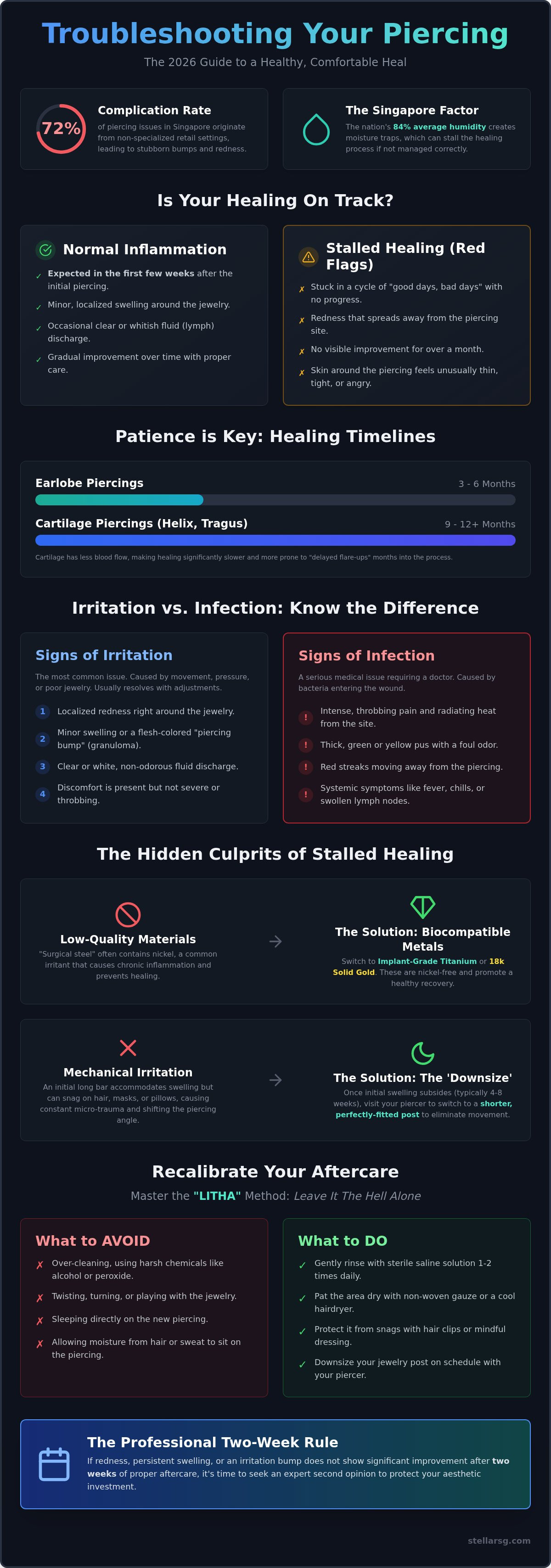
Many people assume that more cleaning equals faster healing. In reality, over-cleaning is a primary reason for troubleshooting a piercing that won't heal. Aggressive scrubbing with Q-tips or picking at "crusties" resets the healing clock by stripping away new skin cells. We recommend the LITHA method: Leave It The Heck Alone. Your body is remarkably efficient at repairing itself when it isn't constantly fighting physical interference. By stepping back, you allow the delicate fistula to stabilize without the trauma of constant manipulation.
A critical part of this "no-touch" rule is ending the practice of rotating your jewelry. Contrary to outdated advice, turning the stud doesn't prevent it from getting stuck. Instead, it forces bacteria and dried fluids into the open wound. This creates micro-tears and prolongs localized inflammation. Stick to a hands-off approach to allow the tissue to repair itself. If you're struggling with persistent redness, troubleshooting a piercing that won't heal often starts with simply keeping your hands away from the site.
Modern aftercare is about gentle support rather than harsh disinfection. Use a sterile saline spray containing exactly 0.9% Sodium Chloride. Avoid home-made salt mixtures, as they're rarely sterile or balanced correctly for your skin's pH.
Cleaning more than twice a day leads to skin dehydration. This causes tiny cracks in the skin barrier, making the site more vulnerable to environmental irritants and further delay.
If you notice a bump, your first instinct might be to squeeze it. Never "pop" or squeeze a piercing bump. This isn't acne; it's a localized inflammatory response to irritation. Squeezing causes deep tissue trauma and can lead to permanent scarring. Similarly, ignore the myths of tea tree oil or aspirin pastes. These substances are far too caustic for a healing wound and will only exacerbate the damage.
Instead, use warm saline compresses. Soak a piece of non-woven gauze in warm sterile saline and hold it against the bump for five minutes. This encourages natural drainage and improves blood flow to the area. For a personalized recovery plan, you can book an appointment with our specialists to ensure your aftercare is perfectly calibrated for your needs.
Sometimes, even the most diligent home care isn't enough to overcome a stalled recovery. If you've recalibrated your routine and managed environmental moisture but still see no improvement, it's time for expert guidance. We recommend the "2-week rule." If localized irritation or a piercing bump doesn't respond to corrected care within 14 days, home remedies have reached their limit. Troubleshooting a piercing that won't heal requires a trained eye to identify subtle issues that aren't visible in a bathroom mirror. Our specialists provide a sophisticated analysis of the piercing's angle, the jewelry's fit, and the specific biocompatibility of the metal currently in your ear.
Many persistent issues stem from "mystery metals" that cause low-level, chronic allergic reactions. Swapping these for 18k solid gold or implant-grade titanium often resolves inflammation almost immediately. We also prioritize professional downsizing during these sessions. If your initial post is too long, it creates a "see-saw" effect. This constant tilting irritates the wound with every minor movement or hair brush. By installing a shorter, perfectly fitted post, we stabilize the site. This allows the delicate tissue to finally knit together without the trauma of mechanical friction.
Our commitment to your well-being is reflected in our medical-grade sterilization and selection of premium materials. We frequently assist clients with piercings performed elsewhere that are struggling to settle. Whether your piercing was done at a mall kiosk or a studio abroad, we offer a welcoming, professional "second opinion" to get your recovery back on track. Our goal is to save your piercing through methodical care and superior jewelry. You can learn about our professional piercing services and how we prioritize safety alongside aesthetic refinement.
A troubleshooting appointment is a dedicated time for assessment and recalibration. Our consultants provide a caring environment to analyze why your healing has stalled and implement a step-by-step recovery plan. Investing in high-quality jewelry and professional adjustment now protects your aesthetic investment and prevents permanent scarring. Don't let a stubborn piercing cause unnecessary anxiety or discomfort. We invite you to book an appointment at a Stellar SG boutique near you to experience the peace of mind that comes with expert care.
Achieving the curated look you desire should be an inspiring experience; it shouldn't be a source of persistent discomfort. We've explored how Singapore's high humidity and improper jewelry materials can stall your recovery progress. By switching to biocompatible metals and mastering a dry-focused aftercare routine, you give your skin the best environment to stabilize. Remember that troubleshooting a piercing that won't heal often requires a professional second opinion to assess the precise angle and fit of your jewelry.
Our team acts as specialists in 18k gold jewelry and provides expert troubleshooting for stubborn piercings. With 8+ convenient locations across Singapore, professional care is always nearby. Don't let a minor setback discourage you from expressing your unique style. We're dedicated to making your experience safe, comfortable, and sophisticated. You deserve a piercing that looks as beautiful as you imagined.
Book a Professional Piercing Consultation at Stellar SG
A piercing bump typically persists due to constant mechanical irritation or a reaction to low-quality jewelry materials like nickel. If you've been troubleshooting a piercing that won't heal for months, the cause is often a bar that is too long or a "butterfly back" trapping bacteria. These bumps are your body's inflammatory response to friction. A professional assessment can determine if a material swap to 18k gold is necessary to finally calm the tissue.
You should generally avoid changing jewelry yourself until healing is complete, but a professional swap is often necessary to save a struggling piercing. If your current jewelry is causing an allergic reaction or has an improper fit, an expert can safely install a medical-grade alternative. This intervention prevents further trauma to the delicate fistula. Always consult a specialist before attempting a change to ensure the new piece supports your recovery.
While cartilage piercings can take up to a full year to heal, persistent soreness after twelve months usually indicates a stalled healing process. This discomfort is often linked to sleeping on the ear or using improper aftercare products. Cartilage has limited blood flow, making it sensitive to even minor disruptions. If the tenderness doesn't subside, a professional checkup is recommended to ensure the piercing's angle hasn't shifted over time.
Irritation usually presents as localized redness or a flesh-colored bump, while a true infection involves radiating heat and throbbing pain. You might also notice thick green or yellow discharge or systemic symptoms like a fever. Distinguishing between the two is vital when troubleshooting a piercing that won't heal. If you experience spreading redness or extreme tenderness, seek professional advice immediately to prevent the issue from escalating further.
Singapore’s average humidity of 84% significantly impacts healing by preventing the piercing site from staying dry. Excess moisture creates a breeding ground for bacteria and can lead to persistent "moisture bumps." This environment makes it harder for the skin to form a stable seal. To combat this, we recommend gently drying the area with a hairdryer on a cool setting after every shower or outdoor activity to ensure a healthy recovery.
Antiseptic creams and rubbing alcohol are far too caustic for a healing piercing and often kill the healthy cells needed for repair. These harsh chemicals can cause the skin to crack and become even more irritated. Stick exclusively to sterile saline spray with a 0.9% sodium chloride concentration. This gentle solution cleanses the wound without disrupting the body's natural recovery process or causing unnecessary chemical burns to the tissue.
Downsizing involves replacing your initial long post with a shorter one once the primary swelling has subsided. This is essential for helix piercings because a long bar can snag on hair or masks, causing constant micro-trauma. The shorter post stabilizes the jewelry and prevents the "see-saw" effect that often leads to irritation bumps. Most professionals recommend scheduling a downsizing appointment approximately six to eight weeks after your initial piercing.
You should avoid swimming in pools, the ocean, or hot tubs until your piercing has fully stabilized. Chlorine and other pool chemicals are highly irritating to open wounds, while natural bodies of water contain bacteria that can lead to serious infections. If your piercing is already struggling to heal, the added stress of these irritants will likely reset your recovery timeline. Wait until the site is no longer tender or inflamed.


