 欧元、澳元、英镑、日元、印度卢比


全部的: $0.00
结账时计算税费和运费
 SGD
SGD


A piercing can look calm and still be too delicate for a jewellery change. The signs your piercing has healed aren’t limited to a neat-looking opening: the surface may appear settled while the tissue inside is still maturing.
If you’re unsure whether lingering tenderness, redness or a little crusting is part of healing, you’re not alone. Healing varies by person and piercing location. Earlobes may take several months to heal fully, while ear cartilage can take 6-12 months or longer. Changing jewellery too soon can cause irritation, even when everything appears normal.
This guide explains which signs are reassuring, what can be misleading, and when to continue aftercare or seek professional guidance. You’ll also find steps for approaching a first jewellery change carefully, without rushing a piercing that may still need time.
Healing is gradual, and the pace varies with the piercing’s location and your individual response. A settled earlobe and a healing cartilage piercing may not follow the same pattern. Look for several reassuring signs that persist during ordinary care, rather than relying on one glance or a single comfortable day.
A useful guide to the body piercing healing process can help explain why the visible surface and the tissue beneath it may settle at different rates. Observe the area during your usual care, without touching or moving the jewellery just to test it.
Notice how the piercing looks and feels during your usual care. A consistently settled pattern is more informative than repeated checking. Reassuring clues include:
These are clues, not a diagnostic test. Brief, mild sensitivity after accidental pressure may happen, but discomfort that persists, worsens or repeatedly returns deserves attention. Avoid rotating or sliding the jewellery to check whether it moves easily.
The opening you can see may look calm before the deeper tissue has finished healing. Appearance alone cannot confirm that the internal channel has finished healing. A few days without redness or discharge can feel encouraging, but they don’t establish that the piercing is ready for a jewellery change.
Instead, consider whether the signs have stayed settled over time and whether the piercing feels comfortable during ordinary care and daily activity. If it seems fine one day but becomes tender or irritated again, wait before changing the jewellery. The signs your piercing has healed are most useful as a consistent pattern, not a guarantee that healing is complete.
No checklist can confirm complete internal healing on its own. If symptoms persist or return, continue your advised aftercare and delay changing the jewellery. For increasing pain, heat, swelling or spreading redness, seek professional or medical guidance rather than testing the piercing yourself.
Healing doesn’t follow one calendar for every ear piercing. An earlobe is soft and fleshy, while cartilage is firmer and has a different blood supply. These tissues heal differently, so a timeline that seems reasonable for one piercing may not apply to another. Feeling comfortable before a typical healing period has passed also doesn’t prove the channel is fully healed.
Earlobes are made of soft tissue. Cartilage piercings, such as a helix or tragus, pass through the firmer structure of the ear, so they may need more patience and can remain sensitive for longer. As a general guide, earlobes may take 6-8 weeks for initial healing and 3-6 months to heal fully, while ear cartilage can take 6-12 months or longer. These are estimates, not personal deadlines.
Explore the complete guide to ear piercing types to learn more about how different ear placements vary. Remember that healing time depends on the piercing’s location, the person’s response and ongoing irritation.
Six weeks is often repeated as a simple milestone, but it isn’t a universal date for changing jewellery. It may fall within the initial healing period for some earlobe piercings, yet it doesn’t confirm that the tissue channel has fully matured. Cartilage piercings generally need considerably longer, and individual progress can vary even between piercings in the same area.
Placement and everyday irritation matter, too. Pressure from sleeping on an ear, snagging or repeated contact may unsettle a piercing and affect how it feels over time. A piercing that seems comfortable isn’t necessarily ready for a jewellery change. Consider how it has felt consistently, where it’s placed and how long it has been healing, rather than counting weeks alone.
Continue the aftercare recommended for your piercing, and consult the professional piercing aftercare guidelines for general care advice. If you’re unsure how your ear piercing is progressing, a personal conversation about it can help you choose a cautious next step. Stellar SG’s professional ear-piercing service is available at its Singapore locations.
A piercing can look calm while the channel beneath the skin is still healing. No redness doesn’t automatically mean it’s fully healed, and a smooth-looking opening can’t show what’s happening inside. Consider the signs your piercing has healed alongside how the area feels over time, rather than judging by appearance alone.
A settled surface is encouraging, but it isn’t proof that deeper tissue has finished healing. Jewellery moving easily isn’t a reliable test either. Deliberately shifting it can cause friction and irritation, even if it doesn’t hurt in that moment. Don’t remove jewellery just to inspect the channel. Taking it out and trying to put it back can disturb the piercing.
Occasional mild sensitivity after accidental pressure may settle. Pay attention if discomfort persists, worsens or keeps returning, especially if other symptoms appear. A piercing that seems fine for a short time may still be unsettled.
Watch for symptoms that are increasing rather than improving. These can include:
These signs don’t confirm a specific cause, but they do warrant advice. For general information on piercing complications and prevention, see the Mayo Clinic’s piercing complication prevention advice. If symptoms are severe or getting worse, seek medical assessment promptly. A medical professional can assess symptoms and advise on care. This general guide can’t diagnose an individual piercing.
Until you have appropriate guidance, avoid testing the piercing by moving or removing the jewellery. Rather than deciding from one sign whether healing is complete, notice changes early and choose a careful next step, especially before changing jewellery.
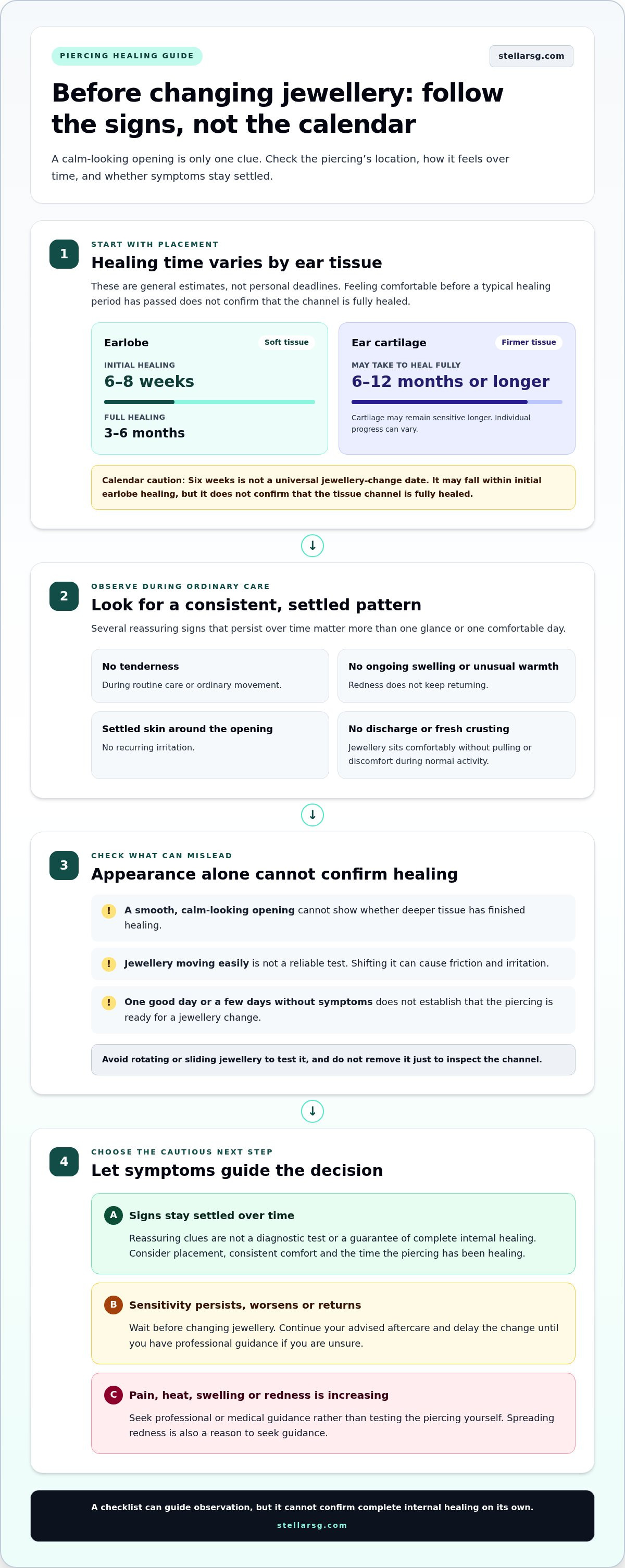
A first jewellery change can feel like the final step in healing, but pause before you begin. Use this checklist to decide whether to wait, seek guidance or proceed gently. The signs your piercing has healed are reassuring only when they form a steady pattern, and no checklist can guarantee that the channel is fully healed.
If you’re confident the piercing is ready, start with clean hands and handle the area gently. Prepare the replacement earring before removing the existing one, so the piercing isn’t left without jewellery while you search for the next piece. Choose an appropriate, well-made earring, and continue following your piercer’s aftercare instructions.
Move slowly, without twisting or forcing the jewellery. If it catches, causes pain or the area becomes irritated, stop. Resistance is a reason to pause, not push harder. Don’t keep trying to insert the earring or repeatedly test the opening. Give the piercing time and seek professional guidance if you’re unsure what to do next.
For an in-person ear-piercing appointment or guidance about an ear piercing, explore professional ear-piercing care at Stellar. A careful approach helps protect your comfort as you plan a jewellery change.
Steady signs of calm healing are reassuring, but they can’t guarantee that the tissue inside the piercing has fully healed. If you’re uncertain, waiting is a sensible choice. Keep following the aftercare instructions you were given, and postpone changing your jewellery until the piercing feels settled and you’re confident about your next step.
Wait before changing jewellery if the area remains tender, swollen, irritated or prone to recurring redness. Don’t try to settle your doubts by repeatedly moving the jewellery or taking it out to inspect the channel. These actions can disturb the area and make it harder to judge how it’s progressing.
Stick to the care routine advised for your piercing rather than adding harsh products or extra cleaning steps. Singapore’s humid climate may make skin feel warm or damp, but humidity alone doesn’t show that a piercing is healing poorly or has developed a complication. Keep care gentle and pay attention to changes in the piercing itself.
An experienced piercer can offer guidance about routine healing progress and whether jewellery appears to fit appropriately. This can help if you’re unsure whether a change is premature, especially for a cartilage piercing or one that has felt unsettled. A piercer’s guidance doesn’t replace medical care when symptoms suggest a health concern.
If you notice severe or worsening pain, increasing warmth or swelling, spreading redness or concerning discharge, seek advice from a qualified healthcare professional promptly. An article can offer general information, but it can’t assess your piercing or diagnose the cause of symptoms. Avoid changing or removing jewellery to investigate while you’re waiting for advice.
Consider the signs your piercing has healed as a consistent pattern, alongside its location and how long it has been healing. If symptoms remain uncertain, continue your advised aftercare and wait before choosing a new earring. To book an in-person ear-piercing appointment, book an ear-piercing appointment. You can also explore Stellar’s ear-piercing service.
The signs your piercing has healed are most reassuring when they stay consistent: no ongoing tenderness, swelling, heat or recurring redness. Still, a calm appearance can’t confirm that the tissue inside is fully healed. Healing also varies by location, so don’t rely on one good-looking day or a single timeline to decide whether to change your jewellery.
If the piercing feels unsettled or you’re unsure, keep following your advised aftercare and wait rather than forcing a change. Stop if jewellery catches or causes pain. Seek advice from a qualified healthcare professional if symptoms are severe or getting worse.
Ready to explore a new piercing or find earrings for a new or existing piercing? Stellar offers a professional ear-piercing service and a curated collection of earrings at retail locations across Singapore. Explore Stellar’s professional ear-piercing service and take your next step with care.
Reassuring signs include no ongoing tenderness, swelling, unusual warmth or recurring redness during ordinary care. The skin should look settled, without recurring irritation or discharge, and the jewellery should feel comfortable during normal activity. Look for a consistent pattern over time, not just one good day. These signs your piercing has healed can suggest progress, but they can’t confirm on their own that the internal channel is fully healed.
Yes. The visible opening may look calm before the tissue channel beneath it has fully matured. A lack of redness or tenderness on the surface doesn’t necessarily mean a jewellery change is safe. Healing takes time and varies with the piercing’s location and your individual response. Avoid testing the channel by moving or removing jewellery. If you’re unsure, continue your advised aftercare and delay changing the jewellery.
It depends on the location. Earlobes may take 6-8 weeks for initial healing, but full healing can take 3-6 months. Ear cartilage, such as a helix or tragus piercing, can take 6-12 months or longer. These are general estimates, not personal deadlines. A piercing may feel comfortable before it’s fully healed, so consider its symptoms and progress over time rather than relying on the calendar alone.
Six weeks isn’t a universal sign that an earring change is safe. It may fall within the initial healing period for some earlobe piercings, while cartilage piercings often need substantially longer. Before changing jewellery, consider the piercing’s location and whether tenderness, swelling, heat or recurring redness have remained absent. If the piercing feels unsettled or jewellery meets resistance, stop and wait. A professional piercer can offer guidance about routine healing and jewellery fit.
Recurring discharge isn’t a reassuring sign of a fully healed piercing. A newer piercing may produce a small amount of pale fluid that dries into crusting during healing, but changes in colour, amount or accompanying symptoms matter. If discharge occurs with worsening pain, warmth, swelling or spreading redness, seek medical advice. This general information can’t diagnose the cause. If you’re unsure whether what you see is expected, avoid changing the jewellery until you’ve received appropriate guidance.
No. Removing jewellery to inspect the channel won’t reliably show whether deeper tissue is healed, and putting it back can irritate or disturb the piercing. Don’t rotate or repeatedly move the jewellery as a test either. Instead, pay attention to how the area feels during ordinary care and daily activity. If you’re uncertain about readiness for a change, keep following your aftercare instructions and seek guidance rather than removing the jewellery to check.
Delay changing the jewellery and continue the aftercare recommended for your piercing. Mild sensitivity after accidental pressure may settle, but pain or swelling that persists, worsens or returns deserves attention. Seek prompt medical assessment if symptoms are severe or getting worse, particularly with increasing warmth, spreading redness or concerning discharge. A piercer can advise on routine healing questions, but a qualified healthcare professional should assess symptoms that may indicate a medical problem.


