 欧元、澳元、英镑、日元、印度卢比


全部的: $0.00
结账时计算税费和运费
 SGD
SGD


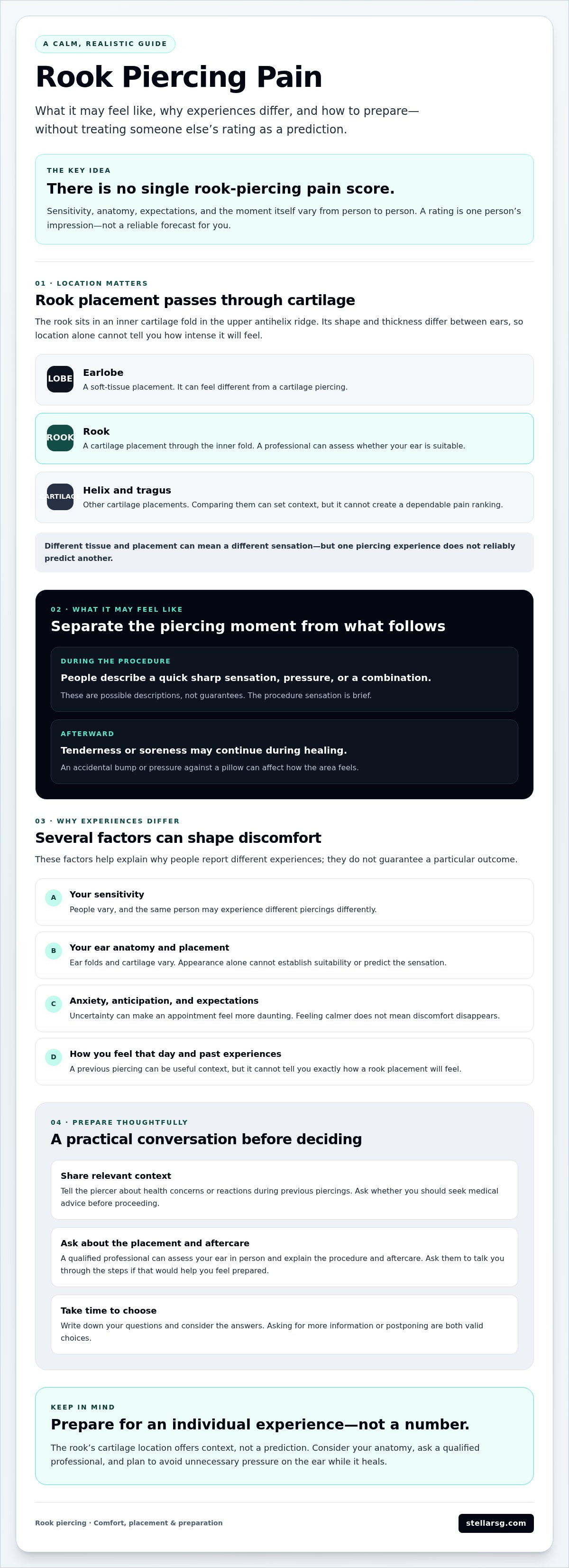
A rook piercing can feel more intense than an earlobe piercing, but an online pain rating can’t predict exactly how it will feel for you. The rook passes through thicker cartilage, and people describe the sensation in different ways, from a sharp pinch to deeper pressure. Your comfort, stress level, and anatomy can all shape the experience.
If you’re unsure about the rook piercing pain level, that’s understandable. Cartilage discomfort can feel different from a quick lobe piercing, and tenderness may continue during healing, especially if the ear is bumped or pressed while sleeping. A realistic idea of what to expect can help you feel prepared without assuming the piercing will be painless or unbearable.
This guide covers what the piercing may feel like, what can affect discomfort, and how to prepare while avoiding unnecessary pressure during healing. You’ll also learn which changes may be part of early healing and when it’s sensible to seek advice from a qualified professional.
Pain is personal, so one person’s rating can’t predict how a rook piercing will feel for someone else. The rook sits in a fold of cartilage on the inner ear, and some people find the sensation more noticeable than an earlobe piercing. Others find it manageable. No single score captures everyone’s experience.
As part of the broader practice of body piercing, rook placement is a distinctive choice, but its appearance doesn’t mean every ear or experience will be the same. Treat the rook piercing pain level as a personal impression, not a clinical measurement.
The rook is commonly placed through the inner cartilage fold in the upper part of the antihelix ridge. Because this is cartilage rather than the soft earlobe, the procedure can feel different. The fold’s shape and thickness vary from ear to ear, as does individual sensitivity, so the location alone can’t predict the intensity. A professional can assess whether your anatomy is suitable.
People may describe the moment as a quick sharp sensation, pressure, or a combination. These are possible experiences, not guarantees. A number on a pain scale can describe one person’s reaction, but it can’t reliably forecast another person’s.
There is no single rook piercing pain score because each person’s sensitivity, anatomy, and experience are different.
It also helps to distinguish the piercing itself from what follows. The procedure sensation is brief, while the area may feel tender or sore afterward. That tenderness can be affected by contact, such as accidentally bumping the ear or pressing it against a pillow. These are different parts of the experience, and neither can be captured by a rating that applies to everyone.
There isn’t a reliable way to predict someone’s response from their personality or a pain rating. Sensitivity varies, and the same person may experience different piercings differently. The rook piercing pain level may also be shaped by how you feel that day, what you expect, and the details of the placement. These factors explain why experiences differ, but they don’t guarantee a particular outcome.
Waiting, uncertainty, or worrying about what will happen can make an appointment feel more daunting. That doesn’t mean the discomfort is imaginary, or that calming down will remove it. If you’re nervous, tell the piercer before the procedure and ask them to explain the steps and what you’ll need to do. Clear information can help you feel prepared and make it easier to speak up if you need a moment.
Previous experiences are useful context, too. If you’ve had a reaction during another piercing or have a health concern that may affect the appointment, share that with the piercer. They can discuss what’s relevant and whether you should seek medical advice before proceeding.
Yes, but not in a way that can be predicted from appearance alone. Ear folds and cartilage vary between people. A past earlobe or cartilage piercing can help you think about what to expect, but it won’t tell you exactly how a rook placement will feel. A professional should assess your ear in person to determine whether the location is suitable. If you’re uncertain, ask for an assessment before deciding.
Placement is a matter of comfort and informed care. The American Academy of Family Physicians discusses potential piercing complications, including concerns involving cartilage, in its overview of Complications of body piercing. Use that reference for general context, not as a prediction of your individual outcome. Ask a qualified professional to explain the placement, procedure, and aftercare.
You don’t need to decide on the spot. Write down your questions, mention what makes you uneasy, and take time to consider the answers. You can review information about Stellar SG's professional ear-piercing service, but confirm directly whether rook placement is offered.
Comparing placements can help you picture the differences, but it can’t produce a dependable pain ranking. A lobe piercing passes through soft tissue, while a rook, helix, or tragus piercing involves cartilage. People describe each sensation differently, and an experience with one placement doesn’t reliably predict another. For a broader overview, see this complete guide to ear-piercing types and pain levels.
| Placement | General location and tissue | What varies |
|---|---|---|
| Lobe | Soft, fleshy lower part of the ear | Some people describe the sensation as a brief pinch; sensitivity and tenderness still differ. |
| Rook | Inner fold of cartilage in the upper ear | Ear shape, placement, and personal sensitivity can affect the experience. |
| Helix | Outer upper rim of the ear, through cartilage | Its location differs from the rook, so one experience can’t predict the other. |
| Tragus | Small cartilage area in front of the ear canal | Anatomy and individual response vary, as they do with other placements. |
The key difference is the tissue and location: a lobe piercing goes through soft tissue, while a rook piercing sits in an inner cartilage fold. Some people say cartilage feels sharper or more pressurised than a lobe piercing, while others describe it differently. That’s a personal comparison, not a universal hierarchy. The healing experience can also differ from the moment of piercing, so don’t use a past lobe piercing as a precise forecast. WebMD’s overview of rook piercing pain and healing offers additional context.
A helix is on the outer rim, a tragus is near the ear canal, and the rook sits in an inner cartilage fold. These placements involve different areas and anatomy, so neither a helix nor tragus piercing is a reliable stand-in for the rook piercing pain level. Even two ears may differ in shape or suitability. Ask a qualified piercer to assess your ear and answer questions about the specific placement rather than relying on someone else’s rating.
Preparation can’t guarantee a particular pain experience, but it can help you feel informed and ready to decide. Focus on clear questions, honest communication, and understanding the care involved before you commit.
Ask whether your ear’s anatomy appears suitable and what the appointment involves. Find out which jewellery options are appropriate for the placement and what aftercare instructions you’ll need to follow. A professional consultation can clarify suitability and expected care. Review the professional ear-piercing service information, then confirm directly whether rook placement is available.
Allow enough time to discuss your questions without feeling rushed. Tell the piercer if you’re nervous, and agree on a simple way to signal that you need a pause. If you have a medical concern or are considering numbing products or medication, ask a qualified healthcare professional for guidance rather than trying something on your own.
After the piercing, follow the specific aftercare instructions provided by your piercer. Avoid adding steps or products based on guesses or someone else’s routine. If the instructions are unclear, ask for clarification. If you’re concerned about how the area is responding, contact a qualified professional for advice.
The rook piercing pain level can’t be controlled through preparation, but informed questions help you understand the placement and care before deciding. You’re free to postpone if you don’t feel ready. You can review Stellar’s ear-piercing service information or view appointment options, and confirm whether rook placement is offered before booking.
A rook piercing may suit your style, but deciding whether it’s right for you involves more than appearance. Consider how much you want this specific placement, whether a professional finds your ear anatomy suitable, and whether you feel ready to follow the aftercare guidance. The rook piercing pain level is personal, so don’t let someone else’s rating make the decision for you.
There’s no need to rush. If you’re unsure, asking more questions or postponing is a thoughtful choice, not a setback.
Speak with a qualified professional if you’re uncertain about placement suitability, the healing process, or how a health concern could affect your decision. Ask what aftercare involves and what changes should prompt you to seek further advice. If you already have a piercing and notice concerning symptoms, contact a healthcare professional for appropriate medical guidance. An article can offer general information, but it can’t assess or diagnose your ear.
Before travelling to a studio or retail location, contact the provider to confirm that it currently offers the rook placement you want. Don’t assume every ear-piercing service includes every placement. You can also ask what the appointment involves, whether suitability is assessed in person, what jewellery options are available, and which aftercare instructions you’ll receive. For broader context on choosing an ear-piercing service in Singapore, review the provider’s information and ask questions directly.
Stellar SG provides professional ear-piercing services in Singapore, but rook placement availability isn’t confirmed here. Check directly before making plans. If you’d like to discuss an appointment, contact Stellar SG and confirm whether the requested placement is offered. Choose the next step that feels informed and right for you.
The rook piercing pain level is different for everyone, and a rating can’t predict your personal experience. Focus on understanding the placement, having your ear assessed by a professional, and feeling ready for the aftercare. If you’re unsure, it’s reasonable to ask more questions or wait.
Stellar SG provides ear-piercing services at retail locations in Singapore and offers a curated jewellery selection. Rook placement availability hasn’t been confirmed, so check directly before making plans. To discuss your piercing plans, book an appointment with Stellar SG and ask about the placement and appointment process.
Take the time you need. With clear information and a considered choice, you can move forward at a pace that feels right for you.
On informal 1-to-10 scales, rook piercings are often described around 6 to 8, but that range is only a rough reference, not a clinical measurement. The rook piercing pain level varies with individual sensitivity, anatomy, and how you feel during the appointment. One person’s rating can’t predict yours. Ask the piercer what to expect, and treat online scores as personal impressions rather than a promise.
Some people find a rook piercing more uncomfortable than an earlobe piercing because the rook passes through cartilage, while the lobe is soft tissue. Others describe the sensations differently. The comparison isn’t a reliable pain ranking, and a previous lobe piercing won’t tell you exactly how a rook will feel. Tenderness during healing is also separate from the brief sensation of the piercing itself.
The piercing sensation is brief, but tenderness or soreness afterward can last longer and varies from person to person. There isn’t a fixed timeline that applies to everyone. Pressure from sleeping on the ear, bumps, or contact with headphones may irritate the area. Follow the piercer’s aftercare instructions, and seek professional advice if discomfort is worsening, severe, or concerning rather than settling.
You can prepare for the appointment, though no step can guarantee less pain. Ask the piercer to explain the process, share any anxiety or previous reactions, and agree on how to signal if you need a pause. Follow the specific aftercare guidance you’re given and avoid unnecessary touching or pressure. Don’t use numbing products or take medication for the procedure without guidance from a qualified healthcare professional.
There’s no dependable universal ranking between rook and helix discomfort. The rook sits in an inner cartilage fold, while the helix is placed along the outer upper rim. The locations and individual anatomy differ, and people can describe either experience in different ways. Having a helix piercing doesn’t reliably predict how a rook will feel. Ask a qualified piercer about your ear and the specific placement you’re considering.
If the pain is severe, worsening, or accompanied by concerning changes such as excessive swelling or pus, seek medical advice promptly. These symptoms need an appropriate assessment, and an online article can’t determine their cause. Don’t try to diagnose the problem or change your aftercare based on guesswork. Contact a healthcare professional and follow their advice about next steps for the piercing.
No. Rook placement depends on the shape and prominence of the cartilage fold, and ears vary. A qualified piercer should assess your anatomy in person before confirming whether the placement is suitable. If it isn’t, or you’re not comfortable with the assessment or aftercare expectations, it’s reasonable to ask questions, consider another option, or postpone your decision. Suitability shouldn’t be assumed from photos or another person’s experience.


