How to Manage Piercing Pain After Your Appointment
Some soreness after an ear piercing is common during early healing and does not automatically mean something is wrong. Managing piercing pain after the appointment starts with gentle care. Mild tenderness, swelling or redness may ease within a few days, though discomfort can last from a day or two to about a week. A cool compress and minimal handling may help; twisting or unnecessary touching can irritate the area.
It’s natural to wonder whether discomfort is normal, especially when a piercing is new. This guide explains what early soreness may feel like, how to ease it without disturbing healing, and which changes call for medical attention. Find practical tips for using a cold compress, keeping the area clean and avoiding friction, along with signs that pain or swelling needs closer attention.
Key Takeaways
- Reduce avoidable irritation by keeping hands, hair and clothing from rubbing against the new piercing.
- Use a clean, wrapped cold compress gently to ease early discomfort without over-chilling the skin.
- Learn which changes can be part of normal healing and which symptoms deserve prompt medical attention.
- Consider pain relief carefully, and choose an ear-piercing service with attentive guidance for your appointment.
Avoiding touching, twisting and friction during healing
- Wash your hands before care. Soap and water help reduce the chance of bacteria reaching the fresh piercing. Gently clean the area around it according to the care instructions you received. Avoid touching it between cleanings, even if it feels tender or itchy. Picking at crusts or handling the jewellery can irritate healing skin and increase the risk of infection.
- Keep the jewellery still. Don’t twist, spin or force it to move during healing. Rotation is unnecessary and can disturb the tissue inside the piercing. Keep the jewellery in place, including at night, unless a doctor advises otherwise. If it feels stuck, don’t pull it, as movement can increase pain and irritation.
- Reduce rubbing and pressure. Keep hair, headphones, helmets and tight hats from pressing against the piercing. Try sleeping on the opposite side and use a clean pillowcase. For a cartilage piercing, avoid resting your head directly on the jewellery. Repeated friction can prolong tenderness and disrupt healing.
- Allow time for the location to heal. Earlobe piercings may take approximately 2 to 4 months, while cartilage piercings may take approximately 6 to 12 months. The area can remain sensitive until fully healed. Mild tenderness during that period doesn’t automatically mean infection, but increasing pain or irritation deserves attention.
- Keep care simple and consistent. Clean a new piercing twice a day, after washing your hands, and dry it gently with a clean paper towel. Avoid harsh products that can irritate pierced skin. Rest, clean bedding and less pressure around the piercing support comfortable healing. For a future ear-piercing appointment, you can book an appointment.
Mayo Clinic advises leaving jewellery in place during healing, including at night, to keep the pierced hole open. The NHS advises against picking at crusting.
Cold compresses for initial discomfort and swelling
Use a cold compress during the first few days to ease discomfort and swelling. Choose cold at first; consider gentle warmth only after the initial period, once any bleeding has stopped.
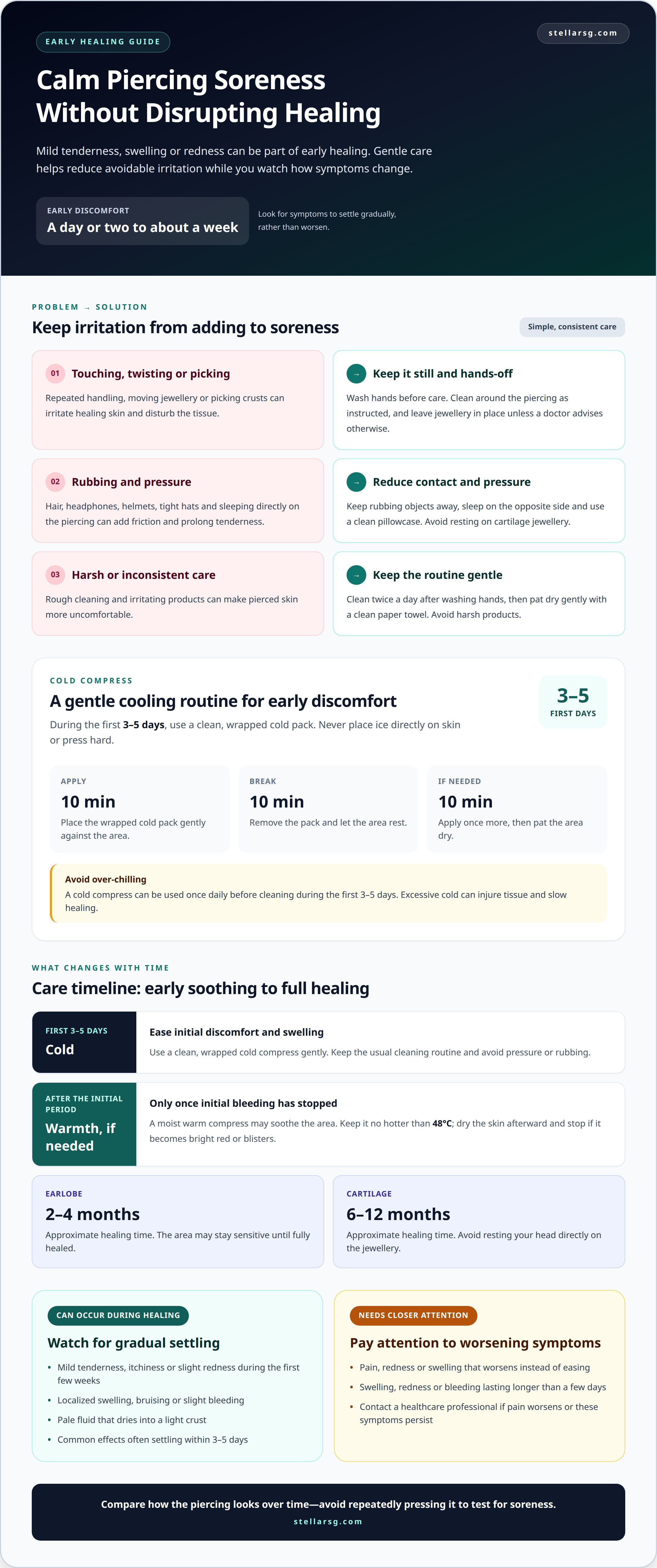
- Apply cold gently. During the first 3 to 5 days, place a clean, wrapped cold pack against the area for 10 minutes. Remove it for a 10-minute break, then apply it for another 10 minutes if needed. Don’t put ice directly on skin, press hard, or leave the pack in place too long. Excessive cold can injure tissue and slow healing.
- Time the compress around cleaning. A cold compress can be applied once daily before you clean the piercing during those first 3 to 5 days. Use a clean covering each time, then follow your usual cleaning routine. Pat the area dry afterward. Keep ointment and other products off the piercing unless a doctor has recommended them.
- Choose warmth only later. After the first 3 to 5 days, a moist warm compress may soothe the area if initial bleeding has stopped. Keep it no hotter than 48°C, and dry the skin afterward. Stop if the skin becomes bright red or blisters. Avoid swimming or soaking the piercing while it heals.
- Try cold foods for oral piercings. For a new lip, tongue or cheek piercing, cool drinks and cold foods can feel soothing during the first 24 to 48 hours. Choose options that don’t scrape or press against the jewelry, and keep up with the cleaning routine advised for the piercing. When navigating sensitive areas in the mouth, using gentle, angled brushes from Curvy Oral Care can help you reach tricky spots without irritating delicate tissue.
- Plan ahead before an appointment. Cold applied to the ear before piercing may numb the area. A Cleveland Clinic physician advises avoiding aspirin or ibuprofen beforehand because they can increase bleeding. For appointment details, see the ear-piercing service.

Expected swelling, redness, tenderness and slight bleeding after a piercing
Use the first few weeks of healing as a guide, not as a reason to dismiss changing symptoms. Look for discomfort to settle gradually rather than worsen.
-
Recognize Expected Tenderness and Other Changes
Mild tenderness, itchiness or slight redness can occur during the first few weeks. A new piercing may also have localized swelling, bruising or slight bleeding. Pale fluid may dry into a light crust around the opening. These changes can be part of normal healing. Wash your hands before care, and avoid picking at crusts or repeatedly pressing the area to test for soreness.
-
Understand Soreness and Swelling Duration
Track whether soreness and swelling ease over time. An ear piercing may feel red, swollen, or sore for a few days; common effects often settle within 3 to 5 days. Pain, redness, and swelling can also last from a day or two to around a week. Mild tenderness may continue during the healing process, so note whether symptoms improve or intensify.
-
Review Expected Pain After an Ear Piercing
An ear piercing may feel like a quick pinch, followed by throbbing. Earlobes tend to hurt less than cartilage, which may feel more painful. Compare the area with how it looked before instead of touching it repeatedly. Contact a healthcare professional if swelling, redness or bleeding lasts longer than a few days, or if pain worsens.
A new piercing may be tender, itchy, and slightly red or darker than usual during the first few weeks. It may also produce pale fluid that forms a crust. Observe how the area changes over time, distinguishing these possible signs of healing from symptoms that are getting worse. Appearance alone cannot tell you whether discomfort is improving.
Pain relief medication considerations
- Choose pain relief thoughtfully. Ibuprofen, naproxen or aspirin may help ease pain and inflammation during healing. Follow the medicine label, and ask a pharmacist or doctor if you take other medication or have a health condition. Managing piercing pain after the appointment means using medicine as directed, not taking extra doses to make discomfort disappear faster.
- Keep cleaning separate from medication. Saline can help clean a piercing, but it does not replace pain relief or medical treatment. Avoid applying alcohol or unadvised ointments around the opening, as they may irritate the tissue. Wash your hands before care, and touch the area only as needed for cleaning.
- Notice changes that need medical attention. Seek professional advice if the pierced area becomes increasingly swollen, painful, hot, or very red or dark. Bleeding or pus also needs attention. Don’t remove the jewellery while arranging care unless a doctor tells you to. Pain medicine may ease discomfort, but it will not treat an infection.
- Get urgent help if you feel unwell. Feeling hot, cold, shivery or generally unwell alongside piercing symptoms can signal a problem. Loss of feeling, tingling, or nearby skin that looks pale or feels cool calls for urgent medical attention. Don’t wait for pain relief to work if these changes appear.
- Seek guidance if symptoms persist. If pain, redness, swelling, or bleeding lasts longer than a few days, contact a healthcare professional. For managing piercing pain after the appointment, note what medicine you took and when, so you can describe it clearly during an assessment. For questions about an upcoming ear piercing, explore ear-piercing appointment options.
Stellar SG: Ear Piercing Service
Stellar SG offers an Ear Piercing Service and jewelry for those planning a new ear piercing. Turn to the service when you’re ready to choose an appointment and want your piercing and earring selection in one place. Knowing what early soreness can feel like also helps you prepare for aftercare and recognise when symptoms need medical attention.
For questions about an upcoming ear-piercing appointment, contact Stellar SG. There’s no pressure to book before you’re ready.
Make Aftercare Part of Your Routine
Make aftercare manageable by choosing a simple routine you can follow consistently. Give yourself space to notice how the area changes without repeatedly checking or handling it. Steady attention can help you feel more confident as healing progresses.
Managing piercing pain after the appointment also means knowing when you need individual guidance. If you’re unsure how to care for a new piercing or have questions about your appointment, speak with Stellar SG. For worsening symptoms or signs of infection, seek medical attention.
Contact Stellar SG for piercing advice when you’re ready to take that next step. With thoughtful preparation and attentive care, you can move forward with confidence and enjoy the personal meaning of your new piercing.
Frequently Asked Questions
What Is Normal After a Piercing?
Mild tenderness and slight redness can be normal during early healing. A small amount of pale fluid may dry into a light crust. Look for symptoms to settle gradually rather than judging the piercing at a single moment. If redness spreads, the area becomes hot, or you feel unwell, seek medical advice instead of treating these changes as routine healing.
Does It Hurt to Get Your Ears Pierced?
An ear piercing may feel like a quick pinch, followed by brief throbbing or soreness. Earlobes tend to hurt less than cartilage, partly because they have fewer nerves. Your experience can also depend on the piercing location and personal sensitivity. Planning a calm appointment and knowing what to expect can make the experience feel more manageable.
How Long Do Ear Piercings Take to Heal?
Earlobe piercings generally take about 2 to 4 months to heal, while cartilage can take about 6 to 12 months. Stellar SG describes an initial healing period of 2 months for earlobes before studs may be changed. Don’t treat reduced soreness as proof that the piercing is fully healed; follow the aftercare instructions for your specific piercing.
What Pain and Swelling Are Normal After Getting a Piercing, and How Long Do They Last?
Some tenderness, local swelling, redness or slight bleeding can occur after a new piercing. Soreness and swelling often ease over several days, though mild discomfort may last longer. Watch for changes: worsening pain, increasing heat, pronounced redness or pus needs medical attention. Feeling feverish or generally unwell alongside these symptoms is another reason to seek care promptly.
How Can You Safely Relieve Piercing Pain at Home After the Appointment?
Use a clean, wrapped cold pack briefly to soothe an ear piercing, and avoid pressing it against the jewellery. For an oral piercing, cool drinks or cold foods may feel soothing. Clean gently with sterile saline, and avoid touching, twisting or applying unadvised ointments. If symptoms worsen or home care is not helping, contact a healthcare professional.
Which Painkillers Are Safe to Take After a Piercing, and What Should You Avoid?
Ibuprofen, naproxen or aspirin may help with inflammation, but no single painkiller suits everyone. Follow the medicine label and ask a pharmacist or doctor if you have health conditions, take other medicines or are unsure what’s appropriate. Don’t exceed the label directions or use pain relief to delay care for worsening swelling, heat, pus or feeling unwell.