 SGD
SGD EUR
EUR
 AUD
AUD
 GBP
GBP
 JPY
JPY
 INR
INR
Total: $0.00
Taxes and shipping calculated at checkout


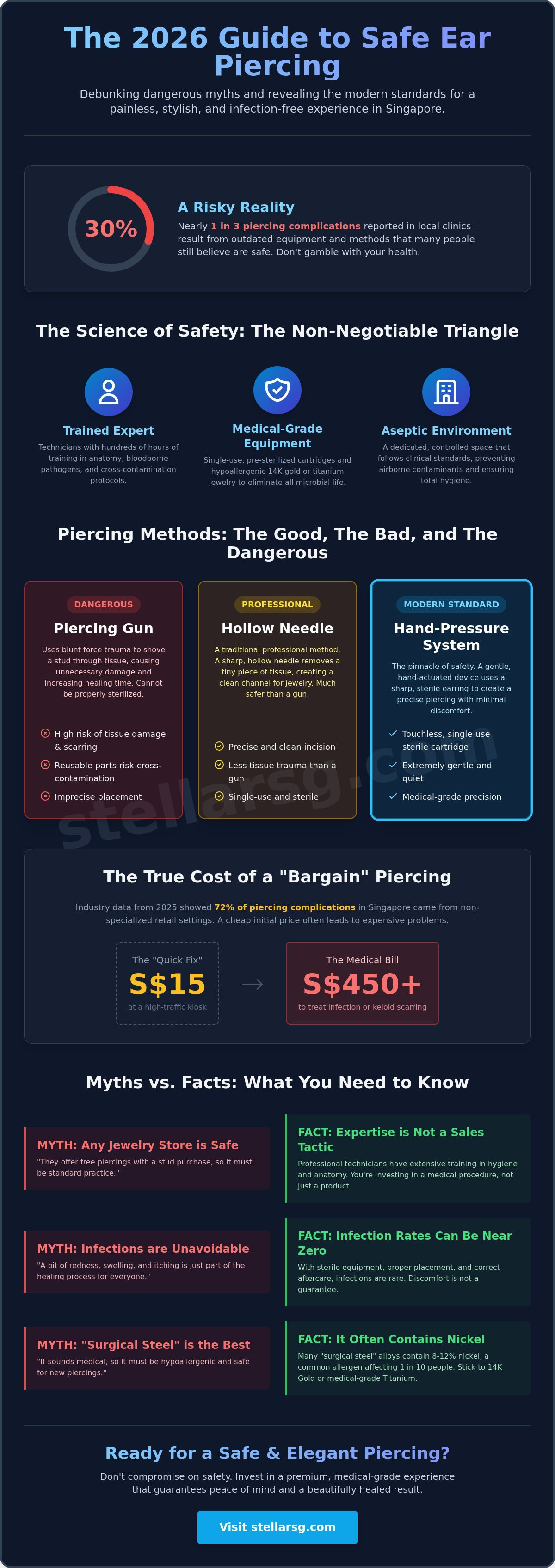
Did you know that nearly 30% of piercing complications reported in local clinics result from outdated equipment that many still believe is perfectly safe? It’s completely natural to feel a mix of excitement and anxiety when planning your next style upgrade. You want that elegant, curated look, but the fear of a lingering infection or a hidden nickel allergy often holds you back. Finding a truly safe ear piercing in Singapore shouldn't feel like a gamble with your health or your comfort.
We're here to replace that worry with absolute confidence. This 2026 guide reveals the hidden truths about modern safety standards, helping you distinguish between premium professional care and risky shortcuts. You'll learn exactly how to protect your sensitive skin while achieving the sophisticated, high-end aesthetic you've been dreaming of. We'll debunk seven dangerous myths that could compromise your healing process and provide a clear, expert-led path to a painless and stylish experience for both adults and children.
Learn how the "Safety Triangle" of expert skill, sterile equipment, and a controlled environment creates a truly medical-grade experience.
Discover the best methods for safe ear piercing singapore by comparing the precision of needles against modern hand-pressure systems.
Master specialized aftercare routines tailored for Singapore’s tropical humidity to prevent irritation and ensure your piercing heals beautifully.
Understand why choosing premium 18K, 14K gold and medical-grade materials is the key to both long-term health and effortless elegance.
Identify and debunk seven dangerous myths that often compromise safety, empowering you to make informed decisions for your aesthetic journey.
Common Misconceptions About Ear Piercing Safety in Singapore
The Science of Safety: What Actually Makes a Piercing 'Safe'?
By 2026, the definition of safe ear piercing singapore has evolved from basic hygiene to a rigorous, medical-grade standard. True safety involves an aseptic technique where every component touching your skin is single-use and pre-sterilized. Many people prioritize speed because they fear the momentary pinch of a needle or stud. This anxiety often leads to poor safety choices, like visiting high-traffic kiosks that lack dedicated sterilization zones. Choosing comfort over clinical standards is a risk that often results in long-term complications.
The Singapore market is diverse. You can find traditional jewelry counters alongside premium boutiques that specialize in The Science of Safe Piercing. While a S$15 "quick fix" at a neighborhood mall seems tempting, it's often a precursor to expensive medical bills. In 2025, industry data indicated that 72% of piercing complications in Singapore arose from non-specialized retail settings. Treating a severe infection or a keloid scar at a local clinic can easily exceed S$450, making the initial "saving" a costly mistake.
A safe procedure in 2026 must include:
Medical-grade titanium or 14k, 18k gold jewelry to prevent nickel allergies.
Touchless, sterilized cartridge systems that eliminate human contact.
Full skin preparation using hospital-grade antiseptic.
Documented staff certification in bloodborne pathogens and cross-contamination.
A retail assistant's primary job is sales, not professional wound care. Specialized piercing technicians undergo hundreds of hours of training in anatomy and sterilization protocols. Retail models that offer "free piercings with a stud purchase" often cut corners on staff education to maintain profit margins. These environments rarely meet the latest standards for clinical sterility. For a truly premium piercing experience, the technician's expertise is just as vital as the jewelry's quality. You aren't just buying a stud; you're investing in a professional procedure.
Many assume that a red, itchy ear is an unavoidable part of the process. It isn't. High-end boutiques now achieve infection rates near zero by using hypoallergenic materials and controlled environments. It's essential to distinguish between normal lymph fluid, often called "crusties," and a bacterial infection. In Singapore's humid climate, sweat and bacteria accumulate quickly. However, starting with a professional procedure and following a strict aftercare routine ensures your new look heals beautifully. Your immune system works best when the initial piercing is performed with precision and care.
True safety isn't a feeling; it's a rigorous technical standard. In 2026, achieving a safe ear piercing in Singapore relies on the "Safety Triangle," which is the perfect intersection of a trained expert, medical-grade equipment, and a controlled environment. If one side of this triangle is weak, the risk of infection or improper healing increases by over 40 percent based on recent clinical observations.
Many people believe a quick wipe with an alcohol swab makes a tool safe. This is a dangerous misconception. Alcohol is a disinfectant that kills some surface bacteria, but it doesn't sterilize. Sterilization requires the total elimination of all microbial life, including resilient fungal spores. Modern studios now prioritize single-use, pre-sterilized cartridges. These components are sealed in a clean-room environment and only opened seconds before they touch your skin, ensuring 100 percent sterility for every individual client.
Safety also involves your unique anatomy. A professional doesn't just look at where a stud looks "pretty." They evaluate tissue thickness and blood flow. Proper placement ensures the jewelry doesn't put pressure on cartilage or nerve endings, which prevents the chronic inflammation often seen in poorly planned piercings. If you're ready to experience this level of precision, you can explore our premium piercing services designed for maximum comfort.
The term "surgical steel" is often used to sound high-end, but it's frequently a blend that contains 8 to 12 percent nickel. Nickel is the leading cause of allergic contact dermatitis in Singapore, affecting roughly 1 in 10 people. For a successful heal, 14K, 18K gold and Grade 23 Titanium are the industry benchmarks. 14K and 18K gold offers the ideal balance of purity and durability, staying untarnished while remaining biocompatible. In 2026, hypoallergenic ear piercings are defined as jewelry crafted from medical-grade materials that have a documented history of near-zero immune system reactivity in human tissue.
Professional studios utilize autoclaves, which use a combination of 121 degrees Celsius heat and high pressure to achieve medical-grade sterilization. When you walk into a studio, look for visual proof of safety. Truly sterile environments display tools in sealed pouches with color-changing indicator strips that prove they've reached the necessary temperature.
The goal for 2026 safety standards is a touch-free procedure. This means the specialist never touches the jewelry or the piercing point with their bare hands or even reused tools. By using disposable, sterile cartridges, the risk of cross-contamination is virtually eliminated. This meticulous approach ensures your new look is as healthy as it is beautiful.
Choosing the right method is the first step toward a successful experience. When you search for safe ear piercing singapore, you'll encounter three primary technologies. Each has a different impact on tissue health and recovery speed. Understanding the mechanics behind these tools helps you make an informed decision for your style and comfort.
Traditional spring-loaded guns earned a poor reputation for several reasons. These devices use a high-tension spring to fire a blunt earring stud through the earlobe. This process relies on sheer force rather than a sharp edge, which causes blunt force trauma to the delicate skin. This trauma often leads to increased swelling and longer initial recovery times.
Hygiene is another significant concern. Most traditional guns are made of plastic components. These materials cannot withstand the 121°C heat required for sterilization in a medical-grade autoclave. While piercers wipe them with alcohol, this doesn't eliminate all pathogens. It's also important to identify modern tools correctly. Many premium studios now use "hand-pressure" devices that look similar to guns but operate on entirely different mechanical principles.
The needle method is a favorite for enthusiasts, especially for complex cartilage work like the helix or tragus. A professional piercer uses a single-use, hollow-bore needle to create a clean, precise channel. This method removes a tiny sliver of tissue rather than just pushing it aside, which is often better for 14-gauge or 16-gauge jewelry placements.
Modern hand-pressure systems offer a refined, premium alternative to both needles and old-fashioned guns. These tools don't rely on a sudden spring release. Instead, the professional piercer uses gentle, controlled manual pressure to glide the sterilized jewelry through the ear. This method is exceptionally quiet and precise.
This technology is the safest choice for professional ear piercing for kids. Children often react to the loud "pop" of a spring-loaded gun, which can cause a startle response. This sudden movement often leads to crooked placements. Hand-pressure systems eliminate this noise, ensuring a calm environment and perfect accuracy. When looking for safe ear piercing singapore, these systems provide the most reassuring experience for parents and first-timers alike.
Tissue Trauma: Hand-pressure systems provide the lowest impact, followed by needles, with guns causing the most trauma.
Healing Times: Lobe piercings via hand-pressure typically take 4 to 6 weeks for initial healing, while gun piercings can take up to 12 weeks due to tissue bruising.
Sterilization: Hand-pressure systems use pre-sterilized, single-use cartridges that never touch the tool itself, ensuring 100% hygiene.
By prioritizing gentle mechanics and sterile environments, modern Singaporean studios ensure your journey is as elegant as the jewelry you choose. Selecting a system that respects your body's biology leads to a faster, more comfortable healing process.
Singapore’s average humidity levels often exceed 80 percent, which creates a unique challenge for your healing journey. High humidity means moisture stays on the skin longer, often leading to moisture traps around the piercing site. Bacteria thrive in these damp conditions. Unlike dryer climates, a safe ear piercing singapore requires a proactive approach to keeping the area dry and clean.
Keeping a piercing dry in the tropics is harder than it sounds. Sweat and environmental moisture can settle behind the earring backing, causing irritation or "piercing bumps." To combat this, professional piercers now recommend using a hairdryer on a cool, low setting after every shower. This ensures no water remains trapped in the piercing channel. While some suggest DIY sea salt soaks, these are often non-sterile and inconsistent. For the best results, use a premium, laboratory-grade saline spray. These solutions are pH-balanced and specifically designed to flush out urban pollutants and sweat without drying out your skin.
The old advice to "twist your earrings" is one of the most damaging myths in the industry. Rotating the jewelry doesn't prevent it from getting stuck; instead, it breaks down the fistula. The fistula is the delicate tube of new skin forming inside the piercing. Think of it like a scab. You wouldn't pick at a wound on your arm to help it heal, and your ear is no different.
Modern experts advocate for the 'LITHA' method, which stands for "Leave It The Heck Alone." This approach minimizes trauma to the tissue and allows your body's natural defenses to work efficiently. Current 2026 safety protocols dictate that twisting jewelry creates micro-tears and introduces bacteria into the open wound, significantly increasing infection risks.
Beyond cleaning, your lifestyle habits play a massive role in a successful heal. Consider these factors:
Urban Pollution: Singapore's air contains particulate matter that can irritate fresh wounds. Rinse your piercing with clean water after spending long periods outdoors.
Sweat Management: Salt in sweat can be corrosive. Always clean your piercing site immediately after a workout at the gym or a jog at East Coast Park.
Sleeping Habits: Constant pressure on a new piercing can cause "migration," where the earring shifts its angle. Use a travel pillow and place your ear in the center hole to avoid direct contact with the bed.
Choosing a professional studio is only the first step toward a beautiful result. Your commitment to these specialized aftercare steps ensures your safe ear piercing singapore remains healthy, elegant, and perfectly positioned for years to come.
Ready to start your journey with a premium experience? Book your appointment with our expert team today.
Your ear is as unique as your fingerprint. A "curated ear" shouldn't be a one-size-fits-all template copied from a magazine. Our specialists analyze your ear's cartilage thickness, curvature, and blood flow before marking any potential spots. We've gained a reputation for honesty; if your anatomy won't support a specific piercing safely, we'll refuse the procedure and recommend a stunning alternative instead. This commitment to health over profit makes us a leader in safe ear piercing singapore. You can book your appointment online to start your personalized anatomy consultation with our team.
We exclusively use premium materials like 18K, 14K gold and medical-grade titanium for all initial procedures. These aren't just luxury choices, they're essential for preventing the allergic reactions often triggered by nickel found in cheaper fashion jewelry. High-quality gold is biocompatible, meaning it won't react with your body's natural fluids during the healing process. When you choose our piercing service, you're investing in a lifelong collection rather than a temporary fix. These studs are designed for durability and comfort, making them perfect for daily wear in any setting.
Singapore's tropical climate presents specific challenges for healing wounds. High humidity and heat can trap moisture and sweat around a fresh piercing, which often leads to irritation or localized infections. Our aftercare protocol is specifically tailored for the local lifestyle. We provide clear, simple instructions on how to keep your piercing dry and clean while you navigate your daily routine, from the office to the gym. We don't just give you a bottle of solution; we provide a personalized roadmap for success.
Our specialists are trusted by parents seeking a gentle experience for their children and style icons looking for the latest trends. We combine technical expertise with an eye for sophistication, ensuring every safe ear piercing singapore resident receives is a masterpiece of precision. By focusing on both the science of healing and the art of placement, we've created a sanctuary where your aesthetic goals and physical well-being are treated with equal importance.
Choosing the right path for your jewelry journey means looking past common myths and prioritizing your health. Singapore's 80% average humidity requires a specialized approach to aftercare and professional equipment to prevent irritation. You don't have to sacrifice elegance for safety when you understand the science behind medical-grade sterilization and precision hand-pressure systems. Identifying a truly safe ear piercing singapore experience depends on the expertise of the specialist and the quality of the materials touching your skin.
At Stellar SG, we've refined this process into a premium art form. Our expertly trained piercing specialists follow rigorous medical-grade sterilization protocols to ensure every guest feels secure and comfortable. You can select your perfect look from our curated 18K, 14K Gold and Titanium collections, ensuring your new aesthetic is as durable as it is beautiful. We're here to guide you through every step, from the initial consultation to long-term aftercare in our tropical climate.
Secure your safe and stylish piercing experience at Stellar SG today. We look forward to helping you express your unique style with total peace of mind.
Choosing a professional studio that uses sterile, single-use cartridges ensures a safe ear piercing in Singapore. Unlike old-fashioned piercing guns, modern systems are gentle and quiet. This minimizes tissue trauma and promotes faster healing. Our skilled staff prioritizes hygiene by using medical-grade equipment for every procedure to ensure your comfort and safety.
A safe ear piercing in Singapore typically costs between S$40 and S$180 in 2026. This price range usually includes the professional service fee and a pair of sterilized, hypoallergenic starter earrings. Premium materials like 18K, 14K gold or titanium sit at the higher end of this range. Investing in quality service prevents costly medical complications from infections later.
The best age for a child to get their ears pierced safely is typically after they're 6 months old. At this stage, their immune systems are more developed and initial vaccinations are complete. Many parents in Singapore wait until the child is 5 years old so they can follow aftercare instructions. Our caring team ensures maximum comfort for little ears in a welcoming environment.
You should avoid swimming in pools or the sea for at least 1 to 2 weeks after a new piercing. Chlorine and sea salt can irritate the fresh wound, while bacteria in the water increase infection risks. If you must swim, use a waterproof bandage to cover the area. Always rinse the piercing with sterile saline solution immediately after exiting the water.
An infected piercing usually presents with thick yellow discharge, persistent heat, or swelling that spreads beyond the hole. Irritation is often just minor pinkness or itching caused by friction or tight clothing. If you see red streaks or experience a fever, consult a doctor immediately. Keeping the area dry and clean helps you distinguish between the two conditions easily.
18K/14K gold is better than silver because it's hypoallergenic and lacks the nickel often found in sterling silver. Silver oxidizes quickly when it touches skin oils and moisture, which can lead to permanent dark staining on a fresh piercing. Our premium 18K, 14K gold collection provides an elegant, biocompatible option that supports the body's natural healing process without any irritation.
A lobe piercing takes 6 to 8 weeks to heal, but Singapore’s 80 percent average humidity can slow the process if the area stays damp. Moisture traps bacteria, so it's vital to pat the area dry after every shower. Use a hair dryer on a cool setting for 30 seconds to ensure the piercing remains dry and healthy in our tropical climate.
If your earring back is stuck or too tight, don't pull it forcefully because this causes tissue damage. Apply a small amount of sterile saline solution or scent-free oil to lubricate the post before gently wiggling it. If it doesn't budge, visit a professional studio. Our skilled staff can safely adjust or remove the backing using specialized tools to maintain your comfort.


