 SGD
SGD EUR
EUR
 AUD
AUD
 GBP
GBP
 JPY
JPY
 INR
INR
Total: $0.00
Taxes and shipping calculated at checkout


If you’re wondering how to hide a new piercing for work, the safest option may be to leave it visible rather than disturb it. A fresh ear piercing can feel at odds with workplace expectations, but removing or changing the jewellery, or covering it in a way that presses or rubs against it, can irritate healing tissue.
You can still make a thoughtful, discreet choice. A hairstyle or clothing may draw less attention to an ear piercing, but anything that catches, rubs or puts pressure on it can cause problems. And if jewellery presents a safety or hygiene concern in your role, simply concealing it may not meet workplace requirements.
This guide explains how to make a healing ear piercing less noticeable without compromising its care, what to avoid, and when it’s safer not to hide it. You’ll also learn why checking your workplace’s dress code and planning future piercings around it can help.
A fresh ear piercing can feel at odds with a workplace dress code, but concealment shouldn’t come at the expense of healing. The safest approach to how to hide a new piercing for work is to reduce attention rather than try to make the jewellery disappear completely. Avoid touching, pressing or removing it just to meet an appearance preference.
For example, you could choose a hairstyle that softens the view of your ear without tucking hair tightly against the piercing. Check that collars, headwear and other clothing won’t rub against or catch on it. If an option needs repeated adjustment during your shift, it may irritate the piercing more than leaving it visible. What feels comfortable depends on the placement, how it’s healing and your employer’s expectations.
A piercing is still new while its channel is healing, and healing can vary with placement and individual circumstances. An earlobe piercing and an outer-ear cartilage piercing may need different care, so don’t assume one is ready for jewellery changes just because another healed comfortably. For a general overview of the body piercing healing process, see how healing and aftercare are commonly discussed. Follow the instructions you received from your piercer, and ask them if you’re unsure whether a workday option is suitable.
Don’t assume every employer prohibits visible piercings. Check your staff handbook or written appearance guidance first, since policies can differ between workplaces, roles and tasks. If the wording is unclear, speak discreetly with your manager before trying to conceal the piercing. Ask what’s expected in your role and whether the rule relates to appearance, safety or hygiene. This can help you find a practical approach without putting pressure on a healing piercing.
If your role involves equipment or tasks where jewellery could create a safety or hygiene concern, hiding it may not resolve the issue. Take the policy seriously, but don’t remove or swap fresh jewellery on your own to get through a shift. If workplace requirements seem to conflict with your aftercare, ask your piercer for guidance and discuss the concern with your manager. Aim for a solution that respects both workplace rules and the piercing’s need for gentle care.
A healing piercing is a wound, so unnecessary handling can disrupt delicate tissue. Taking jewellery out and putting it back can cause irritation or swelling, and the opening may narrow or close while the jewellery is out. Reinserting it can then be difficult and may cause further trauma. That’s why you shouldn’t remove a fresh piercing just to get through a shift.
If your workplace has a jewellery rule, don’t improvise a change on your own. Contact the piercer who performed the piercing and explain the requirement before making an adjustment. The Association of Professional Piercers’ professional aftercare guidance also emphasises gentle care during healing. Ask a professional who can assess your piercing and jewellery for individual advice.
Don’t assume it’s safe to leave a fresh piercing empty during work. Even if the jewellery comes out easily, getting it back in may be uncomfortable or difficult, and forcing it can irritate the channel. Healing varies, so there’s no universal point at which a new piercing can safely be removed for a shift. Check with your original piercer before removing or changing the jewellery, especially if a workplace requirement seems to leave you without a safe option.
A clear retainer still requires a jewellery change. It may not suit your piercing or its current healing stage, so don’t switch to one without a qualified piercer’s advice. A discreet-looking option isn’t automatically a gentle one.
Adhesive dressings can press or rub against the area, and a tight covering may trap moisture. Makeup near the piercing can leave product or residue on sensitive tissue, while applying and removing it adds contact. These methods may cause more irritation than leaving the jewellery undisturbed. If a covering is required for a work task, ask your piercer and manager how to handle the conflict safely rather than applying something tight over the piercing.
When considering how to hide a new piercing for work, protecting healing comes before making it completely invisible. If pain persists, swelling worsens or you notice another concerning change, don’t keep adjusting or covering the jewellery. Seek advice from a qualified piercer or healthcare professional. If you’re considering a future ear piercing, reviewing the ear piercing service information can help you prepare questions about jewellery and aftercare.
The gentlest option is usually the one that leaves your jewellery alone and creates the least contact with your ear. Don’t judge a method only by how well it hides the piercing. Consider whether it presses, rubs, snags or needs repeated adjustment. The right choice depends on placement, healing stage, hairstyle and the tasks you do at work.
Use this comparison as a starting point, not a guarantee. The Association of Professional Piercers’ professional piercing aftercare guidelines emphasise avoiding unnecessary movement and irritation during healing.
Possibly. Wear your hair loosely if it falls naturally over the ear without pulling across the jewellery. A hat, headset, uniform or high collar can press on a piercing, especially if it rests over the area. Before your shift, check how your usual work movements affect the piercing, such as turning your head or putting on required equipment. Don’t keep touching it to check. If something rubs or catches, choose another option where workplace rules allow.
A smaller or less noticeable piece isn’t automatically suitable for a healing piercing. Changing jewellery involves handling the piercing, and the right choice depends on its placement and healing stage. Ask a qualified piercer whether a change is appropriate before acting. Don’t switch to a clear retainer or another piece on your own, even if it seems like an easy answer to how to hide a new piercing for work.
If your role requires headwear or equipment that contacts the ear and no comfortable styling option works, seek advice from your piercer before trying a covering or jewellery change. For some jobs, concealment may not meet safety or hygiene requirements, so clarify the workplace rule too.
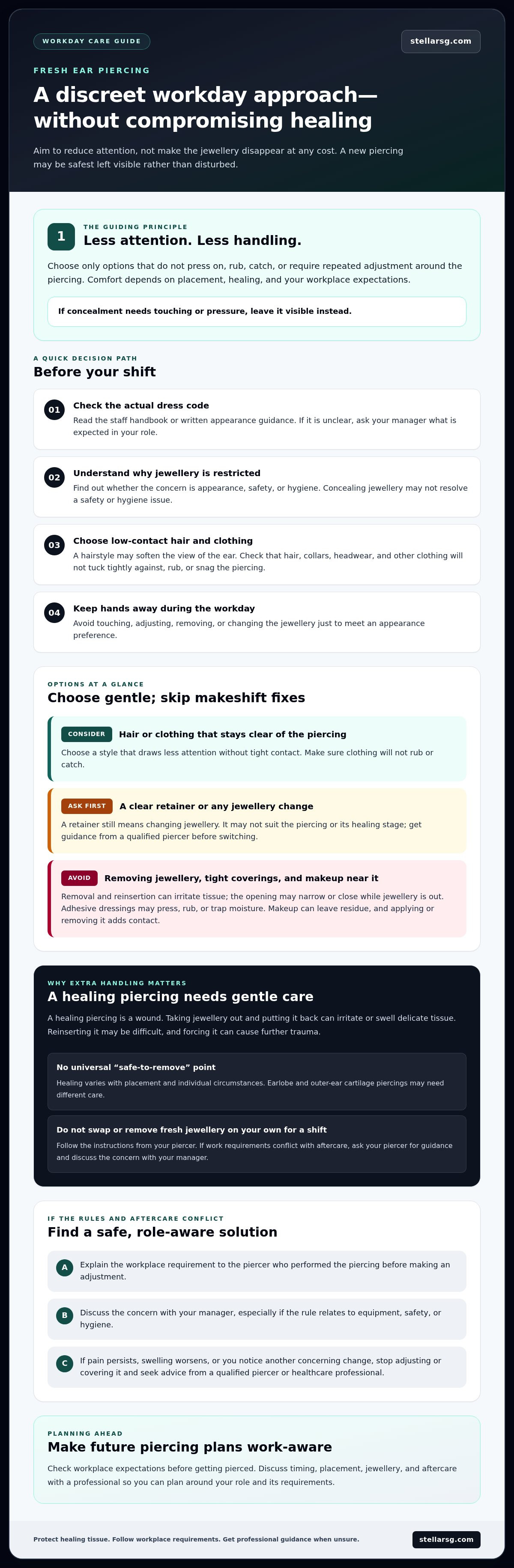
A little preparation can help you get through a shift without repeatedly adjusting your jewellery or worrying about whether it’s catching. Use this checklist to assess contact points before work, then leave the piercing alone unless your aftercare instructions call for clean handling.
Persistent pain, increasing swelling or another concerning change deserves attention. Ask a qualified piercer or healthcare professional for advice instead of trying to solve it by covering or changing the jewellery. The safest answer to how to hide a new piercing for work may be to make it less noticeable, not conceal it completely.
If you’re planning a piercing or want to review the service details before deciding, see Stellar SG’s ear piercing service information.
If you’re thinking about getting pierced, check your workplace’s written dress guidance before choosing the timing or placement. Consider your usual duties too. A headset worn throughout the day, protective equipment, a uniform collar or regular contact with clients may affect what feels practical during healing. Planning ahead can reduce the pressure to conceal a new piercing before it’s ready.
A professional conversation can help you think through placement, jewellery and aftercare in light of your routine. It won’t replace checking your employer’s policy, but it can help you understand what a healing piercing needs and which questions to resolve before choosing a date.
Bring specific details about your workday so the discussion is useful. For example, explain if you wear a headset, helmet or other equipment that sits near your ear. Ask:
Make sure you understand the care instructions before you leave. If your workplace has a restriction, ask your manager how it applies to your role before settling on timing or placement.
Speak with a qualified professional before getting pierced if your job’s requirements seem difficult to reconcile with healing. The same applies if you already have a new piercing and are considering a jewellery change to meet a work rule. Don’t assume a particular placement, smaller piece or concealment method will suit every person or role. Ask questions first, then weigh the advice alongside your employer’s expectations.
Stellar SG provides ear piercing services at retail locations in Singapore. You can explore its ear piercing service information to learn more and consider what to ask. Planning ahead is a more comfortable starting point than working out how to hide a new piercing for work after it’s already healing. Explore the service information when you’re ready, with no need to rush your decision.
The safest way to think about how to hide a new piercing for work is to aim for less visibility, not concealment at any cost. Keep fresh jewellery in place, and choose hair or clothing that won’t press on, rub or snag the piercing. If workplace requirements seem to conflict with healing, check the policy and seek professional advice before making a change.
Planning ahead can make a future piercing feel more comfortable. A professional can help you discuss placement, jewellery and aftercare questions in light of your work routine. Stellar SG offers ear piercing services at multiple retail locations in Singapore, where you can learn more about the service before deciding what suits you.
Explore Stellar SG’s ear piercing service and take your next step with care. A thoughtful plan can help you feel confident at work while giving your piercing the attention it needs as it heals.
It’s best not to remove a fresh piercing just for a shift. The opening may narrow or close, and reinserting jewellery can be difficult or irritate healing tissue. Don’t assume it’s safe to leave the piercing empty, even for a short time. If a workplace rule seems to require removal, contact the piercer who performed the piercing and discuss the situation before changing or removing the jewellery.
Try making it less noticeable rather than covering it completely. A loose hairstyle may soften its visibility if your hair doesn’t rub against or catch on the jewellery. Check whether collars, headsets, hats or uniform items press on the ear during normal work movements. The safest approach to how to hide a new piercing for work depends on the piercing’s placement, healing stage and your job.
A bandage isn’t automatically a safe solution. Adhesive or a tight dressing may press on the jewellery, rub the area or trap moisture. Applying and removing it can also disturb the piercing. Don’t use a covering solely to disguise a fresh piercing without asking your piercer whether it’s suitable. If workplace equipment or rules require coverage, discuss the conflict with your manager and seek professional advice before applying anything.
Don’t switch to a clear retainer on your own. A retainer still requires a jewellery change, and whether it’s suitable depends on the piercing and its healing stage. Ask a qualified piercer to assess the situation and advise you before making any change. If your employer restricts visible jewellery, explain the policy and ask the piercer about safe options rather than assuming a clear retainer will meet both your workplace’s needs and your piercing’s needs.
First, check the written dress guidance and clarify how it applies to your role. Speak discreetly with your manager, especially if the restriction relates to safety or hygiene. Don’t remove or change fresh jewellery without first speaking with your piercer. If the policy seems incompatible with healing, ask your manager and piercer what options are appropriate. A hairstyle may reduce visibility, but it won’t resolve every workplace requirement.
Wait until the piercing is fully healed, and ask your piercer before changing the jewellery. Healing time varies by placement and individual. Earlobe piercings take a minimum of 6-8 weeks to heal, while cartilage piercings can take 6-12 months. These are general healing ranges, not personal clearance to change jewellery. Don’t swap a piece just for work without professional guidance.
Stop any concealment approach or accessory that presses, rubs or snags the piercing, and avoid twisting or repeatedly adjusting the jewellery. Follow your piercer’s aftercare instructions. If pain persists, swelling worsens or you notice another concerning change, contact a qualified piercer or healthcare professional for advice. Don’t try to solve irritation by removing the jewellery, applying makeup or covering the area tightly without professional guidance.


