 SGD
 EUR
 AUD
 GBP
 JPY
 INR
Total: $0.00
Taxes and shipping calculated at checkout


The most secure earring back isn’t automatically the most comfortable. Choosing the right earring back means matching the closure to the earring’s weight and style, your comfort needs, and any sensitivity to nickel. Push or butterfly backs suit lightweight studs, screw backs offer a firmer hold, and flat backs sit smoothly against the ear.
It’s understandable to want earrings that feel comfortable and stay in place. The best option depends on how you’ll wear them: a backing that works for a delicate stud may not suit a dangle, hoop, or close-fitting huggie.
Compare the main earring-back types for comfort, security, and ease of use, with practical notes on sensitive ears and material choices. You’ll also learn what to look for in hoop and huggie clasps, so you can choose a closure that suits your everyday style.
Choosing the right earring back starts with matching the closure to the earring’s weight, shape, and post. Compare how each option fastens and feels against your earlobe.
Screw backs twist onto a threaded post, creating a firmer hold than a push-on friction back. They suit valuable or heavier stud earrings when security matters more than speed. The trade-off is extra time to fasten and remove them. The threaded mechanism also needs a compatible post, so screw backs won’t fit every earring.
Fish hook backs are curved wires that pass through the piercing and hang behind the earlobe. Their lightweight design suits drop and dangle styles, but the open hook can slip out if it isn’t seated securely. A rubber stopper can help hold it in place. Check that the wire feels comfortable and stays put as the earring moves.
Lever backs combine a wire through the ear with a hinged piece that snaps closed behind it. This loop is more secure than an open fish hook, making it a practical choice for dangle earrings. The closure can feel bulkier, so check how it rests behind your earlobe when worn.
Flat backs have a disc-shaped end that sits close against the ear. Their low-profile surface can feel comfortable during long wear, including when you rest your head against a pillow. With a stud or huggie, check that the post leaves enough room and doesn’t press the disc tightly against your earlobe.
Replacement earring-back costs in Singapore depend on the material and design. The price is provided after a quote request.
Standard posts don’t have a universal size. Match the backing to the post’s thickness and, for screw backs, its thread. It should attach without force.
Use this comparison to guide your choice of earring back:
| Option | Hold | Comfort and use | Best suited to |
|---|---|---|---|
| Screw back | Firmer, threaded | Slower to fasten | Valuable or heavier studs |
| Fish hook | Open, less secure | Lightweight | Drop and dangle earrings |
| Lever back | Hinged, closed loop | Can feel bulkier | Dangle earrings |
| Flat back | Post-and-disc fit | Low profile | Studs and close-fitting styles |
Try the earring with its intended backing, then assess comfort, fastening, and movement.
A closure affects more than security: its shape and pressure against the ear also influence comfort. For fresh piercings, a smooth fit matters alongside a backing that stays in place.
A bell back has a closed design that helps keep the post from poking or irritating a fresh piercing. It’s shaped to avoid holding the earring too tightly, unlike a butterfly back pushed close against the earlobe. Choose a fit that feels comfortable rather than compressed. Flat backs also offer a smooth, low-profile surface against the ear.
Push or friction backs are quick to fasten, but friction styles can loosen over time. Screw backs take more effort to put on, while lever backs close with a hinge. For heavier jewelry, a secure closure matters, but the earring’s weight can affect comfort too. Consider how each mechanism feels when worn, not just how firmly it fastens.
Ear shape affects how a backing rests. A flat disc may sit more snugly on a smaller earlobe, while a protruding back can press against the skin when you rest on a pillow. Flat backs provide a smooth surface for everyday wear. If the fit feels tight or rubs, the post and backing may not suit your ear.
Clip-on earrings suit unpierced ears because their backs clasp onto the earlobe. The pressure can pinch during prolonged wear, so comfort depends on how the clasp sits. For sensitive ears, consider both the contact material and the pressure of the closure.
For children, a well-fitted, low-profile backing can reduce protrusion, while secure fastening helps keep earrings in place. A professional ear-piercing service can help match the jewelry and backing to the piercing.
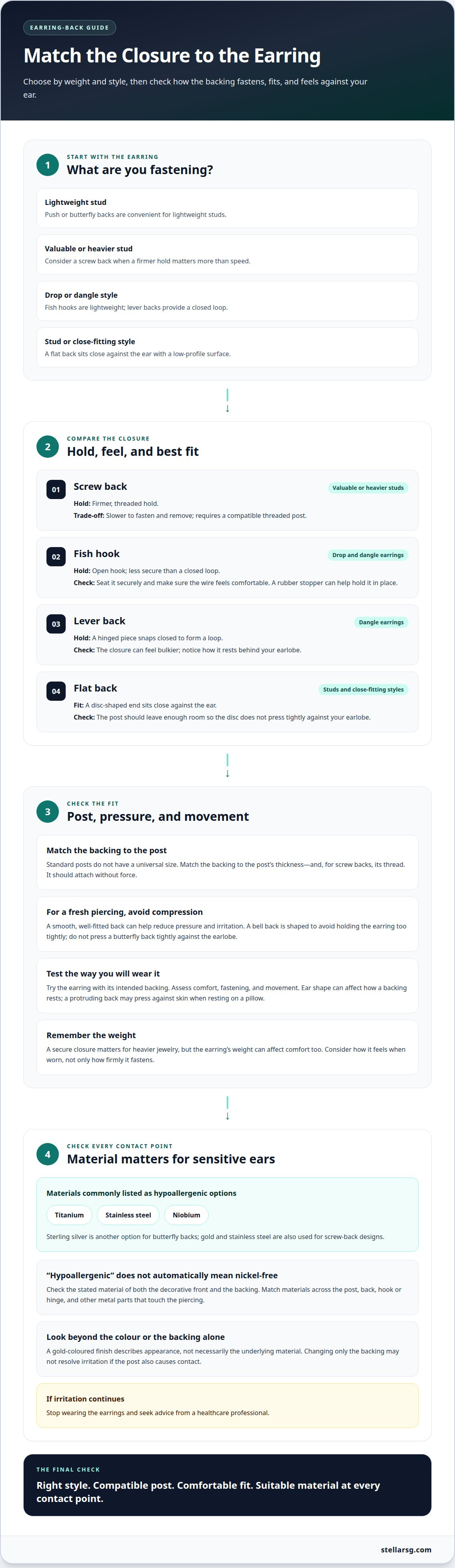
Nickel can trigger skin reactions, so the material touching your piercing matters as much as the backing style. Titanium, stainless steel, and niobium are commonly listed as hypoallergenic options for sensitive ears. Sterling silver is another option for butterfly backs, while gold and stainless steel are also used for screw-back designs.
“Hypoallergenic” doesn’t automatically mean nickel-free. If earrings have caused a reaction before, check the stated material of both the decorative front and the backing. A post made from a suitable material can still be paired with a backing that irritates your skin. Match the materials across the whole earring, including any hinged closure or small metal components.
Start with the earrings you wear most. If lightweight studs cause irritation, for example, changing only the backing may not resolve contact with the post. For dangle or drop earrings, check the hook or hinged mechanism too, since those parts touch the piercing. Choose a material that suits your sensitivity at every point of contact.
A jewelry collection can include several earring styles, but the same material won’t suit everyone. Compare the material description for each pair instead of assuming matching colours mean matching metals. Gold-coloured finishes, for example, describe appearance, not necessarily the underlying material. Focus on the stated base metal and any coating details.
For a practical comparison, note which earrings cause discomfort, then compare their posts, backs, and contact surfaces with a pair you tolerate. Consider materials such as titanium, niobium, or stainless steel when seeking hypoallergenic options. If irritation continues, stop wearing the earrings and seek advice from a healthcare professional; changing the backing alone may not address the cause.
Hoop and huggie earrings use closures built into their circular design, rather than separate butterfly backs. Their fit depends on the hinged post meeting its groove securely, so check that the clasp closes properly before wearing them.
A hinged hoop has a post that clicks into a groove on the opposite side. This locking mechanism keeps the hoop closed, but an insecure clasp can pop open. Close it gently and check whether the post sits in the groove without a gap. A clasp that needs force or feels loose may not fit securely.
Huggie backs are often integrated into the earring and snap shut. Their close-fitting shape suits a minimalist look, while larger hoops make more of a statement. Either way, the closure should rest comfortably against the ear without pinching or pressing on the piercing.
Unlike butterfly backs, hoop closures don’t rely on a small backing sliding onto a straight post. Flat backs are separate, low-profile pieces for stud-style earrings, while a hinged hoop forms a complete loop when closed. Choose based on the earring shape you want and how the fastening feels against your ear.
To check the fit, fasten the hoop and look for clean alignment between the post and groove. Then move your head gently and notice any pinching, rubbing, or unexpected movement. A good fit feels comfortable and stays closed without repeated adjustment. Don’t force the clasp, as pressure can make it harder to fasten correctly.
Whether you prefer a minimalist huggie or larger statement hoops, compare the clasp action and the way each piece rests on your ear. If you’re planning a piercing and want help considering earring fit, book an appointment.
Stellar SG combines ear piercing with a curated collection of jewelry, helping you consider how an earring’s style and backing suit your comfort. If you’re selecting earrings for a new piercing or comparing closures for everyday wear, consider the shape, fit, and material. A lightweight stud, for example, feels different from a hinged hoop or a heavier drop style.
Explore the jewelry with your preferred look and closure in mind, and consider the points of contact if your ears are sensitive. For a personal next step on piercing or jewelry, book an appointment with Stellar SG.
Let your daily routine guide your choice. Think about which earrings you reach for most, when you wear them, and what feels comfortable by the end of the day. That personal perspective makes choosing the right earring back more useful than following one rule for every pair. A closure should work with the way you dress, move, and enjoy your jewelry.
If you’re considering a new piercing or looking for earrings that suit your preferred fit, explore Stellar SG’s ear-piercing service and jewelry collection. Consider what matters most to you, whether that’s ease, a close-fitting style, or a secure-feeling closure, then visit a Stellar SG store to find pieces that match your taste.
Ask Stellar SG about earring backs and find a style that feels right for you.
Yes, titanium, niobium, and stainless steel are commonly used for sensitive ears. Sterling silver is another option for some butterfly-back earrings. If a pair feels comfortable at first but causes irritation later, check the post and backing materials separately. A dermatologist can help identify a suspected metal allergy, especially if reactions continue after changing earrings.
Common types include push or friction backs, butterfly backs, screw backs, flat backs, and locking backs. Dangle earrings may use fish hook wires or lever backs, while hoops and huggies often have built-in hinged clasps. Clip-on earrings fasten around the earlobe without a piercing. Identify how the closure attaches, then match it to the earring’s shape and how you plan to wear it.
Monster backs can support heavy earrings and help prevent them from drooping forward. Comfort clutch backs are another option for heavier studs or drop earrings. For a substantial stud, a screw back offers a firmer grip than a simple push-on backing. Both weight and balance matter, so consider whether the front pulls forward or feels comfortable when worn.
Butterfly backs push onto a post and are easy to put on, while screw backs twist onto a threaded post for a firmer hold. Locking backs use a mechanism designed to resist accidental slipping. Check which post the earring requires, since these closures aren’t interchangeable. For everyday wear, consider how easily you can fasten and remove the backing too.
Choose a backing made from a material your ears tolerate, and consider the post and decorative front as well. Switching to a titanium back won’t resolve irritation if another metal part still touches the piercing. Note which earrings feel comfortable and compare their materials with a new pair. If symptoms persist, stop wearing them and seek medical advice.
Check the closure before wearing earrings, especially if a friction back feels loose or a hoop clasp doesn’t meet its groove securely. Replace backs that are bent, cracked, or no longer grip the post. For fish hook earrings, a rubber stopper can add security. Store spare backs in a small compartment so they’re easy to find if one goes missing.


