 SGD
SGD EUR
EUR
 AUD
AUD
 GBP
GBP
 JPY
JPY
 INR
INR
Total: $0.00
Taxes and shipping calculated at checkout


What if the anticipation of getting a new piercing is actually more intense than the sensation itself? Many jewelry enthusiasts hesitate to complete their dream ear curation because they're worried about a sharp sting or a long, difficult healing process. It's understandable to feel cautious when you see so many conflicting reports online, which is why our ear piercing pain chart is designed to provide the clarity you need before your next appointment.
We believe that your journey toward a more sophisticated, personal aesthetic should be defined by excitement, not anxiety. You deserve a professional perspective that replaces fear with calm, methodical care. This guide provides a clear, expert-backed look at what to expect for every placement, from the gentle lobe to the more complex cartilage areas like the rook or daith.
By the end of this article, you'll have the confidence to choose the perfect addition to your style. We'll explore the specific pain levels for each spot, share professional advice for reducing discomfort, and provide a clear timeline for healing. You're about to discover how an expert-led experience can transform a moment of hesitation into a beautiful, lasting expression of your refined style.
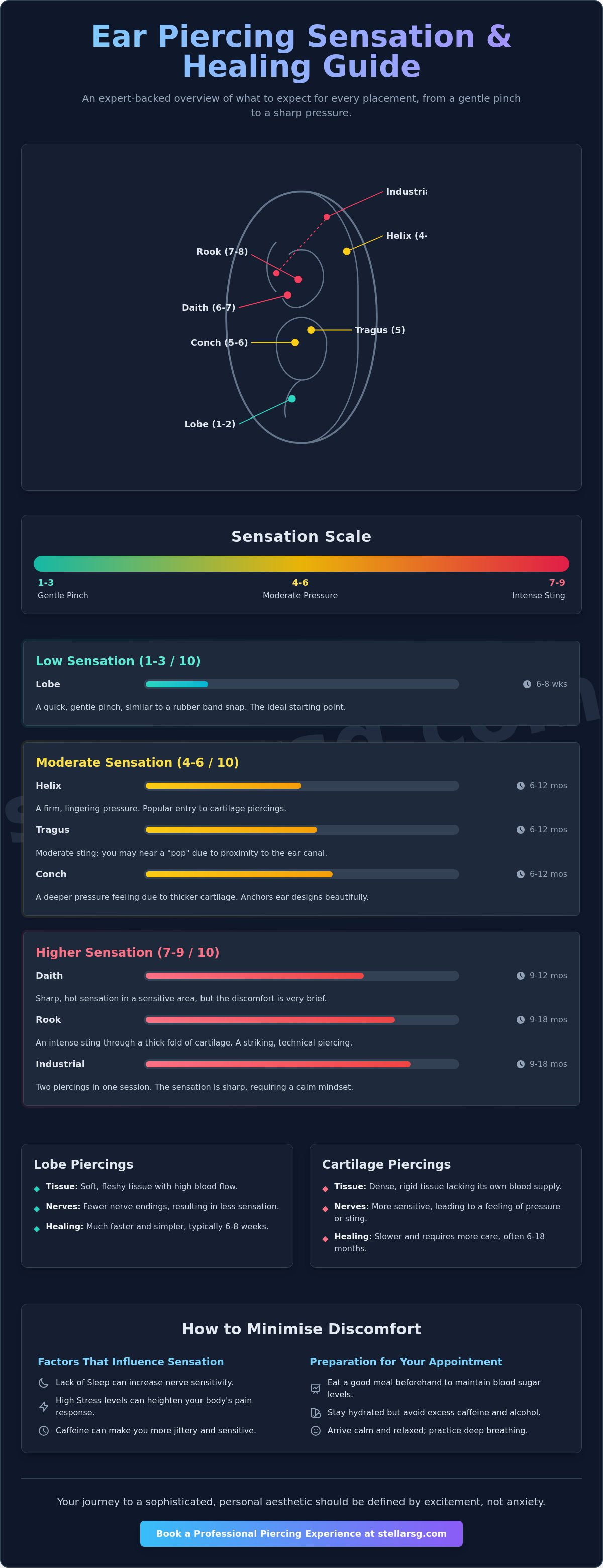
Defining pain is deeply personal. What feels like a tiny tickle to one person might feel like a sharp sting to another. To help you prepare, we use a standard 1-10 scale in our ear piercing pain chart to categorize these sensations. This scale moves from a minor "pinch" at the lower end to "sharp pressure" at the higher end. Understanding these levels helps set realistic expectations, whether you're a first-timer or a seasoned enthusiast looking to add to your curation.
Ear piercing remains one of the oldest known forms of body modification, and modern techniques have made the process more comfortable than ever. However, your internal state plays a huge role. Factors like how much sleep you've had, your current stress levels, and even your caffeine intake can affect your nerve endings. It's also helpful to distinguish between "the poke" and the "throbbing" that follows. The initial piercing is a split-second event, while the warmth or pulse you feel afterward is simply your body's natural healing response beginning its work.
Standard lobe piercings are the universal starting point for a reason. These placements sit in fleshy tissue with fewer nerve endings than cartilage. The sensation is often compared to a quick rubber band snap or a light mosquito bite. Because the tissue is so soft, the jewelry glides through with very little resistance. These levels are ideal for children or anyone with high anxiety about needles, offering a beautiful result with minimal fuss.
As you move into the cartilage, such as a standard Helix or Flat piercing, the sensation shifts. Cartilage is denser and more rigid than the lobe, so you'll likely feel a firm, lingering pressure rather than a sharp sting. At this level, the skill of the professional matters immensely. A smooth, expert "poke" reduces trauma to the area, ensuring the experience remains elegant and manageable. You can explore our piercing service to see how we prioritize comfort during these placements.
Technical piercings like the Daith, Rook, or Industrial sit in thicker or more sensitive areas of the ear's anatomy. You might feel a sharp, hot sensation that lasts for a few seconds during the procedure. While these rank higher on the scale, the discomfort is still very brief. Approaching these with a calm mindset and a professional piercer ensures the procedure is swift and precise. The result is a striking, sophisticated anchor for your ear curation that's well worth the few seconds of intensity.
Understanding the anatomy of your ear is the first step toward a confident piercing experience. Your ear is composed of two distinct types of tissue: the soft, fleshy lobe and the dense, avascular cartilage. Because the lobe is rich in blood flow and has fewer nerve endings, it offers a much gentler experience. Cartilage, however, is more rigid and takes longer to heal because it lacks its own blood supply. When you consult an ear piercing pain chart, these biological differences explain why some placements feel like a tiny pinch while others feel like firm pressure.
The standard lobe remains the gold standard for comfort and ease. Whether it is your first piercing or a stacked lobe addition, the sensation is very brief. Upper lobe placements are slightly more sensitive as they approach the start of the cartilage, but they remain very manageable for most people. These areas benefit from high blood flow, which typically leads to a swift healing time of 6 to 8 weeks. Their accessibility and low sensitivity make them perfect for building the foundation of a sophisticated ear curation.
The Helix is the most popular entry-level cartilage piercing. It sits on the outer rim where the tissue is relatively thin. Many clients describe the Tragus piercing as sounding scarier than it actually feels; you might hear a small "pop" sensation because of its proximity to the ear canal. While the actual sting is moderate, if you have any concerns about your auditory health while exploring these placements, you can discover Amazing Hearing Centre for expert guidance in Singapore. The Conch piercing sits in the thicker, central part of the ear. It results in a deeper pressure feeling during the procedure, yet it provides a stunning, high-end look that anchors the entire ear design beautifully.
Technical piercings like the Daith and Rook involve piercing through thicker folds of cartilage. The Daith is often sought for its unique aesthetic, while the Rook requires a precise needle path through two layers of tissue. The Industrial piercing is unique because it involves two separate holes connected by a single bar, essentially doubling the initial sensation. Because cartilage is denser, these placements require a steady hand and professional expertise to ensure a smooth process. Learning How to Minimise Discomfort through proper aftercare is vital, as these areas can take 3 to 12 months to fully heal.
Every individual has a different threshold, so it's helpful to rely on a professional ear piercing pain chart to guide your choices. If you're ready to start your journey with a specialized consultant, you can book an appointment with our team to discuss which placement best suits your style and comfort level.
While the placement you select on an ear piercing pain chart gives you a baseline for what to expect, the actual sensation is shaped by several technical variables. A professional's technique is perhaps the most critical factor. A skilled piercer understands how to minimize "drag" by using high-quality, sharp instruments that pass through the tissue swiftly. This precision reduces unnecessary trauma to the area, which can significantly lower the initial sting and prevent long-term ear piercing complications like excessive swelling or scarring.
The choice between a specialized piercing system and a traditional needle also impacts your comfort. Many high-end studios utilize advanced, single-use systems designed for speed and sterility, particularly for lobe placements. These systems are engineered to be quiet and gentle, making them a preferred choice for children or those with high anxiety. For more intricate cartilage work, a surgical needle is often the tool of choice because it's incredibly sharp and allows for extreme accuracy. Your unique anatomy also plays a role. The thickness of your cartilage or the shape of your tragus can make a piercing feel slightly different than what a friend might report. A professional piercing service will always assess your ear's structure first to ensure the most comfortable path for the jewelry.
The jewelry you choose isn't just about aesthetics; it's about how your body responds to the new addition. We prioritize 14K gold and other high-quality, hypoallergenic materials because they're far gentler on fresh piercings than mystery metals containing nickel. Using premium metals reduces the risk of allergic reactions and keeps the area calm during the crucial first few weeks of healing. Flat-back labrets are another essential for comfort. Unlike traditional butterfly backs, flat-back jewelry doesn't snag on hair or clothing and won't press into your skin while you sleep, making the entire recovery process feel much more refined.
Your mental state can actually amplify or diminish your pain perception. Anxiety often causes the body to tense up, which can make the sensation feel sharper than it truly is. This is why we focus on creating a calm, boutique environment that feels like a sanctuary rather than a clinical shop. Simple breathing techniques can work wonders during the actual piercing moment. Taking a deep, slow breath and exhaling as the piercing happens helps your muscles relax and keeps your heart rate steady. When you're in a reassuring, professional setting, it's much easier to focus on the exciting result rather than the brief moment of pressure.
Preparation is the foundation of a pleasant piercing experience. While your choice on the ear piercing pain chart sets the stage, how you arrive at the studio matters just as much. We always recommend eating a light, nutritious meal and staying well-hydrated before your visit. This simple step keeps your blood sugar stable and prevents the lightheadedness that sometimes accompanies a rush of adrenaline. It's also wise to consider your attire. Wear a button-down shirt or a top with a wide neckline so you don't have to pull tight fabric over your fresh piercing when you get home.
Once the procedure is complete, the "No-Touch" rule becomes your most important guideline. It's tempting to check on your new jewelry, but touching the site with unwashed hands is the primary cause of post-piercing throbbing and irritation. If you feel a natural "heat" or pulse in the area, use a sterile saline spray to gently soothe the skin. This methodical approach ensures that the initial sting fades quickly into a comfortable, effortless recovery.
Living in a tropical environment requires specific attention to detail. High humidity can trap moisture behind the ear, which may lead to a stinging sensation or "moisture bumps" if the area isn't kept dry. After showering, use the cool setting on a hair dryer to gently dry the piercing site. You should also be mindful of haircare products. Keep shampoos, conditioners, and styling sprays away from the fresh site to avoid chemical irritation. Understanding Why Professional Aftercare is Non-Negotiable in SG will help you maintain that elegant, healthy look through every season.
Side sleepers often worry about how a new piercing will affect their rest. A simple travel pillow is a game-changer. By placing your ear in the center hole, you avoid direct pressure on the jewelry, allowing the tissue to breathe and heal without interruption. This is where flat-back earrings truly shine. Unlike traditional butterfly backs that can poke into the neck, a flat-back labret sits flush against the skin for a seamless feel. Most lobe soreness naturally subsides within a few days, while cartilage may feel tender for a week or more. If you notice persistent, excessive swelling or heat that doesn't fade, it's time to consult your professional piercer for a check-up.
Your comfort is our priority from the moment you walk in until your piercing is fully healed. If you're ready to experience our caring, professional approach, we invite you to book an appointment today for a consultation tailored to your needs.
Your journey to a beautifully curated ear shouldn't be overshadowed by worry about discomfort. While a standard ear piercing pain chart provides a helpful baseline, the environment and expertise of your piercer are what truly define the experience. At Stellar, we've refined a process that prioritizes your physical ease and aesthetic goals in equal measure. We believe that every piercing is a significant moment of self-expression, and it deserves a setting that feels both safe and sophisticated.
We've developed the "Stellar Method" to ensure a gentle, elegant, and safe piercing journey for every client. This approach is rooted in reassuring care, making it the ideal choice for children receiving their first lobes and adults looking for more intricate additions. Whether you visit us at ION Orchard, VivoCity, or our other locations across Singapore, you'll find a team dedicated to methodical care. Our specialists use advanced techniques to ensure the procedure is swift and precise, minimizing the sensation and setting the stage for a smooth recovery.
Our expert specialists are specifically trained in anatomy-specific placement. This ensures that your jewelry sits perfectly according to the unique shape of your ear, which reduces pressure and irritation during the healing process. We've created a curated boutique environment designed to reduce stress and inspire confidence. Unlike traditional studios that can feel clinical or overwhelming, our spaces are calm and welcoming. You can book your professional piercing appointment at Stellar SG to experience this attentive, consultant-led service firsthand.
A truly curated ear is a balance of aesthetics and comfort. Our styling philosophy focuses on building a cohesive look that reflects your personal refinement. We use a premium 14K gold collection for our piercings because high-quality materials are essential for a comfortable experience. These hypoallergenic metals are gentle on fresh sites and provide a luxurious glow that lasts.
We're here to guide you through every step, from your first lobe piercing to a complex helix or conch stack. Transitioning to more technical placements is much easier when you have a trusted partner to provide aftercare advice and professional support. If you're looking for inspiration for your next move, our Helix Piercing Styling: The Ultimate 2026 Guide provides expert tips on creating a sophisticated rim curation. By combining a professional ear piercing pain chart with our specialized care, you can build your dream ear stack with absolute confidence and style.
You now have the clarity needed to transform your vision of a curated ear into a beautiful reality. By using our ear piercing pain chart, you can select the placements that best align with your comfort level while knowing exactly what to expect. It's helpful to remember that professional technique and premium jewelry are the most important factors in ensuring a gentle experience and a smooth healing process. Whether you're starting with a classic lobe or adding a sophisticated cartilage piece, the right preparation makes all the difference.
At Stellar, we're dedicated to providing a safe, elegant environment for every client. With expert specialists at 8+ Singapore locations, we offer specialised care for children's first piercings and a stunning selection of premium 14K Gold and Titanium jewelry options. We invite you to Book Your Gentle Piercing Experience at Stellar SG today. Your journey toward a more refined, personal aesthetic is just one appointment away. We look forward to helping you express your unique style with ease and sophistication.
The standard lobe piercing is universally considered the least painful option for those starting their curation journey. It ranks at the lowest level of our ear piercing pain chart because the tissue is fleshy and lacks the dense nerve networks found in cartilage. Beginners often describe the sensation as a quick, mild pinch that subsides almost instantly, making it a comfortable introduction to the world of piercings.
The initial sharp sensation lasts only for a split second during the actual procedure. Once the jewelry is securely in place, the sharp sting typically transitions into a dull, warm throb within minutes. This secondary sensation is a natural sign of increased blood flow to the area. Most clients find that any remaining tenderness fades completely within a few hours of leaving the studio.
Neither method is objectively less painful, as the sensation depends on the placement and the specialist's skill. Modern piercing systems are designed for extreme speed and are exceptionally gentle for lobe placements, which is why they're a preferred choice for children. For intricate cartilage work, a surgical needle is often used for its precision, which helps manage the firm pressure sensation effectively during the process.
The Industrial and Daith piercings are typically ranked as the most intense placements on the ear piercing pain chart. This is because they involve piercing through thicker folds of cartilage or, in the case of the Industrial, two separate punctures in a single session. While these rank higher on the scale, the discomfort is still very brief when performed by a skilled specialist in a calm environment.
It's generally best to avoid blood-thinning painkillers like aspirin or ibuprofen immediately before your appointment. These medications can increase the likelihood of bruising or minor bleeding during the procedure. If you're concerned about discomfort, focus on staying hydrated and eating a light meal beforehand. You can always discuss safe post-piercing pain management options with our professional team during your consultation.
Delayed soreness is usually caused by the body's natural inflammatory response as it begins the healing process. This can be aggravated by accidental snagging on clothing, sleeping directly on the ear, or a buildup of hair products around the site. If the pain is accompanied by significant swelling or heat, it's a sign that the area requires more diligent saline cleaning to stay calm.
The thickness, or gauge, of the jewelry can influence the feeling of pressure during the initial procedure. Standard lobe piercings use very thin studs to minimize the sensation as much as possible. For cartilage, using the correct gauge is essential for jewelry stability. While it may feel slightly more "full" initially, the correct thickness actually prevents long-term irritation and pain during the healing phase.
Normal pain is characterized by a dull ache or tenderness that gradually decreases as the days pass. In contrast, an infection often presents with persistent throbbing, extreme redness, yellow discharge, or skin that feels hot to the touch. If you notice these symptoms or feel unwell, visit one of our specialists for a professional assessment to ensure your piercing journey remains safe and elegant.


