 欧元、澳元、英镑、日元、印度卢比


全部的: $0.00
结账时计算税费和运费
 SGD
SGD


Did you know that nearly 18% of people in North America struggle with a nickel allergy? It is a staggering figure that explains why so many jewelry lovers find themselves dealing with itchy, red earlobes or strange green discoloration. You shouldn't have to choose between looking elegant and feeling comfortable. Understanding why gold-plated earrings cause irritation is the essential first step toward reclaiming your personal style without the physical cost.
Gold-plated jewelry offers the allure of luxury at an accessible price point, but it's essential to understand exactly what rests against your skin. At its core, gold plating is a microscopic layer of gold, typically ranging from 0.5 to 2.5 microns thick, applied over a less expensive base metal. To put that in perspective, a human hair is about 75 microns thick. This delicate coating is achieved through a process called electroplating, where an electric current bonds gold ions to a metal core. Understanding the Anatomy of Gold-Plated Jewelry reveals that while the exterior looks like 18k or 14k gold, the interior is often composed of "mystery metals" like brass, copper, or nickel. It's this hidden composition that explains why gold-plated earrings cause irritation for so many people. Because plating is a temporary finish rather than a permanent material, it naturally thins over time through friction, moisture, and contact with skin oils. As this protective barrier fails, your sensitive skin becomes exposed to the reactive core. This degradation is inevitable for plated items, making them a short-term fashion choice rather than a lifelong investment in your ear health.
Manufacturers often use nickel as a "brightener" layer to create a smooth, reflective surface under the gold. As the gold layer wears down, these hidden metals leak through to the surface. This is particularly problematic with "flash plating," where the gold layer is thinner than 0.175 microns. These mass-market pieces offer almost no protection, allowing reactive elements to trigger a reaction almost immediately after the finish begins to fade. Once the gold barrier is compromised, the base metal interacts with the moisture in your skin, leading to the common symptoms of discomfort many jewelry lovers experience.
The term "hypoallergenic" lacks legal regulation in the United States. A piece can carry this label while still containing trace irritants that cause significant discomfort for sensitive ears. This ambiguity is a key reason why gold-plated earrings cause irritation despite reassuring packaging. You might think you're buying a safe product, but without strict standards, the label is often just a marketing tool. Biocompatibility is the true standard for jewelry, referring to materials specifically engineered to coexist with living tissue without causing a toxic or immunological response.
While the anatomy of your jewelry sets the stage, the actual discomfort stems from three specific environmental and biological triggers. The most common trigger is the primary reason why gold-plated earrings cause irritation: the chemical migration of base metals through a failing gold barrier. This "barrier failure" happens as micro-scratches develop on the earring post. Even if the jewelry looks perfect to the naked eye, these microscopic fissures allow reactive core metals to seep out. Beyond chemical reactions, mechanical irritation also plays a role. Low-quality plating often lacks a smooth, polished finish at the microscopic level. These rough surfaces can tear the delicate tissue of your earlobe, creating tiny wounds that invite inflammation and sensitivity.
Nickel is the most frequent offender in jewelry-related skin reactions. When the gold layer thins, nickel ions are released and absorbed into the skin. Your immune system may suddenly identify these ions as foreign invaders, triggering a localized inflammatory response known as allergic contact dermatitis. You might notice intense itching, weeping, or crusting around the piercing site. It is a common misconception that you must be born with this sensitivity. In reality, a nickel allergy can develop at any age. Repeated exposure to poorly plated jewelry often acts as the catalyst, eventually pushing your immune system past its tolerance threshold.
For those living in or visiting tropical environments, the climate acts as a catalyst for jewelry degradation. High humidity and consistent perspiration accelerate the oxidation of base metals like copper and brass. The salt in your sweat reacts with these metals, often resulting in the dreaded "green ear" stain on your skin. This chemical breakdown is another reason why gold-plated earrings cause irritation so quickly in Singapore. The moisture trapped between the earring and your earlobe creates a miniature "reaction chamber" that speeds up the tarnish process. For shoppers in Central Singapore, prioritizing solid gold or biocompatible materials isn't just about luxury; it's a practical necessity for maintaining skin health in a tropical landscape. If your current piercings are struggling with the heat, a professional ear piercing service can help you transition to high-quality materials that stand up to the elements. Choosing jewelry designed for longevity ensures your style remains as vibrant and comfortable as the city itself.
Identifying the source of earlobe discomfort is the first step toward a pain-free style. Many people mistake the symptoms of a metal reaction for a bacterial infection, leading to incorrect treatment. Understanding why gold-plated earrings cause irritation involves distinguishing between an immunological response and a physical injury. An allergic reaction typically presents as localized redness and a persistent itch that feels skin-deep. An infection, however, is often characterized by heat, throbbing pain, and the presence of pus. While an allergy is your body’s response to a specific material, an infection is a medical concern that may require professional care. Knowing the difference ensures you don't treat a metal sensitivity with topical creams that won't solve the underlying issue.
The "Insertion Pain" test is a practical way to evaluate your jewelry. If you experience a sharp, stinging sensation when sliding an earring into a healthy, older piercing, the plating is likely the culprit. Substandard manufacturing often leaves microscopic burrs or a rough finish on the post. These imperfections act like tiny saws, creating micro-tears in the delicate ear tissue. This mechanical trauma makes the skin even more vulnerable to the reactive base metals hidden beneath the gold. This physical damage is a secondary reason why gold-plated earrings cause irritation, as the broken skin provides a direct pathway for nickel or copper to enter your system.
Jewelry hygiene also plays a significant role in your comfort. Plated surfaces can be more porous than high-polish solid gold, allowing them to collect skin oils, dead cells, and bacteria. This accumulation creates a biofilm that irritates the piercing site, compounding the chemical reaction already taking place. Regular cleaning is helpful, but it can also accelerate the thinning of the gold layer, eventually exposing the irritants you're trying to avoid.
Common indicators of a Nickel allergy include:
If you're unsure whether your discomfort stems from a material reaction or a physical issue, seek expert advice at a professional ear piercing singapore studio. Experts can determine if the irritation is caused by the metal composition or an improper piercing angle that creates unnecessary pressure on the tissue. They provide a safe, clinical environment to assess your ear health and recommend the best path forward. Persistent irritation in a new piercing requires an immediate switch to biocompatible jewelry to prevent long-term scarring or piercing migration.
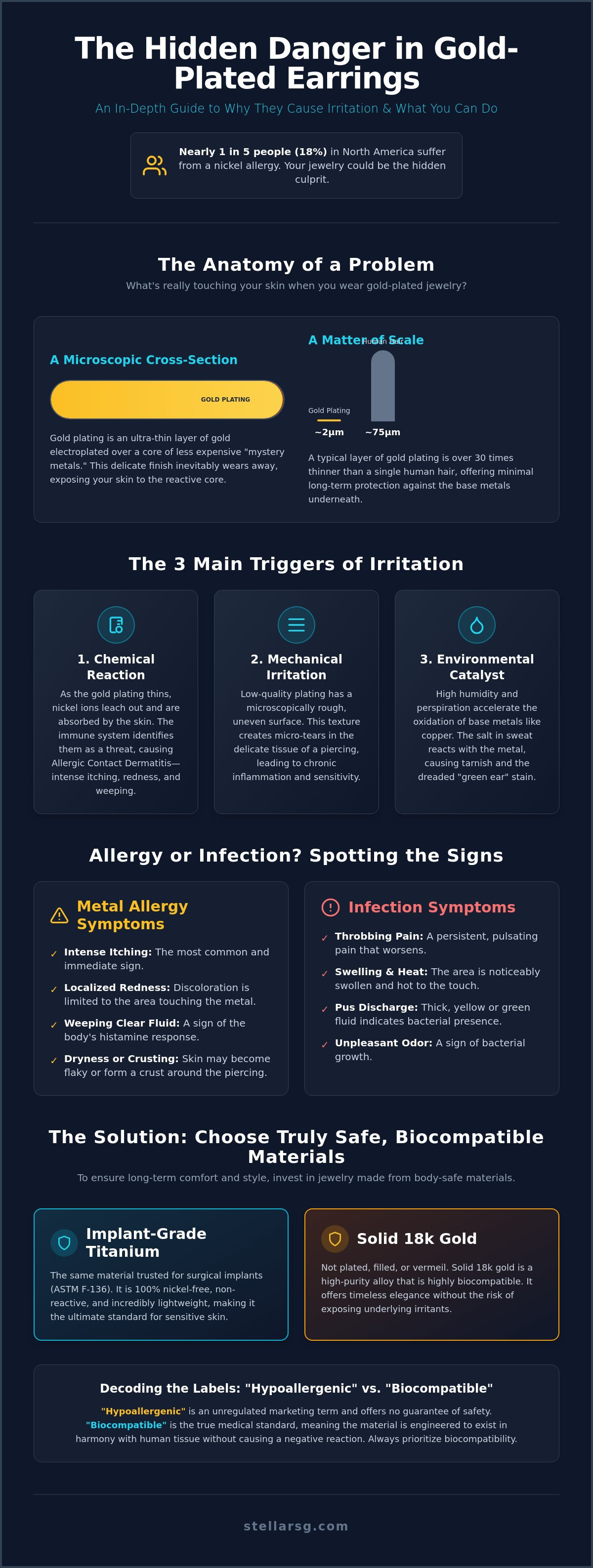
Moving beyond the frustration of reactive metals requires a shift toward materials that respect your body's biology. While fashion jewelry relies on thin, temporary coatings, professional-grade alternatives offer a permanent solution for sensitive skin. Understanding why gold-plated earrings cause irritation is only half the battle; the next step is investing in metals that won't degrade over time. Solid 18k gold stands as the premier choice for those seeking both elegance and safety. Unlike plated options, solid gold is consistent throughout, ensuring no hidden irritants ever reach your skin. For those with extreme sensitivities or new piercings, implant-grade titanium (ASTM F136) offers a "space-age" level of security. It's entirely nickel-free and biocompatible, making it the preferred material for initial healing and long-term comfort.
When selecting your next pair, you might encounter terms like "gold-filled." While gold-filled jewelry features a thicker layer of gold mechanically bonded to a core, it still carries a risk of barrier failure. For the truly sensitive, 18k gold is superior to 14k because it contains a higher gold-to-alloy ratio. This purity minimizes the presence of trace metals that could trigger a reaction. This is a stark contrast to why gold-plated earrings cause irritation, where the thin finish inevitably fails and exposes the wearer to reactive base metals. Choosing solid, high-purity metals is an investment in both your aesthetic and your physical ease.
18k gold is composed of 75% pure gold, making it exceptionally biocompatible. This high purity level significantly reduces the chance of skin reactions, providing a reassuring experience for daily wear. If you're deciding between different purities, our guide on 14k vs 18k Gold for Piercings: Choosing Pure Luxury offers a deeper look into which is right for you. For those in the region, selecting 18k gold piercing earrings singapore ensures you're meeting the highest medical-grade standards available in 2026.
| Material | Safety Level | Durability | Skin Reaction Risk |
|---|---|---|---|
| Nickel-free 18k Gold | High | High | Very Low |
| Implant-Grade Titanium | Highest | High | Minimal |
| Sterling Silver | Medium | Medium | Moderate |
| Gold-Plated Brass | Low | Low | High |
Stellar SG only uses the highest tiers of this safety scale to ensure your jewelry remains a source of joy. Experience the difference of medical-grade elegance and book your appointment for a personalized consultation today.
Embracing a lifestyle of refined elegance starts with choosing materials that honor your skin. We've explored the metallurgical reasons why gold-plated earrings cause irritation, from the inevitable thinning of the gold layer to the release of reactive nickel ions. At Stellar SG, our mission is to provide a sophisticated alternative that blends product elegance with clinical safety. We uphold medical-grade standards for every client, ensuring that your jewelry is a source of confidence rather than a cause for concern. Style should never hurt. Whether you're seeking your first piercing or looking to upgrade an existing collection, our focus on biocompatible 18k gold and titanium provides a foundation for lasting comfort.
The transition from disposable fashion jewelry to a professional "curated ear" is a journey toward intentional self-care. It involves selecting pieces that are designed to be worn continuously without triggering the body's immune response. By choosing high-purity metals, you invest in jewelry that maintains its luster and integrity even in tropical climates. Our experts help you navigate this transition, offering a personalized approach that considers your aesthetic goals and your skin's history. This methodical care ensures that every addition to your ear is safe, stylish, and sustainable for long-term wear.
Our boutique experience focuses on more than just the final look. We provide professional consultations to assess your skin's specific sensitivities and history. This attentive care is particularly important for those who have previously struggled with reactive metals. You can explore our refined range of diamond stud earrings singapore, which are meticulously crafted to provide timeless luxury without the risk of irritation. Visiting our sterile, professionally managed environments at locations like ION Orchard or VivoCity ensures your piercing journey begins with the highest safety protocols in place. We prioritize your physical ease at every step of the process.
It's time to stop settling for the redness and itching of substandard jewelry. Our experts are here to guide you through a selection process that prioritizes your comfort and health. Book an appointment at a Stellar SG location near you to begin your journey toward a sophisticated, pain-free collection. There is a profound joy in wearing elegant earrings that feel as good at the end of the day as they did when you first put them on. Experience the peace of mind that comes with medical-grade quality and expert-led care.
You now understand the fundamental reasons why gold-plated earrings cause irritation, from the inevitable breakdown of thin metallic barriers to the unique challenges of a humid tropical climate. Choosing jewelry should be an act of self-expression; not a compromise on your physical comfort. By prioritizing biocompatible materials like 18k gold and implant-grade titanium, you ensure your style remains as enduring as it is beautiful. It's time to move beyond the cycle of discomfort and invest in pieces that truly respect your skin's biology.
As Singapore’s leading expert in safe ear piercing, Stellar SG offers a curated collection of premium jewelry designed for those with sensitive needs. Our specialists are ready to guide you at multiple convenient locations across central Singapore shopping malls. You deserve an experience that is as safe as it is sophisticated. Experience the comfort of premium jewelry—book your professional piercing appointment today. Your journey to a pain-free, elegant curated ear begins with a single expert consultation. We look forward to helping you shine with confidence.
Gold-plated earrings don't directly cause infections, but they frequently trigger allergic reactions that compromise the skin barrier. When the microscopic gold layer wears down, the exposed base metal causes itching and inflammation. If you scratch the area or if the skin breaks due to this irritation, bacteria can enter the wound and lead to a secondary bacterial infection. This is why addressing metal sensitivity early is vital for ear health.
You can use a dimethylglyoxime nickel testing kit, which is a simple chemical swab that changes color in the presence of nickel. Without a kit, it's difficult to tell by sight alone, as nickel is often hidden beneath the gold surface as a brightener layer. Most mass-market fashion jewelry contains nickel unless it is explicitly certified by strict safety standards like the EU's REACH regulation.
Neither option is ideal for highly sensitive skin because the gold layer remains a temporary coating. However, 18k gold-plated jewelry has a higher gold content in the plating layer itself compared to 14k. While this might slightly delay the onset of symptoms, the primary reason why gold-plated earrings cause irritation is the eventual exposure of the reactive base metal regardless of the gold's karat purity.
Gold plating typically lasts between a few weeks and two years depending on the thickness of the layer and your wear habits. In humid environments or during physical activity, sweat and friction accelerate the breakdown of the gold. Once the plating thins to a certain point, the base metals begin to leach into your skin, causing the familiar symptoms of discomfort and redness associated with sensitivity.
Using clear nail polish is not a recommended or professional solution for sensitive ears. While it creates a temporary physical barrier, the polish quickly chips and flakes off inside the piercing channel. These sharp flakes can cause mechanical irritation or trap harmful bacteria. Additionally, many nail polishes contain chemicals that may further irritate already inflamed skin, making the problem worse rather than solving it.
Your skin turns green due to a chemical reaction between skin oils, sweat, and the copper or brass found in the earring's base metal. When the gold plating wears off, these metals oxidize and create a green copper carbonate film. This harmless but unsightly stain is a clear indicator that the protective gold barrier has failed and your skin is now in direct contact with reactive alloys.
The best materials for new piercings are implant-grade titanium (ASTM F136) or solid 14k and 18k gold. These materials are biocompatible, meaning they are designed to exist in harmony with living tissue. Choosing these over plated options is the most effective way to prevent the complications often seen when why gold-plated earrings cause irritation during the critical healing phase of a new piercing.
Sterling silver is generally better than gold-plated brass or nickel, but it still contains 7.5% copper, which can cause reactions in some individuals. Silver also tarnishes easily, and that oxidation can irritate the piercing site. If you're looking to move on from jewelry that causes you discomfort, you can check out Silver Buyers Sydney to see how to sell your unwanted silver. For those with extreme sensitivities, solid gold or titanium remains the superior choice for long-term comfort and safety compared to any silver-based or plated options.


