 欧元、澳元、英镑、日元、印度卢比


全部的: $0.00
结账时计算税费和运费
 SGD
SGD


The "surgical steel" stud you chose for its name might be the exact reason your skin is reacting. While the term sounds medical, it often hides nickel levels that trigger allergies in 15% of men and a high percentage of women. Choosing safe piercing materials is about more than just avoiding "green skin"; it's about ensuring your new aesthetic doesn't lead to the 72% of complications reported in non-specialized retail settings in 2025. You deserve a piercing experience that feels as premium and elegant as the jewelry you wear.
We understand the frustration that comes after a bad experience with "hypoallergenic" earrings that still cause painful irritation bumps. This guide will clarify the confusion between 14K and 18K gold and explain why the February 2026 ASTM F136 titanium standards are the true benchmark for your safety. You'll learn exactly which metals support effortless healing and how to curate a sophisticated, constellation ear with total confidence. It's time to move past the myths and find the biocompatible shine your skin deserves.
Walk into any high-street accessory shop and you'll see "surgical steel" labels everywhere. It sounds professional. It sounds clinical. In reality, "surgical steel" is an unregulated marketing term with no legal or medical definition. While it suggests a level of purity, most jewelry sold under this name is actually 316L stainless steel. This grade is fine for kitchen sinks or temporary medical tools, but it isn't always ideal for a permanent fixture inside your body. The lack of strict standards means "surgical" jewelry can still contain high levels of nickel, the leading cause of skin irritation in the piercing world.
To ensure you're choosing safe piercing materials, you must look for specific certifications. The true medical standard for steel is 316LVM, which stands for Low Carbon Vacuum Melt. This process removes impurities and traps nickel more effectively than standard 316L. However, even 316LVM is becoming a secondary choice in 2026. At Stellar SG, we prioritize even higher-tier alternatives like ASTM F136 titanium and solid 14K gold. These materials offer a level of biocompatibility that standard steel simply can't match. For a deeper look at the various substances used in the industry, you can consult a comprehensive guide to piercing materials to see how different alloys compare.
Nickel allergies are incredibly common. Statistics from 2025 show that 15% of men and nearly 25% of women experience allergic contact dermatitis when exposed to low-quality metals. In Singapore, our climate makes this worse. High humidity and constant sweat act as catalysts, accelerating the leaching of nickel from low-grade steel directly into your piercing. You might notice your skin becoming dry, itchy, or intensely red. This is often mistaken for an infection, but if there's no heat or yellow discharge, it's likely a metal allergy. Choosing a professional piercing service that avoids these mystery alloys is the best way to prevent long-term complications.
Don't let "hypoallergenic" labels fool you. This is another term that manufacturers use freely without oversight. It doesn't mean nickel-free; it just means it's less likely to cause a reaction than the cheapest possible scrap metal. Silver-plated jewelry is particularly dangerous for initial piercings. Once the thin silver layer wears down, your body is exposed to a reactive base metal, often leading to the dreaded "green skin" or painful irritation bumps. Genuine safety comes from verified biocompatible certifications, not catchy labels on a display card. Investing in premium materials from the start ensures your healing process is as elegant and effortless as your new look.
Choosing the right jewelry isn't just about the sparkle; it's about how your body interacts with the metal long after you leave the studio. When we talk about safe piercing materials, two heavyweights dominate the conversation: implant-grade titanium and solid 14K gold. Unlike the unregulated "surgical" steels discussed earlier, these materials meet rigorous biocompatibility standards. For instance, the Association of Professional Piercers' standards emphasize that initial jewelry must be polished to a mirror finish and free from irritants to prevent tissue migration or rejection.
Titanium, specifically ASTM F136, is a powerhouse of safety. A recent revision to this standard was published on February 9, 2026, ensuring the highest level of purity for surgical implants. It's completely nickel-free and 50% lighter than steel, making it the perfect choice for delicate cartilage or fresh helix piercings. While industrial titanium traded at roughly $6.34 USD/Kg in April 2026, the refined, implant-grade version used in jewelry is a specialized alloy designed to stay in the body without reaction. It promotes osseointegration, the same science that allows dental implants to bond safely with human bone.
Gold offers a timeless, elegant alternative, but not all gold is created equal. We follow the "Goldilocks" rule for safe piercing materials:
If you have extreme sensitivities, Niobium is another overlooked, elemental metal that's 99.9% pure and entirely hypoallergenic. It's an excellent choice for those who've struggled with even the highest quality alloys in the past.
In our humid climate, 14K gold is a superior choice for daily wear because it's more durable than 18K. It resists the microscopic scratches that can harbor moisture and sweat, which is vital for maintaining a clean piercing site. This material is the foundation of the "curated ear" look, allowing you to stack elegant designs without fear of tarnish. You can explore these sophisticated options in Stellar’s Exclusive 14K Gold Labret Collection to find a piece that matches your personal style.
Titanium is often considered the gold standard for complex piercings like the industrial or daith. Because it's inert, the body doesn't "fight" the jewelry, allowing the tissue to focus entirely on healing. The cost-benefit of choosing titanium is clear: you invest slightly more upfront to avoid the long-term expense and pain of treating irritation bumps. It's a professional choice for those who value both health and longevity. If you're ready to upgrade your collection, you can book your appointment with our expert team today.
Choosing safe piercing materials is the first step toward a healthy result, but the physical architecture of your jewelry is just as vital. Even a high-carat gold stud can cause complications if its design traps bacteria or tears delicate tissue during insertion. True safety is a synergy of premium metallurgy and precision engineering. When jewelry is designed with healing in mind, it doesn't just look better; it feels better from the very first day.
Professional jewelry features a mirror-polish finish. This isn't just for aesthetic shine. It creates a surface so smooth that lymph fluid, often called "crusties," cannot bond to the metal. When jewelry is rough or porous, these secretions act like glue. This causes pain and micro-tears every time the piece moves. Additionally, your initial jewelry must be slightly longer than your earlobe thickness. This "long post" accommodates the natural swelling that occurs in the first 2 to 4 weeks. Without this extra room, the jewelry can embed into the skin, which often leads to painful emergency removals.
Many high-street earrings still use "butterfly backs," which are notorious safety hazards. The tight loops and friction-based design trap sweat, dead skin, and bacteria directly against the wound. They also compress the tissue, which restricts blood flow and significantly slows the healing process. For a safe and elegant experience, these outdated designs should be avoided in favor of modern, medical-grade alternatives.
Flat-back labrets have transformed the standard for modern piercings. Unlike traditional backings that poke the skin, these pieces sit flush against the back of your ear. This sleek design is exactly why flat-back labrets are best for sleeping comfortably and using phones without irritation. They use a secure press-fit or screw-on mechanism, so you won't worry about losing your premium investment during your daily routine. It's a sophisticated solution for those who value both style and ease of wear.
The way your jewelry closes determines how much trauma your piercing endures. In externally threaded jewelry, the screw threads are on the post itself. These act like a tiny saw, scraping the raw wound every time the jewelry passes through. According to APP jewelry standards, internal threading is the only professional choice for new piercings. With this design, the post is perfectly smooth. The screw is located on the decorative end, which then fits into the hollow post. It’s a superior construction that prioritizes your comfort and ensures your safe piercing materials actually do their job.
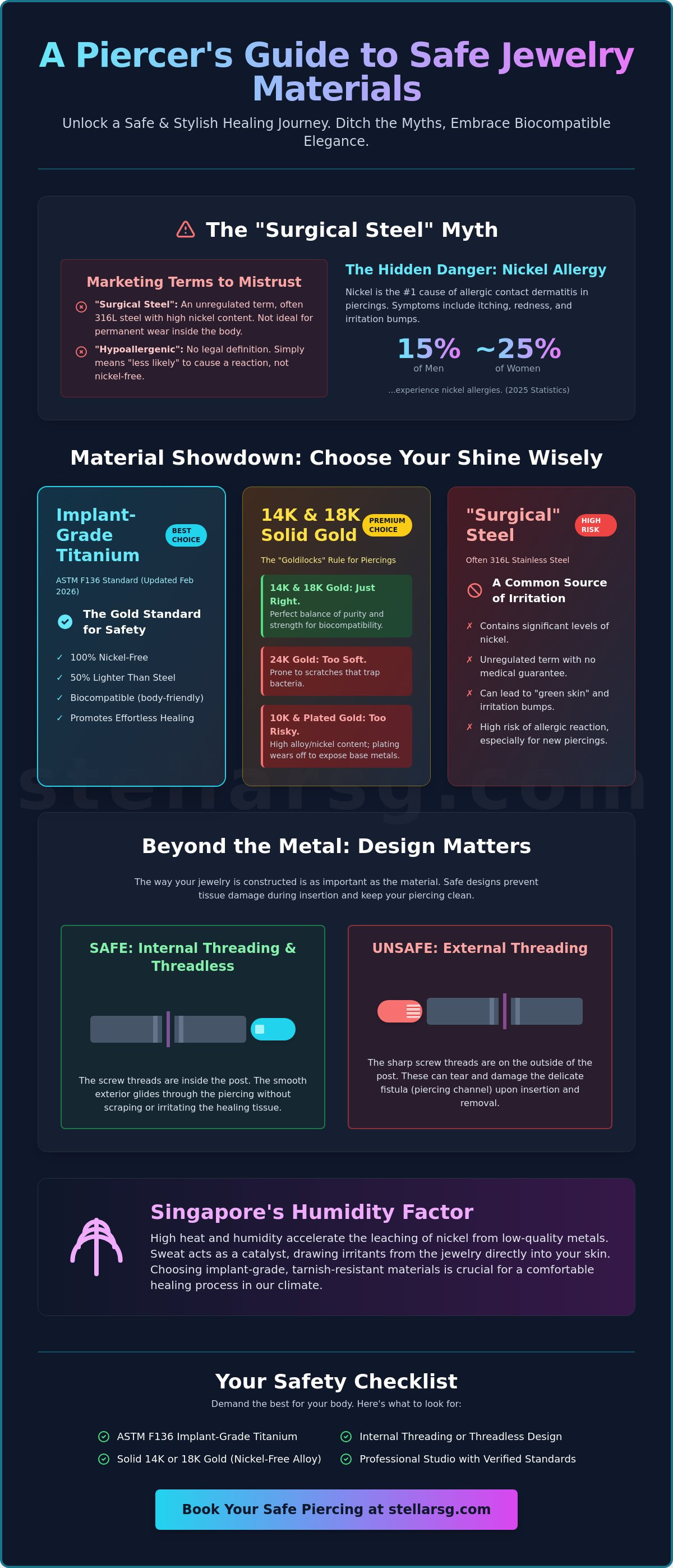
Living in Singapore introduces a unique challenge to the healing process: the "Tropical Factor." Our consistent 80% humidity and high temperatures mean your skin is often damp with sweat. This moisture isn't just uncomfortable; it acts as a catalyst for chemical reactions in low-quality jewelry. While safe piercing materials like titanium remain inert, cheaper alloys can begin to oxidize or leach nickel almost immediately when exposed to the salts and oils in human perspiration. This chemical leaching is a primary driver of the irritation and "green skin" many locals experience after visiting non-specialized retail outlets.
High-quality 14K gold is essential in this climate because it's naturally tarnish-resistant. Unlike silver or plated metals, solid gold won't react to the humid air or the chlorine found in our tap water. Moisture management is the next priority. When sweat traps itself behind a "butterfly back" or a porous metal stud, it creates a breeding ground for fungal and bacterial buildup. Using non-porous, biocompatible metals ensures that your piercing site stays as clean as possible. This material choice must work in tandem with professional aftercare to navigate the risks of a tropical environment.
Irritation bumps are frequently caused by a combination of friction and trapped moisture. In Singapore’s heat, skin can swell slightly, causing jewelry to fit tighter than intended. Our 14K gold labrets feature a polished, sleek surface that minimizes friction against the healing fistula. This reduces the mechanical stress on the wound, effectively lowering the risk of swelling and granulomas. If you notice a persistent bump or unusual redness, it’s best to visit a Stellar SG location for a professional assessment of your jewelry fit.
Active lifestyles often involve a dip in a condo pool or a visit to Changi Cove. While it's tempting to dive in, chlorine and salt water can be harsh on a new wound. Chlorine is a powerful oxidizer that can degrade lower-grade metals, leading to premature tarnish and skin sensitivity. If you've chosen safe piercing materials, the metal itself will withstand the chemicals, but the wound still needs protection. Always rinse your jewelry with fresh saline or clean water after outdoor activities to remove residual salt and chemicals. This simple step keeps your premium jewelry sparkling and your skin healthy. Ready for a safe, stylish upgrade? Book Your Ear Piercing Appointment with our expert team today.
At Stellar SG, we believe your journey toward a curated ear should be as rewarding as the final look. Our commitment to safe piercing materials is unwavering. We exclusively use ASTM F136 titanium and solid 14K gold, ensuring every piece of jewelry meets the highest biocompatibility standards. You don't have to sacrifice beauty for health. Our "Safe & Stylish" philosophy means you can start your healing process with elegant, premium studs that reflect your personal style from day one. By choosing materials that align with the February 2026 ASTM updates, we provide a foundation for healing that is as reliable as it is beautiful.
Building a sophisticated ear stack requires a foundation of quality. Our skilled staff prioritizes anatomy-first piercing, ensuring each placement complements your unique ear shape. By using only biocompatible materials, we eliminate the risks associated with low-grade alloys. This allows you to focus on the artistry of your collection rather than managing irritation. Whether you're a first-timer or a seasoned collector, our goal is to inspire confidence through premium quality and specialized care.
From our flagship at ION Orchard to our boutique locations across the island, we maintain the strictest hygiene protocols. Our staff undergoes rigorous training to provide a safe, welcoming environment for everyone. We take extra care with children and those with sensitive ears, offering personalized consultations to ensure a stress-free experience. Our transparency in sterilization and material sourcing sets us apart. You can learn more about our unique approach in The Stellar Method: Safe Piercing vs. Copycat Providers.
Transitioning from initial healing jewelry to decorative pieces is an exciting milestone. Before you swap your jewelry, follow this final checklist for safe piercing materials:
Your aesthetic enhancement deserves a professional touch. Don't settle for "high-street" quality when your health is on the line. Experience the perfect blend of safety and Singaporean elegance. Book Your Safe Piercing Appointment at Stellar SG and start your journey with total confidence today.
Your journey to a perfectly curated ear starts with a commitment to quality. By moving past unregulated marketing terms and choosing safe piercing materials like ASTM F136 titanium, you ensure your healing is as smooth as your style. We've explored how precision jewelry design and climate-aware aftercare prevent the complications that affect 72% of people in non-specialized retail settings. Now, it's time to turn that knowledge into a premium experience that reflects your personal elegance.
Stellar SG brings Red Dot-level aesthetic standards to every procedure. With 8+ locations across Singapore, including ION Orchard and JEM, expert care is always within reach. Whether you're looking for specialized attention for Stellar Kids or have extremely sensitive ears, our skilled staff provides the gentle, professional touch you deserve. You don't have to choose between beauty and safety when you're in expert hands.
Book Your Professional Piercing Appointment at Stellar SG today. We look forward to helping you find your new favorite look with total peace of mind.
14K gold is generally better for a new piercing because it's more durable than 18K gold. While 18K gold has a higher gold content, it's softer and more prone to microscopic scratches that can harbor bacteria. The 14K alloy provides the perfect balance of purity and strength. This ensures your jewelry remains smooth and safe throughout the entire healing process.
You shouldn't use sterling silver for an initial piercing, regardless of its quality. Silver oxidizes quickly when it comes into contact with body fluids and air. This process can cause permanent skin discoloration known as argyria. It also frequently contains copper or nickel alloys that trigger irritation in sensitive skin. Stick to safe piercing materials like titanium until the wound is fully healed.
Your "surgical steel" earring makes your ear itchy because it likely contains nickel. Although the name sounds medical, most stainless steel alloys used in jewelry contain 8% to 12% nickel. This metal is the primary cause of allergic contact dermatitis. If you're among the 15% of men or 25% of women with this sensitivity, switching to a nickel-free material is the only way to stop the discomfort.
The difference lies in strict certification standards, as industrial titanium isn't refined for human tissue. Implant-grade titanium must meet ASTM F136-13(2021)e1 or the updated February 9, 2026, revision. This ensures the metal is biocompatible and free from internal flaws. Standard titanium might be used for watches or frames, but only the implant-grade alloy is verified for long-term safety inside the body.
You should wear safe piercing materials for at least 6 to 8 weeks for earlobes and up to 12 months for cartilage. Switching to fashion jewelry too early can cause the healing channel to collapse or react to low-quality metals. Even after the initial period, many people choose to keep biocompatible jewelry in for daily wear. This prevents the irritation bumps often caused by cheaper "high-street" alternatives.
Yes, flat-back labrets are significantly safer than traditional butterfly backs. The loops on butterfly backs trap sweat and dead skin, creating a breeding ground for bacteria. Flat-backs provide a smooth, easy-to-clean surface that sits flush against your skin. This design also prevents the jewelry from pressing into your head while you sleep or use a phone, which promotes faster healing.
Allergic reactions to solid 14K gold are extremely rare, but they can happen if the gold is alloyed with nickel or copper. Most reactions aren't to the gold itself but to the other metals mixed in to give it strength. If you have a history of extreme sensitivity, choosing a reputable studio that uses nickel-free 14K gold alloys is essential. For the most reactive skin, titanium remains the safest alternative.
It is completely safe to get a piercing with a nickel allergy if you choose the right materials. You must avoid all steels and stick strictly to ASTM F136 titanium or niobium. These metals are 100% nickel-free and biocompatible. Professional studios in 2026 prioritize these options to ensure that even the most sensitive clients can enjoy a beautiful, irritation-free piercing experience.


