 SGD
SGD EUR
EUR
 AUD
AUD
 GBP
GBP
 JPY
JPY
 INR
INR
Total: $0.00
Taxes and shipping calculated at checkout


That refreshing dip in a crystal-clear pool might be the very thing that stalls your healing journey for months. While the Singapore sun practically begs for a day at the beach, submerging a fresh piercing introduces bacteria and irritating chemicals to a delicate, open wound. It's natural to feel torn between the water and your new aesthetic investment. If you're looking for professional aftercare tips for swimming with new piercing, you've come to the right place. We understand the anxiety of potentially ruining expensive jewelry or facing a painful infection.
Healing isn't a one-size-fits-all process. Earlobe piercings typically require one to two months of dedicated care, while more complex cartilage piercings like the helix or conch can take six to twelve months to fully stabilize. You shouldn't have to choose between your lifestyle and your look. This 2026 checklist provides a clear timeline for when it's safe to dive back in. We'll also walk you through a step-by-step cleaning routine to use after water exposure, giving you the confidence to enjoy the water while ensuring your piercing heals with elegance and ease.
Think of your new piercing as a delicate masterpiece in progress. While it looks stunning from day one, the underlying skin is navigating a complex recovery. A fresh piercing is essentially a puncture wound. During the initial body piercing healing process, the "fistula" (the tunnel of skin) is incredibly vulnerable to external elements. Introducing pool or sea water too early is like inviting uninvited guests into a private gallery. It disrupts the harmony of the healing tissue and can lead to long-term complications.
Swimming introduces three primary threats: bacterial invasion, chemical irritation, and physical trauma. Chlorine, while necessary for pool hygiene, is a harsh oxidant. It strips away the natural oils your body produces to protect the wound, leading to dryness and microscopic cracking. In Singapore's intense humidity, moisture doesn't simply evaporate. It often stays trapped behind the jewelry. This persistent dampness softens the skin and creates a breeding ground for a "swimmer's infection." You'll know it's more than minor irritation if you notice persistent heat, green or yellow discharge, or throbbing pain that doesn't subside after a few hours.
Public pools and condo swimming areas are not sterile environments. They contain organic matter and microorganisms that thrive in warm water. Even the ocean, despite its natural appeal, carries bacteria and abrasive salt that can tear at raw skin. When you're looking for aftercare tips for swimming with new piercing, the most important advice is to view water as a vehicle for contaminants. Cross-contamination often happens when you touch a pool ladder or deck and then subconsciously adjust your earring. This transfer of bacteria is the leading cause of post-swim infections that can ruin your new look.
Your body's ability to recover depends heavily on the piercing's location. Earlobes have a robust blood supply, allowing them to heal relatively quickly, typically within six to eight weeks. Cartilage, found in the helix, tragus, or conch, is much denser and lacks direct blood flow. This makes the recovery period much longer, often spanning six to twelve months. It's vital to respect these different timelines before submerging your jewelry. For more specific insights into these durations, you can consult our guide to professional ear piercing singapore. Using the right aftercare tips for swimming with new piercing ensures that your journey from the studio to the pool is safe and stylish.
Patience is the ultimate accessory for any new piercing. While you might be eager to show off your style at a rooftop pool, the industry standard "Golden Rule" is a minimum wait of 4 to 6 weeks before any form of water submersion. This period allows the initial wound to stabilize, but it's essential to remember that everyone's immune health and healing speed differ. Following professional piercing aftercare guidelines means respecting your body's unique pace rather than rushing toward the water.
A common mistake is assuming that because a piercing looks "healed" on the surface, it's safe to swim. This is often a deception. The external skin usually closes first, while the internal channel, or fistula, remains raw and delicate. Submerging your piercing before this internal tube has toughened can lead to deep-seated irritation. Some people attempt to bypass this wait by using waterproof bandages. However, these often fail during movement and can actually trap bacteria and sweat against the wound. This creates a "greenhouse effect" that stalls your progress and increases the risk of infection.
The first 48 hours are the most critical window for your new jewelry. During this time, the wound is fresh and has no protective barrier. You should avoid getting the area wet even during a standard shower. Try to keep your head tilted away from the spray, or use a clean, dry cup to shield the area. Even clean tap water can contain trace minerals or bacteria that might irritate the site before it has had a chance to breathe. If you're looking for the best aftercare tips for swimming with new piercing, the most effective one is to stay completely dry during this initial phase.
Before you consider a "test" swim, your piercing should show zero signs of active healing. This means no redness, no swelling, and absolutely no discharge or "crusties" for several consecutive days. The skin around the jewelry should look calm and feel comfortable when you move your ear naturally. If you feel any tenderness when the area is gently touched, you aren't ready for the pool yet. For a professional assessment of your healing progress, you can always visit Stellar's piercing service to ensure your journey is on the right track. Taking the time to confirm your readiness ensures your high-end jewelry remains a source of joy rather than a source of worry.
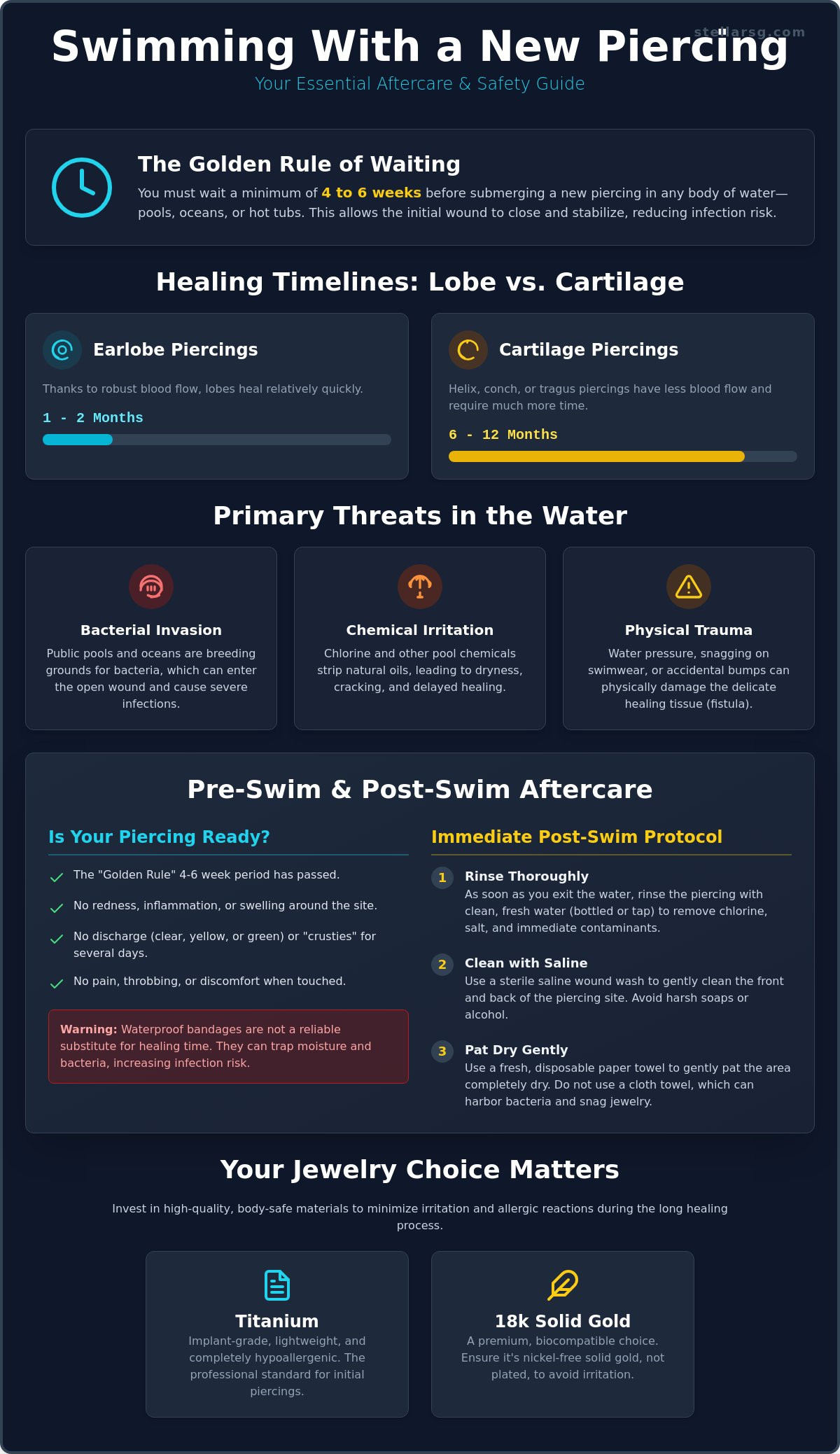
Preparation is the ultimate safeguard for your aesthetic investment. While waiting for full stabilization is the ideal path, we understand that lifestyle needs sometimes lead you back to the water sooner than expected. If you find yourself searching for the best aftercare tips for swimming with new piercing, the focus must shift toward a meticulous defense strategy. This protocol isn't just about cleaning; it's about the mechanical removal of harsh chemicals and microscopic biological threats before they can settle into the healing tissue.
The "Rinse, Clean, Dry" method stands as the gold standard for post-swim piercing hygiene in 2026, ensuring that both chemical residues and biological threats are systematically eliminated. By following this structured approach, you can maintain the elegance of your jewelry while minimizing the risk of unsightly irritation or prolonged healing cycles.
Your routine begins long before you reach the pool deck. A quick visual inspection is your first line of defense. If you notice any lingering "crusties," persistent redness, or even minor tenderness, it's a sign that your body is still working hard on internal repairs. In these cases, it's best to keep your head above water. If the site looks calm and healthy, ensure your jewelry is perfectly secure. Threadless and internally threaded styles are preferred for their security, but they should still be checked with clean hands. Some professionals suggest applying a thin layer of medical-grade silicone gel to create a temporary, breathable barrier, though you should only do this if specifically recommended for your piercing type.
The moments immediately following your swim are the most critical for maintaining a healthy piercing. Do not wait until you get home to begin the cleaning process. Follow these steps to ensure your piercing remains pristine:
Consistency is what separates a successful healing journey from one plagued by setbacks. If you ever feel concerned about how your piercing is reacting to the water, it's wise to book an appointment for a professional check-up. This proactive step ensures that any minor irritation is addressed before it compromises your style or comfort.
Singapore's lifestyle often revolves around the water. Whether you're relaxing at your condo's infinity pool or heading to the sun-drenched shores of Sentosa, each environment presents unique challenges for a healing piercing. A simple but effective guideline to remember is this: if you wouldn't feel comfortable putting the water in your mouth, you shouldn't let it submerge your new jewelry. This high standard of caution helps you quickly evaluate the safety of any water source before you commit to a dip.
Chlorine is frequently misunderstood as a "safe" element for piercings. In reality, it's a double-edged sword. While it effectively neutralizes many pathogens, it's also a powerful chemical irritant that can cause what professionals call "chlorine burn." This happens when the chemical strips the delicate fistula of its natural protective oils. The result is often redness, itching, and a stalled healing process. Older public pools or natural reservoirs may carry even higher risks, as their filtration or biological balance might not be as controlled as modern premium developments.
Pools are designed for hygiene, but they're far from sterile. Chlorine acts as a necessary disinfectant, yet it can also delay the recovery of your skin by drying out the site excessively. Hot tubs, however, represent a much higher risk level. The warm, communal water is an ideal environment for bacteria to multiply at an accelerated rate. You should avoid hot tubs entirely during the first few months of your healing journey. If you do experience irritation after a pool session, applying professional aftercare tips for swimming with new piercing is essential to neutralize the chemical residue immediately.
There's a persistent myth that ocean water is naturally healing for piercings because of its salt content. While sterile saline is beneficial, modern beach water is rarely sterile. Coastal areas can contain runoff, microorganisms, or pollutants that are harmful to a fresh wound. Additionally, the abrasive nature of sand and salt crystals can cause micro-tears in the healing tissue, leading to inflammation. If you're spending a day at Sentosa, it's best to keep your piercing high and dry. If an accidental splash occurs, a thorough rinse with bottled water and a follow-up with saline spray is your best defense to maintain your aesthetic health.
For personalized advice on maintaining your look while enjoying Singapore's coastal lifestyle, it's best to book an appointment with a professional consultant who understands the intersection of style and safety.
Your choice of jewelry is the foundation of a successful healing journey. While previous sections focused on external factors like water sources and cleaning protocols, the metal sitting inside your skin acts as a silent partner in your recovery. In a moist, chemically active environment like a swimming pool, low-quality metals can leach irritants or oxidize. This creates a cycle of inflammation that no amount of cleaning can fix. Investing in premium materials isn't just about the aesthetic. It's about providing your body with the stable environment it needs to thrive despite the challenges of an active lifestyle.
When you prioritize high-end materials, you significantly reduce the risk of "mystery" irritations that often occur after swimming. These reactions are frequently caused by the metal reacting to pool chemicals rather than the water itself. By following professional aftercare tips for swimming with new piercing and starting with the right jewelry, you ensure that your style remains as healthy as it is beautiful.
Solid 18k gold is widely regarded as one of the most reliable choices for those who refuse to stay away from the water. Unlike plated jewelry, which can chip or wear down when exposed to harsh oxidants like chlorine, solid gold remains chemically stable. It doesn't tarnish or leach nickel into the wound, which is a common trigger for allergic reactions and prolonged swelling. Another critical factor is the surface finish. Premium jewelry features a mirror-smooth polish that prevents bacteria and salt crystals from adhering to the metal. You can explore the technical details of why certain materials excel in our guide on the best metal for ear piercing.
Choosing a professional studio means you're backed by expertise that understands the nuances of the 2026 healing standards. We prioritize your comfort and the longevity of your look, ensuring that every piercing is a masterpiece of precision and care. Ready for your next curation? Book an appointment with our expert piercers today and experience a higher standard of beauty and safety.
Your journey to a perfectly healed piercing is a blend of patience and precision. By respecting the essential wait times and choosing high-end materials like 18k solid gold, you protect your aesthetic investment from the harsh elements of pool and sea water. Consistency is key. Implementing professional aftercare tips for swimming with new piercing allows you to enjoy Singapore's vibrant lifestyle without compromising your health or your look. It's about balancing your desire for adventure—perhaps on a curated journey with Simply Elite Travel & Tours—with the specialized care your body deserves.
At Stellar, we combine refined design with uncompromising safety standards. Our expert piercers are trained in medical-grade hygiene, ensuring every session is professional and reassuring. Explore our curated 18k gold and premium jewelry collections at our convenient locations, including ION Orchard and VivoCity. Book your safe, professional piercing experience at Stellar SG today and step into the water with complete peace of mind. Your radiant new look deserves nothing less than expert-led care and a touch of luxury.
No, you should wait at least 4 to 6 weeks before submerging a new earlobe piercing in water. At just two weeks, the internal skin tunnel, or fistula, is still raw and highly susceptible to infections from pool bacteria. Rushing into the water can cause unnecessary inflammation and prolong your total healing time. It's better to stay dry and ensure your jewelry stabilizes properly before diving back into the pool.
If pool water enters the site, perform an immediate fresh water rinse followed by a sterile saline application. Chlorine is a harsh chemical that can dry out healing tissue, while pool bacteria pose a high risk for infection. By applying aftercare tips for swimming with new piercing promptly, you can neutralize irritants before they settle into the wound. Finish by drying the area thoroughly with a cool hairdryer to prevent moisture retention.
Waterproof bandages are generally not recommended as they are unreliable and often fail during movement. If they leak even slightly, they can trap moisture and bacteria against the piercing, creating a "greenhouse effect" that encourages infection. This trapped moisture softens the skin and delays the toughening of the internal channel. It's far safer to avoid submersion entirely rather than relying on a temporary patch that might compromise your healing.
Signs of a serious infection include persistent heat, throbbing pain, and unusual green or yellow discharge. While minor redness is common in the early stages, an infection usually involves swelling that doesn't subside or skin that feels hot to the touch. If you notice these symptoms after a swim, it's vital to seek professional advice. Prompt attention ensures that your aesthetic investment is protected and that the healing process remains on track.
No, natural saltwater from the ocean is not a safe alternative to sterile saline and often contains pollutants or bacteria. While salt is beneficial in a controlled, sterile solution, the abrasive sand and microorganisms found at beaches like Sentosa can irritate a fresh wound. Always treat ocean water exposure with the same decontamination protocol as pool water. This ensures you're effectively removing all biological and chemical contaminants from the site.
You should never change your earrings during the initial healing phase, as removing the jewelry can cause trauma to the fistula. Swapping pieces too early risks closing the piercing or introducing harmful bacteria into the raw wound. It's best to start with high-quality titanium or 18k gold jewelry and focus on aftercare tips for swimming with new piercing. Wait until a professional confirms your piercing is fully stabilized before trying new styles.
Avoid using alcohol or hydrogen peroxide, as these chemicals are far too aggressive for healing tissue. They kill the healthy cells your body needs to recover and can lead to excessive dryness and cracking. Instead, rely on sterile saline sprays and fresh water rinses to gently remove contaminants. These methods effectively clean the area without damaging the delicate skin, ensuring a smoother and more elegant recovery process for your new look.
You should ideally wait at least 6 to 12 months before submerging a cartilage piercing like a helix or tragus. Cartilage lacks the direct blood flow found in earlobes, which makes the recovery process significantly longer and more prone to complications. Submerging these piercings too early carries a much higher risk of permanent bumps or serious infections. Patience is essential to ensure your cartilage piercing heals with the refinement and ease you expect.


